Tag: cocktails (Page 14 of 62)

Drink of the Week: The Miner’s Son

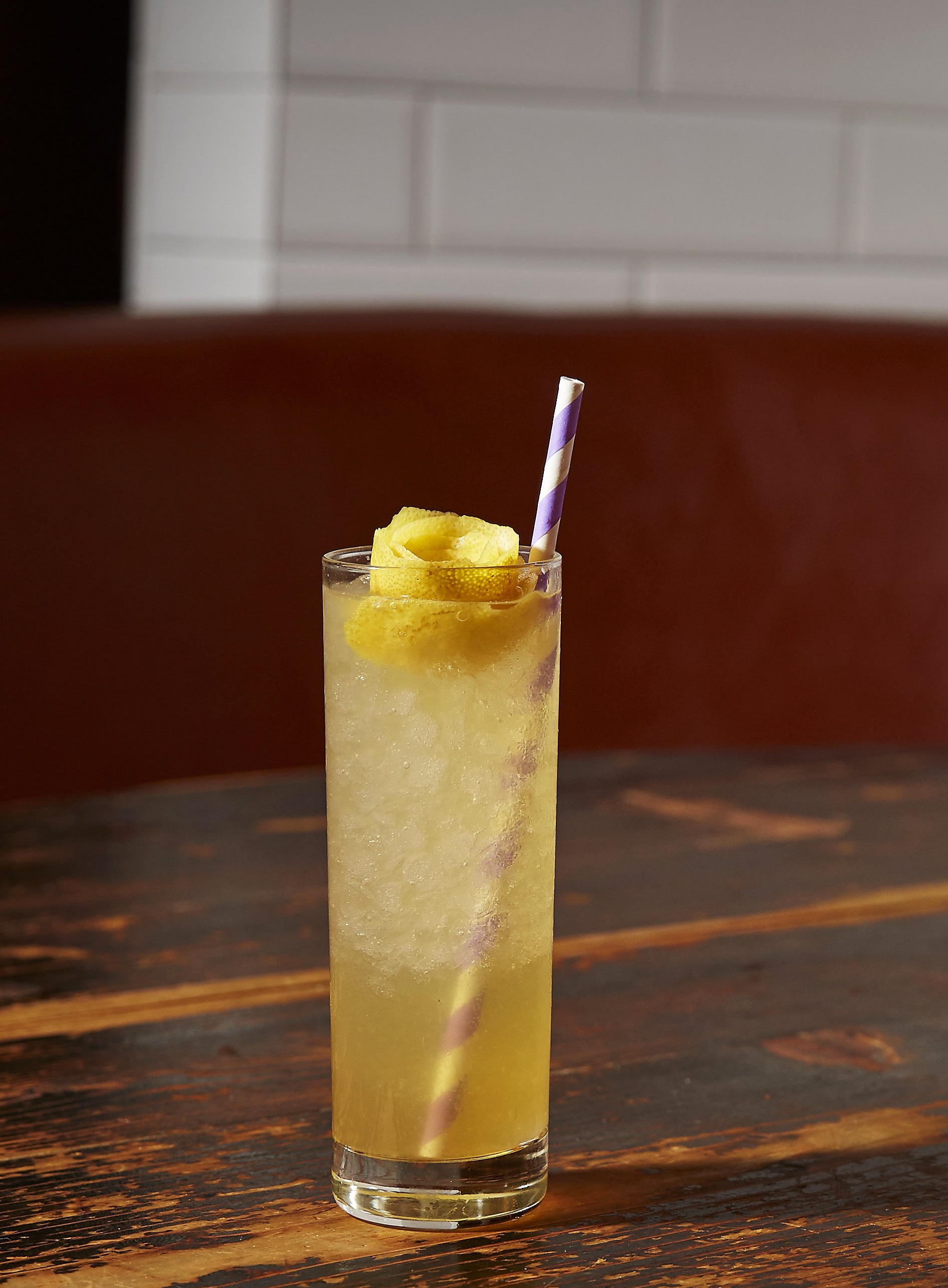
The Miner's Son.I have no idea why Minneapolis bartender Marco Zappia chose to name his drink the Miner’s Son. The closest thing I can find to a cultural reference in the name is that it’s also the name of a restaurant in North Bay, Ontario — so maybe that’s it, and maybe it isn’t. I do know, however, that Zappia’s concoction makes very nice use of a mixer I haven’t really explored at all.

I like tea probably slightly more than the next person, so I guess it’s somewhat surprising that I haven’t really been on top of the not-really-new trend towards using both hot and cold teas in various mixed drinks. Don’t ask me why I’ve been so remiss, but at least I was finally nudged along by a gloriously free bottle of Famous Grouse Scotch, the best selling Scotch in the UK, paired with something called Owl’s Brew The Famous Mint Tea, a very tasty product designed to be combined with the aforementioned whiskey.

I have to say that I agree with apparently most of the population of the British Isles that the Famous Grouse is an extremely likable Scotch. I just might start using as a default here at Casa de DOTW, and I already mentioned that the Owl’s Brew Mint Tea is pleasant on the tongue — it’s also extremely sweet. However, I’m not at this point 100% sold on combining it with Scotch on its own, as the Owl’s Brew bottle suggests. It’s not bad, it’s just that this mysteriously named recipe, which adds a bit of lemon and seltzer to the mix, is what really seems to bring out the best in all these good products.

The Miner’s Son

1 1/2 ounces The Famous Grouse Blended Scotch Whisky
3/4 ounce Owl’s Brew The Famous Mint Tea
1/2 ounce simple syrup
1/3 ounce fresh lemon juice
2 ounces seltzer water
1 lemon twist (garnish)

Combine all the liquid ingredients in a Collins glass, though I think a double rocks or perhaps a smallish highball glass will also work in a pinch. Stir, and add your lemon twist, which Mr. Zappia would like you to properly express, I suspect. (Here are some good instructions on that score, though I would argue us non-pros are just fine using a vegetable peeler and dispensing with the fancy knife work.)

****

The weather is about as cool as it gets out here on the West Coast right now. Even so, the Miner’s Son makes for a nearly irresistible libation and it’s appeal will only increase when El Nino finally makes his exit. It’s a blend of sweet, tangy, minty, and, uh, tea-y flavors that’s pretty darn hard to resist.

On the theory of not fixing what ain’t remotely broke, I dispensed with my tradition of trying the drink out with a Brand X base spirit. I did, however, try it with half a tablespoon of superfine sugar in place of simple syrup. Despite having exactly the same amount of calories, that came out slightly less sweet …and, arguably, a bit better.

On another experiment, however, I found that, while the terms “seltzer,” “club soda,” and “soda water” tend to be used almost interchangeably at times, in this case it might be best to stick to the strict meaning of seltzer water, which is simply plain carbonated water. Club soda, by contrast, contains some additional sodium. Using it seemed to throw the balance of the drink slightly off. Sometimes tiny differences aren’t all that minuscule.

Drink of the Week: The Twelve-Mile Limit

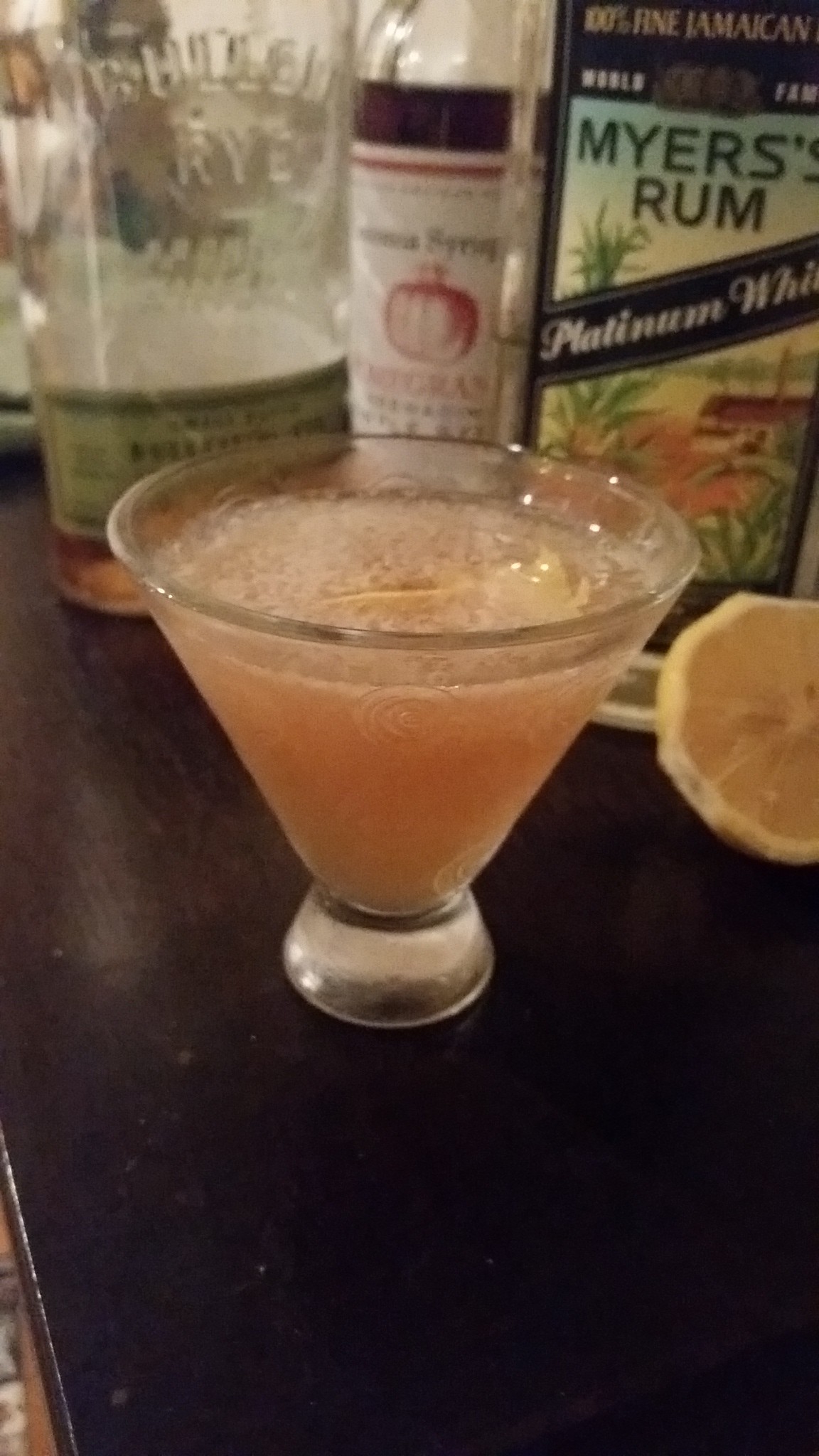
the Twelve-Mile Limit.During the first few years of prohibition, seafaring bootleggers attempting to import contraband booze into the U.S. could rely on a three-mile limit…the point beyond which American legal jurisdiction ended and alcohol became legal. In an effort to make the logistics of illegal import more challenging, a 1924 law extended the limit to a full 12 miles. Presumably, the new law made things harder both on rum-runners and legitimate cruise lines and their thirsty passengers.

As recounted in the 21st century by Ted Haigh in his uber-influential “Vintage Spirits and Forgotten Cocktails,” globetrotting journalist Tommy Millard therefore took it upon himself to up the ante on a previously existing Three Mile Limit cocktail (aka the Three Miler). Milard was apparently quite the gadabout and man about whatever town he happened to be in who, as one fellow journo put it, moved about like “a leaf on the wind.”

Today, I celebrate the fact that, after losing my first copy of Ted Haigh’s book to a water-filled sink, another copy has arrived at my doorstop with this potent, but actually quite tasty beverage. Even today, it’s probably best consumed when the authorities are well out of reach.

The Twelve-Mile Limit

1 ounce white rum
1/2 ounce rye whiskey
1/2 ounce brandy
1/2 ounce grenadine
1/2 ounce lemon juice
1 lemon twist (garnish)

Combine all of the non-garnish ingredients in a cocktail shaker with plenty of ice. (I like to start to with the grenadine, to make sure all of the thick syrup finds it’s way from the measuring jigger to the drink.) Shake vigorously, and strain into a chilled cocktail glass. Add the lemon twist and salute your freedom to be the highly responsible boozer you are.

****

When it comes to brands, different writers seem to have strong preferences for what works best in a Twelve-Mile limit. Mr. Haigh suggests that Appleton White Rum and Hennessy VS brandy are his favorites for this drink. Writing in 2010, rum blogger Matt Robold thought a bolder rum was in order and offered El Dorado 3 Year Old or Montanya Platino. The following year, blogger Doug Ford used Mount Gay Eclipse Silver rum, Sazerac rye, and Courvoisier VSOP brandy.

I used what I had in the house. My first version included Bacardi Maestro de Ron, 100 proof Rittenhouse Rye, and my default Reynal Brandy. That come out a bit tart for my taste. I had more fun with the next, version where I went with the slightly less potent Bulleit Rye and Meyer’s Light Rum, producing a much more pleasantly mellow libation. A less high end version featuring plain old regular light Bacardi and Old Overholt rye was simple, but nicely balanced between sweet, tart, and boozy flavors.

One more note. Despite what you might read on some blogs, making your own grenadine is a great thing to do if you’re itching to go all DIY, but it’s in no way a necessity. I just try to make sure I’m using something with at least some real pomegranate juice in. Right now, I’m using Sonoma Syrup, but my usual default, Master of Mixes, would very likely have been about as good. For some reason, the online prices I’m seeing for the latter are MUCH higher that what I remember paying for it at my local BevMo! Nevertheless, avoid the all-artificial super cheapy stuff, if you can.

And now a moment of silence on behalf of long deceased journalists and other leaves on the wind.

Drink of the Week: Picon Punch

Picon Punch.Happy New Year! By now, a lot of you are probably wondering about the wisdom of ever having another alcoholic beverage. Some of you, perhaps, are just getting started. Either way, I hope you’re having a good, but also highly survivable, first day of 2016.

Apparently invented and perpetuated by Basque settlers and their descendants in California and Nevada, Picon Punch as you and I are likely to enjoy it is something of an approximation. That is because it’s traditional chief ingredient isn’t really available in the United States or, arguably, anywhere else.

You see, even if you are able to grab a bottle of Amer Picon from France, we are told, the original formula was drastically altered by lowering the amount of alcohol. If you’d like a reasonably authentic Picon Punch, your two choices are doing a great deal of research and work to try and make your own version of the now borderline nonexistent real thing, or you can do what almost everyone does and use Torani Amer. That’s an amaro manufactured by a company far better known for making the syrups that both bars and old-style indie coffee houses rely on —  almond flavored orgeat, for example. Torani Amer is available here in California and perhaps nearby Southwestern states, presumably to feed the appetites of the still robust Basque community.

In other words, if you find yourself in the still largely rural areas around Bakersfield, your musical choices should be local country legends Merle Haggard and Buck Owens. Your cocktail choice might as well be a Picon Punch especially since, as booze historian Ted Haigh wrote a few years ago, nearly every bar in Bakersfield stocks Torani Amer.

Picon Punch

2 or 2 1/2 ounces Torani Amer (Amer Picon substitute)
1 teaspoon or 1 ounce brandy (float)
1 teaspoon grenadine
Soda water
lemon peel (optional garnish)

Combine the Torani Amer and grenadine in a collins or highball type glass, stir. Add soda water and ice, but leave a little bit of room on top for your brandy float. Stir again, if you like (I like) and add your brandy float. Sip and wish the world, which has such marvels as Picon Punch in it, a very happy new year.

*****

So, I basically tried two versions of Picon Punch: a super-potent iteration featuring 2 and 1/2 ounces of the nearly 80 proof Torani Amer and a full ounce of brandy on top, and a kinder, gentler variant with only 2 ounces of the Amer and a teaspoon of brandy. Both were very respectable and oddly refreshing, considering the amount of booze. The second version tasted slightly better, but I felt better after the first version.

There is another version of Picon Punch, offered by Robert Hess in The Essential Bartender’s Guide. On the one hand, it contains some lemon juice, so I guess it’s technically more of a true punch, which usually contains one or more fruit juices. Still, I gather than this nearly juice-free version is the one the Basque folks actually drink. If you’ve ever had Basque food, you know these are a people who enjoy hearty flavors. I’ll stick with their version for now.

Drink of the Week: Hot Milk Punch

Hot Milk Punch.Merry Christmas from Drink of the Week!

Now, the way we figure it, your holiday is likely breaking down in one of two ways. Either you’re being besieged with relatives — or are yourself a besieging relative — or you’re one of those folks who, for whatever reason, are finding yourself with not much more than a movie and maybe the proverbial Chinese dinner to keep you company this year.

Whichever of these positions you find yourself in, tonight might well be the perfect time for a super-duper relaxing hot drink. How relaxing? Well David Wondrich, usually at no loss for words in providing mixology advice along with generous dollops of background and history, only had two words to describe this recipe for Hot Milk Punch: “liquid Ambien.”

Now, to be clear, punches of all types, including milk punch, have quite a long history and I’m only starting to learn about them myself. There’s a cold version of this drink and we might well revisit the topic then. In the meantime, it’s Christmas and, most likely, you’re either trying to escape from numerous family duties while reading this, or perhaps distracting yourself in various ways. So, let’s keep it about as simple as we can.

Hot Milk Punch

1 ounce dark rum
1 ounce brandy
6 ounces milk (full fat, probably)
1 teaspoon sugar
nutmeg (garnish)

Heat the milk, preferably in a pan. For whatever reason, microwaved milk seems to lack a certain comforting consistency. While you’re heating the milk, combine the booze and sugar in a coffee cup. Pour in the hot milk and stir. Top with some ground nutmeg and sip cautiously. Whatever your situation, be grateful if you have a roof over your head and have the wherewithal to supply yourself with delicious alcoholic concoctions. Maybe think about actually doing something nice for people who don’t.

****

What with the holidays and all, it’s been a pretty crazy week here at DOTW Manor. On the one hand, that made Milk Punch just the right beverage…on the other hand, my general high level of busyness limited my experimentation to a certain degree.

Nevertheless, I enjoyed my drink using both Martell and Reynal brandy combined with Whaler’s Rum, a very inexpensive and very sweet dark rum. Using much pricier (and generally really delicious) Papa’s Pilar dark rum wasn’t quite as comforting somehow. Bacardi 8 simply wasn’t dark enough. Indeed, I really enjoyed the drink when I discarded complexity entirely and used two ounces of the Whaler’s with no brandy at all.

So, make it entirely with a very sweet dark rum, or go whole hog sophisticate and use only cognac. It’s your bedtime. Hope the day that comes before it turns out to be a more or less merry one.

Drink of the Week: The Horsecar

Image ALT text goes here.The holidays are coming but there’s a limit to how many sweet and rich ingredients a person can or should imbibe. That’s especially true if, like me, you’re thinking about appropriate holiday cocktails while dealing with a bit of a lifelong weight issue — these posts haven’t exactly helped! — and also trying to prepare for upcoming celebratory indulgences. So, while you’re definitely free to make the more traditional holiday cocktails I’ve offered in the past, this week, I took a complete break from the flipping excess of last week’s beverage and went with something simple, and only a little bit sweet.

The Horsecar is a drink of uncertain origin as far as I can tell, but Saveur tells us it was featured in a 1956 cocktail book issued by our men’s magazine forebears over at Esquire. It’s a definite relative of the various Perfect Manhattan-esque drinks I’ve been messing with lately, combining both sweet and dry vermouths. And, yes, it’s a near replica of the Jumbo — which, by absolute sheer coincidence, was the featured drink here just barely under two years ago by about three days. Still there’s one key difference. See if you can spot it.

The Horsecar

1 ounce rye whiskey
1 ounce sweet vermouth
1 ounce dry vermouth
1 dash orange bitters
1 cocktail cherry (garnish)

Not a lot of surprises here. Pour the rye, vermouths, and bitters into a cocktail shaker and mixing glass. Shake or stir, and then strain into a chilled cocktail glass. Contemplate the millions of subtle variations possible when you combine liquids in differing proportions.

****

Okay, so, like the Jumbo, the Horsecar is good for those who love Manhattans, but maybe sometimes find the standard version too high either in sweet vermouth or too heavy on the whiskey. The difference between the drinks is that the classic Jumbo calls for Peychaud’s bitters, which have an almost candy-like flavor, and the Horsecar calls for orange bitters, my  frequent personal choice when I’m making Perfect Manhattans. (I understand that you can also make Horsecars with Angostura-style aromatic bitters but, to be fair, that cocktail should probably be given it’s own name.)

My rye brands this time around were Rittenhouse, Old Overholt, Bulleit, and Alberta Dark Rye. My dry vermouths were Dolin’s and Martinis. My sweet vermouths were Martini, Vya, Carpano Antica, and, experimenting with a new brand, Cocchi Vermouth di Torino. The results were uniformly very nice, with floral and sweet qualities predominating. Probably the single most drinkable version contained Old Overholt — not really a personal favorite — Dolins and Carpano Antica. That version would have been the height of craft cocktail bar orthodoxy, except I shook it instead of stirring. Yes, it was clouded with ice crystals but it was also very easy on the palette without being boring.

I liked the Horsecar stirred as well. Those drinks were definitely a bit bolder in flavor, and could also be quite lovely. The only one that didn’t seem to work as well contained Alberta Dark Rye; it’s a brand I like quite a bit, but it’s a bit of a whiskey outlier and actually contains 1 percent sherry wine. Sometimes the dark horse really does come in last.


« Older posts Newer posts »

© 2026 Bullz-Eye Blog

Theme by Anders NorenUp ↑