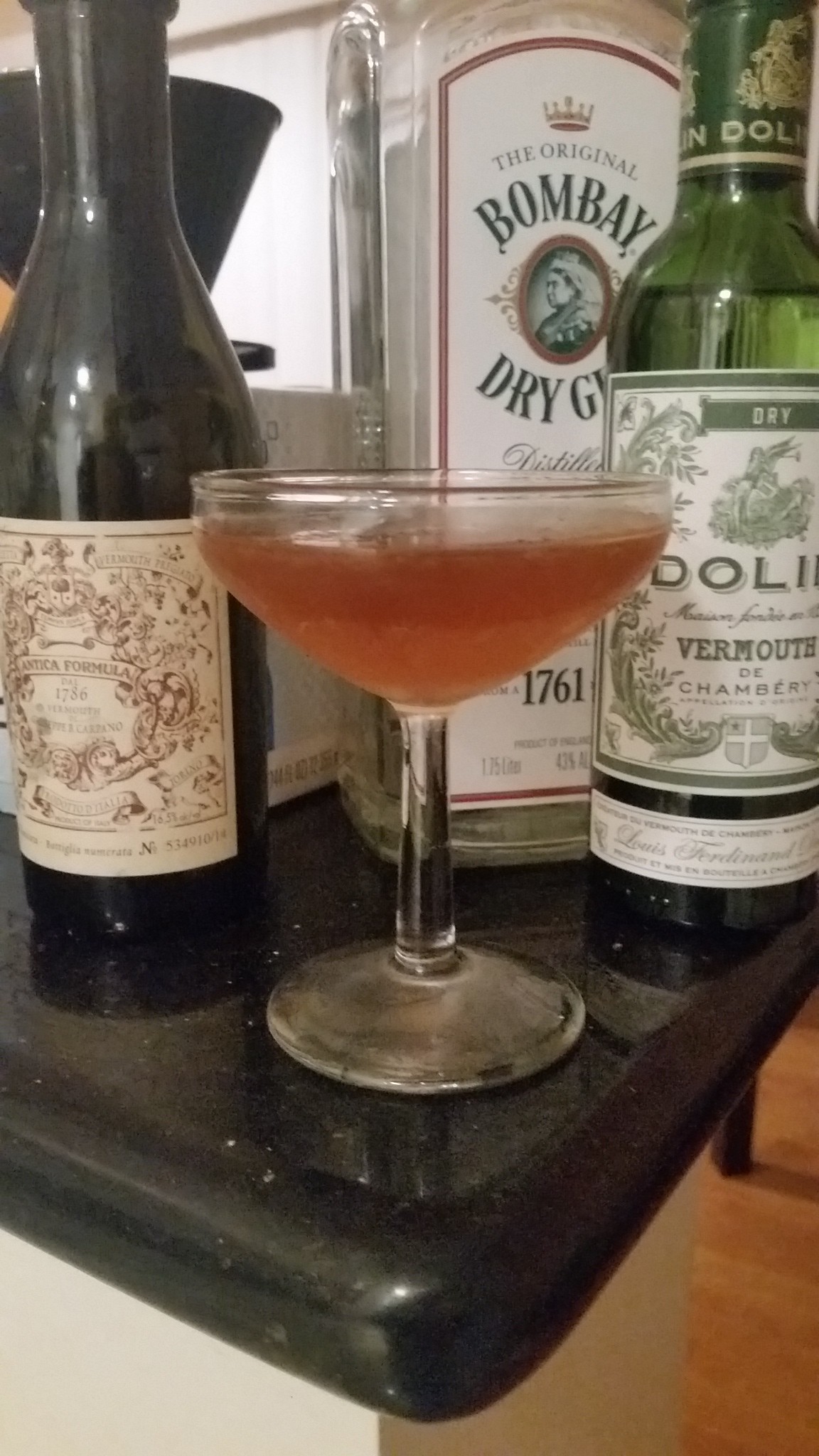
 Let’s get this out of the way: the Perfect Cocktail is not the perfect cocktail, but you already knew that. It is, however, not one bit bad.
My guess would be that this little known selection from Harry Craddock’s 1930 “The Savoy Cocktail Book,” such as it is, is either named after the Perfect Manhattan or I suppose it could be a precursor. What they both have in common is a combination of sweet and dry vermouth combined with a spirit…though the proportion of hard liquor is less than it would be if were something closer to a sweet or dry martini. It’s a fairly tasty concoction if you use the right ingredients and it’s not too terribly strong, which is sometimes a very good thing. Also, the simple symmetry of its ingredients is, if not actually perfect, pretty snazzy.
The Perfect Cocktail
1 ounce sweet vermouth
1 ounce dry vermouth
1 ounce gin
Combine the liquids in a cocktail shaker with plenty of ice. Shake well and strain into a chilled cocktail glass. If you insist, it is also okay to stir this in a shaker or mixing glass and then strain the slightly prettier, but less icy, liquid into that same chilled glass.
*****
In preparation for the Perfect Cocktail, I made sure I was well stocked with various types of vermouths — all purchased in small bottles to maximize freshness. (Yes, I’m going to remind you, yet again, to always refrigerate your opened vermouth bottles and to try and use them up within a month or two, if possible.) Since the vermouths actually predominate in this drink, they’re obviously the most important ingredients.
I used Martini and Dolin for my dry vermouths; Martini, Vya, and Carpano Antica were my sweet choices. Overall, the more expensive options seemed to work notably better, with the possible exception of Vya. Martini Extra Dry seemed to pose a special issue, as the Perfect Cocktail seemed to accentuate some of its more imperfect bitter flavors.
My gins this time around were Bombay Dry, Gordon’s, and Plymouth. A slight edge went to the latter. Using Dolin, Plymouth (slightly less dry than you standard dry gin), and Carpano seemed to yield the best result, with the most piquant combination of sweet, floral and more mouth-friendly bitter flavors.
Though I usually suggest stirring gin-centric beverages, I liked this a lot better shaken. That’s probably because it’s really the vermouths that are the star of the show, with the sweet vermouth being the most dominant. It might be worth trying this drink even if you’re out of gin but have some vodka on hand.
I also experimented with using a cocktail cherry. I can’t say it helped noticeably, but neither did it hurt. So, if you’re looking for an excuse to use a cocktail cherry — and some of them are better than you might think — you might as well use it for the Perfect Cocktail.
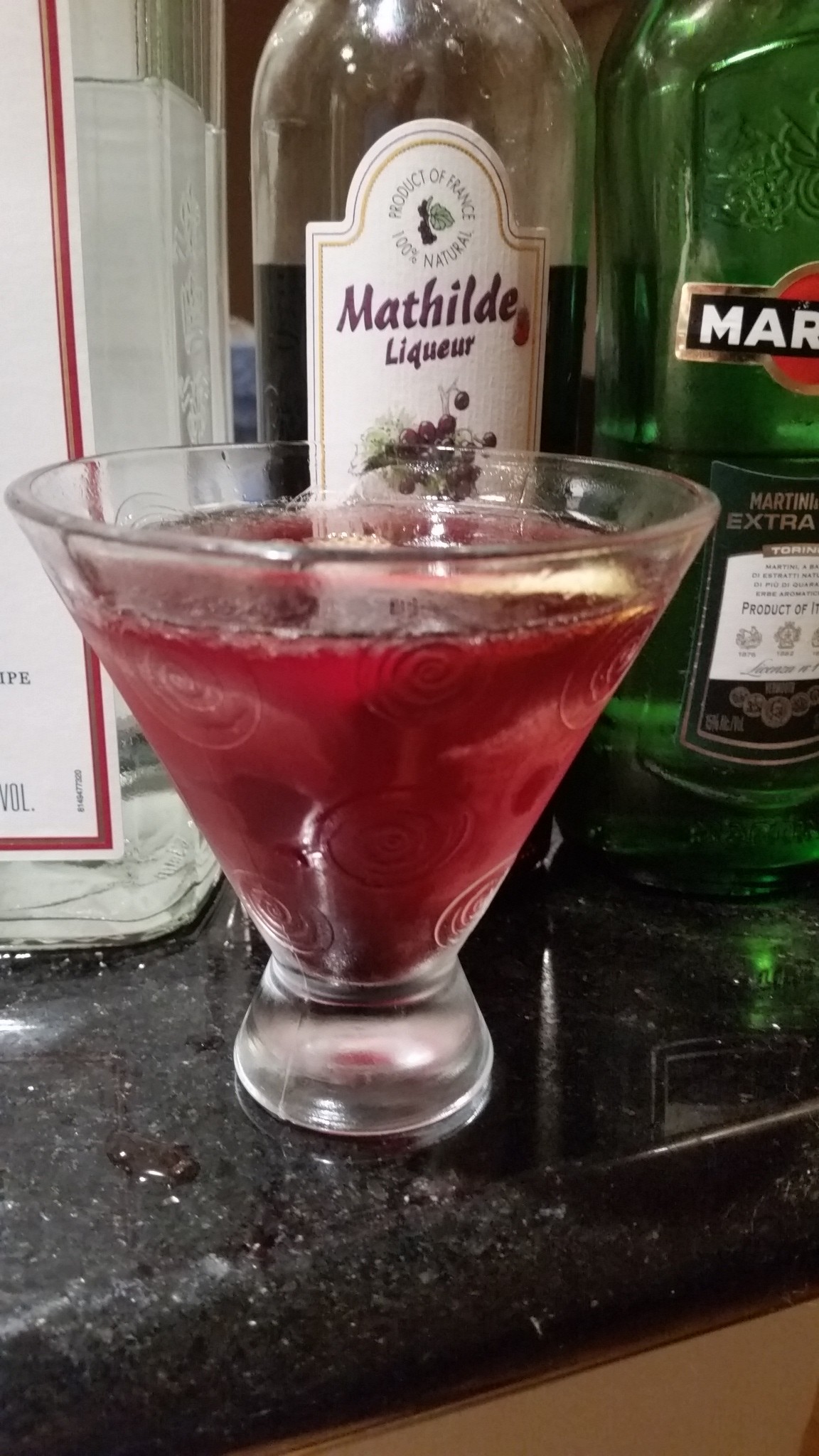
 A while ago, I picked up a half-size bottle of Mathilde brand cassis (black currant) liqueur. Often referred to with some pretension as “creme de cassis” in recipes, the distinction between creme de cassis and just plain cassis seems vague at best. Anyhow, though extremely sweet, my plain old cassis had a nice flavor and I decided it was time to give it a whirl in an appropriate cocktail setting.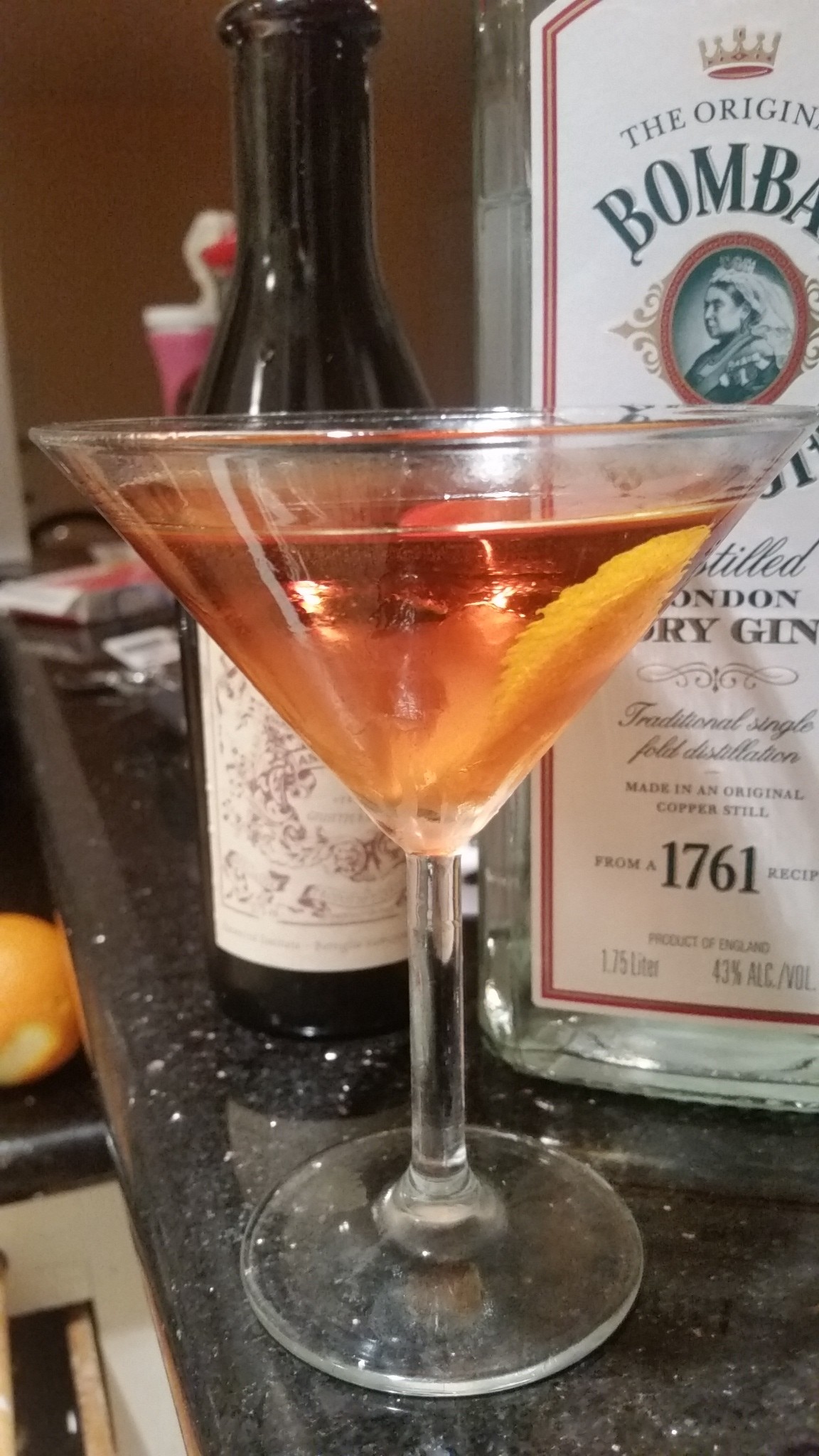
 My first ever DOTW post back in 2011 covered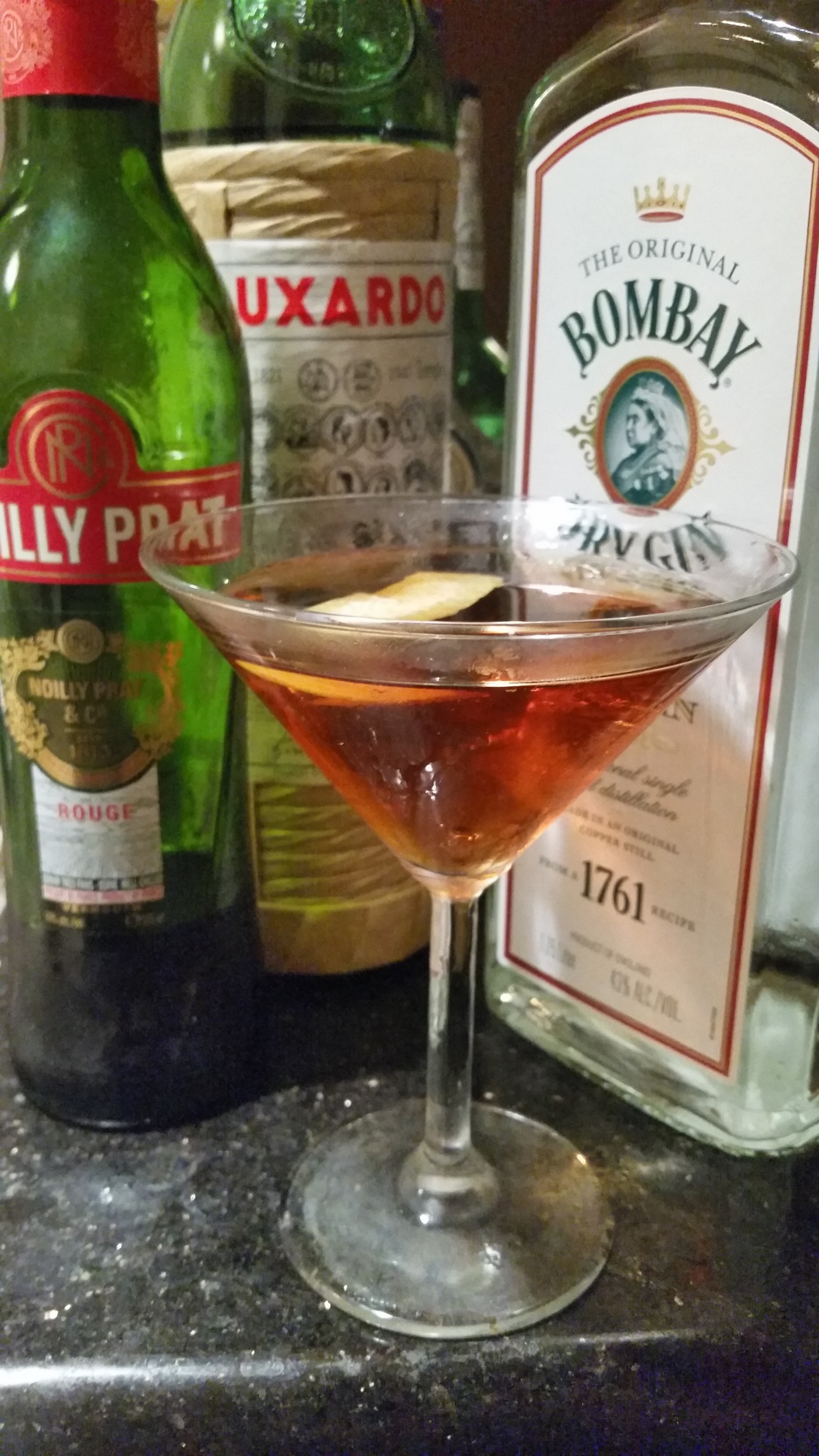
 You’ve got relatives, I’ve got relatives. Everyone’s got relatives. The interesting thing about them is that they can have a great many of the same components that we do; at the same time, the final result can have you shaking your head and wondering how the #$@#$# it is that you share any chromosomes at all with these people.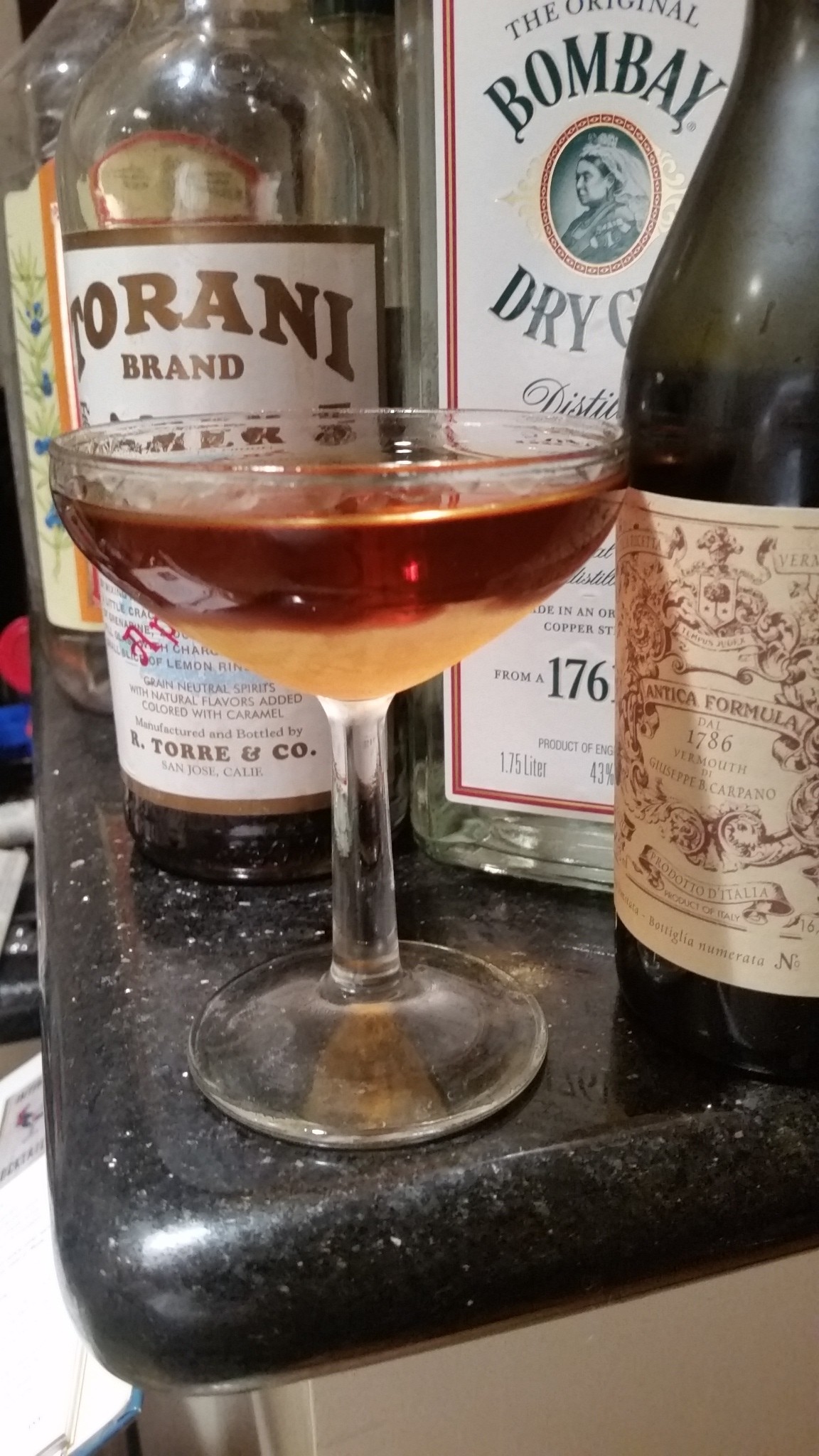
 “Fin de siècle” is French for “end of the century, which means that we’ve all missed our opportunity by 15 years to have a Fin de Siècle at the most appropriate point possible, assuming we were old enough to drink in 2000. Or, if you want to look at it the other way, we’ve all got 85 years to work on preparing the perfect Fin de Siècle in time for 2100.


