Category: Movies (Page 41 of 191)

The Buddy System: How Shane Black has continually reinvigorated and redefined the buddy cop film

the_buddy_system_1

While usually thought of as a hackneyed cliché from the ’70s and ’80s, the buddy cop film has actually been around a lot longer than that. Some trace its roots back to Kurosawa’s 1949 film “Stray Dog,” with early adopters being the politically charged “In The Heat of the Night” (1967) and the “I Spy” TV show in 1965. But it really grew legs with such films as “Hickey & Boggs” (1972), “Freebie and the Bean” (1974) and “48 Hrs.” (1982), each adding to the genre its own flair and nuance. (Please note: while the term is “buddy cop,” in this post the genre includes films with people that aren’t necessarily police officers; rather it’s just two, usually mismatched, partners joined together to solve a mystery.) So although it’s not as if famed filmmaker Shane Black invented the buddy cop film, for the past four decades, he has reinvented and reinvigorated an otherwise predictable and tired genre by using recurring tropes, witty banter and impressive action.

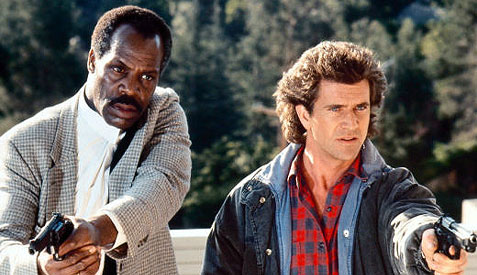
After “Die Hard,” “Lethal Weapon” is easily the most influential action film of the last 35 years. The spawn of homages and knockoffs that came after it is staggering, using Black’s template of the loose cannon and his straight-laced partner who engage in comic repartee while also delivering explosive violence. But many of the imitators that followed, including the “Lethal Weapon” films where Black isn’t involved (although he originally scripted the 1989 follow-up, it was heavily rewritten), missed that special mystery ingredient he brought to the first entry. “Lethal Weapon” is unique not just for its go-for-broke take on action, but also because it begins the type of story and archetypal characters that Black would revisit time and again over his career.

Continue reading »

Movie Review: “Money Monster”

Starring
George Clooney, Julia Roberts, Jack O’Connell, Dominic West, Caitriona Balfe, Giancarlo Esposito
Director
Jodie Foster

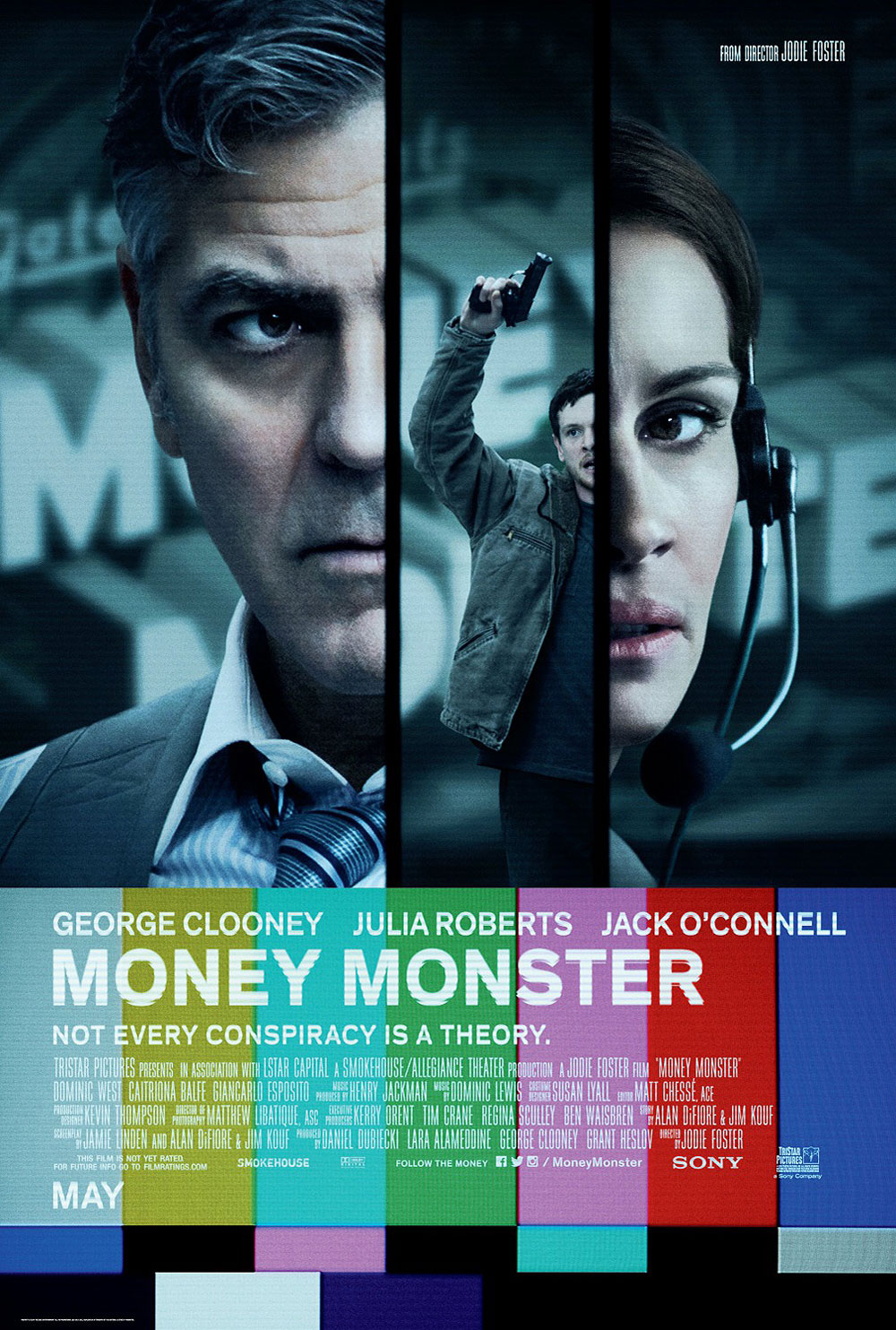
Jodie Foster‘s last directorial effort, the Mel Gibson-led drama “The Beaver,” is a slightly unconventional and often brutal movie. The film proved to be a commercial failure, but then again, it’s hardly a commercial movie. Whether or not it connected with audiences, there was an honesty to “The Beaver” that’s not always present in Foster’s latest feature, the real-time thriller “Money Monster.” Although it’s more of a conventional crowd-pleaser, the film fails to resonate as strongly as it should.

Lee Gates (George Clooney) is the loud, fast-talking host of “Money Monster,” a finance show in the same vein of “Mad Money.” One day, the show’s filming is interrupted when Kyle Budwell (Jack O’Connell) sneaks onto the set and holds Gates hostage at gunpoint. Kyle partially blames Gates for a bad stock tip that resulted in the loss of his life savings after Ibis Clear Capital inexplicably lost $800 million overnight. Nobody has answers, including Gates, and nobody is asking the important questions until Kyle shows up. With the help of his producer Patty Fenn (Julia Roberts), Gates will do everything he can to get to the bottom of what happened, re-discovering his humanity in the process.

That last line sounds cheesy, I know, and it slightly is in execution. It’s not because of the performances or directing, but because the script by Jamie Linden, Alan DiFiore and Jim Kouf is treading such familiar territory that character revelations and the big dramatic moments are sometimes more calculated than human. The script is refreshingly efficient — a story that’s cleanly under 100 minutes, especially during the summer, is always a blessing — but it’s almost always serving a formula. Every once in a while, like when Kyle talks to his wife, the story takes a surprising turn, only to find itself back on track towards an inevitable conclusion.

Continue reading »

Blu Tuesday: Deadpool and More

Every Tuesday, I review the newest Blu-ray releases and let you know whether they’re worth buying, renting or skipping, along with a breakdown of the included extras. If you see something you like, click on the cover art to purchase the Blu-ray from Amazon, and be sure to share each week’s column on Facebook and Twitter with your friends.

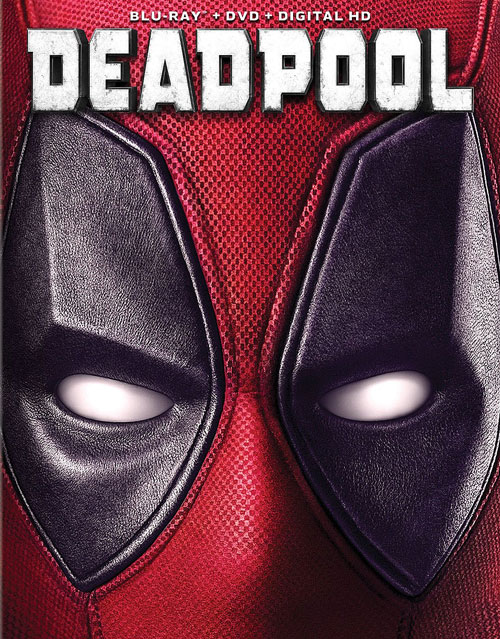
“Deadpool”

WHAT: After he’s diagnosed with cancer, mercenary Wade Wilson (Ryan Reynolds) agrees to participate in an experimental treatment that grants him special healing abilities but horribly scars his body in the process. Upon escaping the secret facility, Wade sets out to exact revenge on the deranged mutant (Ed Skrein) responsible for both saving and ruining his life.

WHY: The road to bringing “Deadpool” to the big screen may have been riddled with challenges, but it only makes the finished product that much more satisfying, because it’s a fresh and wildly entertaining action-comedy that demonstrates why studios should take more risks. Rhett Reese and Paul Wernick’s screenplay nails the dark, twisted and juvenile tone of the wisecracking antihero, and the decision to dole out his backstory in bits and pieces via flashback is a clever way of getting around the tediousness of the typical superhero origin story. The film also completely earns its “R” rating with enough violence and foul-mouthed language to please diehard fans. But while “Deadpool” has clearly been made with those fans in mind, the movie stretches beyond sheer fan service thanks to the strength of the script and Ryan Reynolds’ pitch-perfect performance (completely atoning for the bastardized version of the character in “X-Men Origins: Wolverine”) to deliver a hilariously self-aware take on the genre that audiences unfamiliar with Deadpool will enjoy as well.

EXTRAS: In addition to a pair of audio commentaries (one with director Tim Miller and Deadpool co-creator Rob Liefeld, and the other with star Ryan Reynolds and writers Rhett Reese and Paul Wernick), there’s a making-of featurette, five production galleries, deleted scenes and a gag reel.

FINAL VERDICT: BUY

Continue reading »

Movie Review: “Captain America: Civil War”

Starring
Chris Evans, Robert Downey Jr., Scarlett Johansson, Sebastian Stan, Anthony Mackie, Chadwick Boseman, Daniel Brühl, Elizabeth Olsen, Paul Bettany, Don Cheadle, Emily VanCamp
Directors
Anthony & Joe Russo

By all rights, Captain America should be the lamest, worst Avenger. He came of age decades before the topic of segregation was even entertained. Rock & roll hadn’t been invented yet. If Steve Rogers is a real person, he’s likely a racist crank, yelling at the other Avengers to get off his lawn.

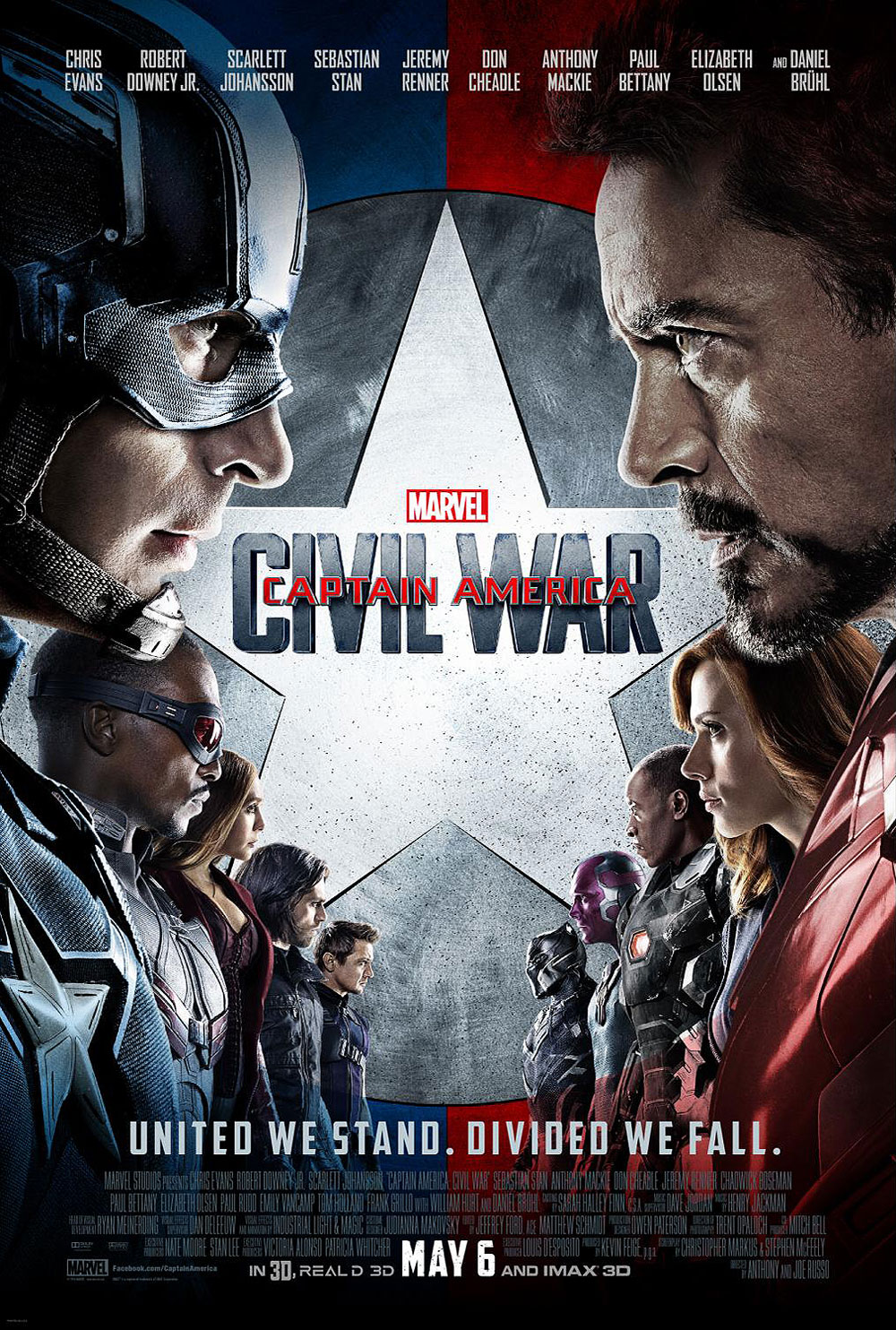
Thankfully, the Cap in the Marvel Cinematic Universe is none of those things. Steve Rogers is an open-minded skeptic, for whom Japanese internment camps are still a recent event. (It is not a coincidence that the word ‘internment’ is used in a crucial scene here.) He is mistrustful of the government — and who can blame him, after the events of “Captain America: The Winter Soldier” – and therefore loath to see the country he loves overstep its bounds a second time. This makes him a perfect foil for Iron Man/Tony Stark, a man whose genius is eclipsed only by his ego, and for whom reparations and accountability make sense, as long as everyone else pitches in to help him pay his bar tab.

This is the crux of “Captain America: Civil War.” The plot is more streamlined than the ’70s-era, conspiracy-minded “Winter Soldier,” but there are still some unsettling themes at play here, chief among them the concepts of freedom and safety, and the fear of compromising one for the other. The comics on which this film is based were written 10 years ago, presumably to point a finger at the George W. Bush administration for overreaching in terms of surveillance. Sadly, they’re even more prescient now.

Continue reading »

Movie Review: “A Bigger Splash”

Starring
Tilda Swinton, Ralph Fiennes, Matthias Schoenaerts, Dakota Johnson
Director
Luca Guadagnino

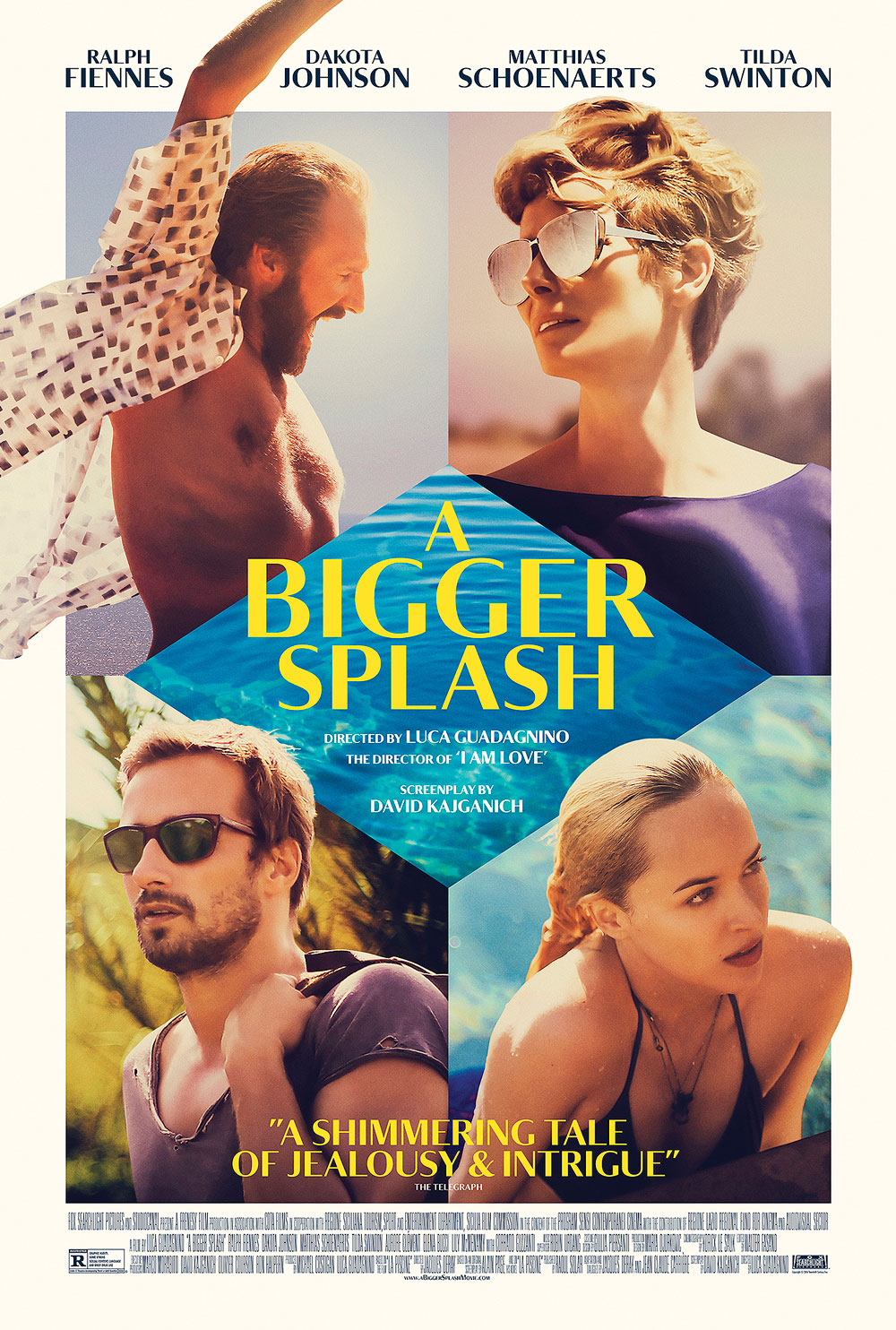
At first, “A Bigger Splash” is a feast for the senses. The gorgeous locations, thrilling tunes, and nothing but good times with Tilda Swinton’s rock star feels like paradise. Midway through director Luca Guadagono’s hypnotic film, however, the dream begins to turn into an equally exciting and unnerving nightmare.

Marianne Lane (Swinton), unlike her former lover Harry (Ralph Fiennes), is speechless. After the rock star undergoes a potentially career-ruining procedure, she seeks some peace and quiet with her boyfriend Paul (Matthias Schoenaerts). They lie about in the sun, make love any chance they get, and, at least on the surface, the two couldn’t look happier. Their brief moments of peace and quiet are interrupted when Harry stops by with his “daughter” Penelope (Dakota Johnson). Harry, Paul and Marianne all share a history together — one that slowly reveals itself over the course of the narrative.

Until the surprising but inevitable third act, that’s about as much plot as there is in “A Bigger Splash,” a film that’s driven far more by atmosphere and character. David Kajganich’s script may feel like a rambling assortment of scenes, but they’re all of a piece, always serving a purpose or revealing something about the characters. When Harry lets loose to some Rolling Stones in a joyful three-minute dance sequence, we see the man Marianne used to love. That man, the one that always tries to live his life to the fullest, comes and goes throughout the film, like all four of the central characters.

Continue reading »

« Older posts Newer posts »

© 2026 Bullz-Eye Blog

Theme by Anders NorenUp ↑