
Category: Lifestyle (Page 182 of 274)

Product Review: Roots of Fight Tyson ’88 Hoodie

Roots-Of-Fight-Mike-Tyson

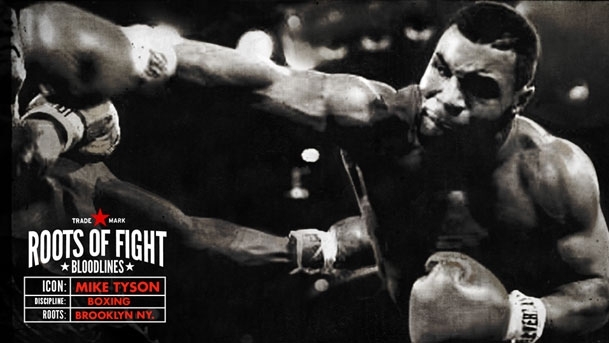
In the last 30 years, there hasn’t been a heavyweight boxer as good as Mike Tyson. Arguably the greatest heavyweight of all-time, the 5-10 Tyson, with just a 71-inch reach, routinely knocked out opponents that were five inches taller and a quarter of his own bodyweight heavier.

After his 38-second knockout win over Lou Savarese in 2000, Tyson uttered potentially the greatest quote in boxing history. “My style is impetuous, my defense is impregnable, and I’m just ferocious.”

And it wasn’t just about his success in the ring. The brand of Mike Tyson has experienced the crossover appeal that no other boxer, outside of Muhammad Ali, can lay claim to.

If you grew up in the ’80s or early ’90s, you spent hours engaging the likes of Soda Popinski and Mr. Sandman in the Nintendo tour de force “Mike Tyson’s Punch-Out.” At his peak, “Kid Dynamite” was one of the most popular athletes in the world and still is to this day, thanks to his one-man show, “The Undisputed Truth.”

Even eight years after his final bout, Tyson’s legacy as a fighter and as a brand are both as impregnable as ever.

Roots of Fight pays tribute to the rich history of martial arts, boxing and MMA, and connects the history with images of iconic fighters like Mike Tyson, Muhammad Ali, Helio Gracie and Bruce Lee in its clothing collection.

And we aren’t talking Affliction, Silver Star or any other weird fighting apparel that gives a nod to the strip mall jiu-jitsu black belt ethos that permeates the modern fight landscape.

Roots of Fight is all substance, no flash and dash. If Affliction is for the twenty-somethings who still haven’t learned humility is where it’s at, Roots of Fight is the quiet man whose presence alone controls the room.

Continue reading »

5 Ways to Become a Financial Boss in 2014

stacking coins

Whenever a new year comes around, people inevitably end up reflecting on how things are going in their lives. If there’s one constant in all of this, it’s that financial issues tend to be at the center of concerns for those who set out to make big changes around the new year. Even those who are happy with their salaries tend to run into issues with money, and there are things that all of us can do to work towards improving our financial lives.

Continue reading »

Drink of the Week: The Elk’s Own

the Elk's Own. I am supposed to be mildly allergic to red wine. In fact, it was the discovery that wine tasting trips tended to give me a mild, brief malaise — somewhere between a feeling of actual sickness and very mild depression — that started me thinking a bit more seriously about the possibilities of hard liquor some years ago. Still, life has its way of surprising you and I’ve found a few drinks involving red wines that I’ve liked quite a bit. They mostly seem to involve egg white.

The wine in question is usually port or sherry, and that’s the case this week with a drink I found in Dale DeGroff’s The Craft of the Cocktail which he, in turn, found in the 1934 tome, The Artistry Of Mixing Drinks, written by Frank Meier of Paris’s Ritz Bar. Like most drinks of this era, it can also be found in The Savoy Cocktail Book. Most of the modernized versions you’ll find online, however, differ significantly from this week’s drink — significantly enough that I might consider actually revisiting it in a different formulation later on. In the meantime, I’m sticking with a minor variation of Mr. DeGroff’s recipe for this Friday the 13th. It’s pretty much the classic formulation in any case.

The Elk’s Own

1 ounce rye or Canadian whisky
1 ounce port
1/2 large egg white
1/2 ounce fresh lemon juice
1/2 ounce simple syrup of 2 teaspoons superfine sugar

Since measuring out half of the egg white of a large egg might be tricky, consider doubling up on the Elk’s Own and making two drinks. Even if it’s just you, it’s tasty enough you might want to drink both.

Combine all the ingredients in a cocktail shaker and shake without the ice. Then, add plenty of ice cubes and shake once more, this time quite vigorously. Strain into a cocktail glass or glasses and toast the Elks Lodge. We’re not at all sure they had anything to do with this drink, but I’m sure they could use a salute.

*****

I didn’t have as many chances to play around with this week’s drink as I’d have liked, so I didn’t manage to even try the more stiff/modern style version; it ups the amount of whiskey to about 1 1/2 parts and the port down to 3/4 of an ounce but uses an entire egg. Some other time, for sure.

Getting down to my choice of ingredients, I used an inexpensive bottle of tawny port that I had on hand, but some people seem to lean towards ruby port, which might be another excuse to revisit this one at a later date. For my hard liquor, I went with my beloved Canadian Club on my first try, as Mr. DeGroff specifically calls for Canadian whisky. Later, I went with the understandably very popular Redemption Rye.  As implied by the directions, I made two drinks each time using one large egg white, out of respect for the for the fact that the DeGroff recipe called for a small egg white, and where the #3$#@$ do you find a small egg these days?

My substitution of two teaspoons of sugar if you don’t have any simple syrup handy is a highly educated guess that I’m pretty sure will work. I didn’t have the opportunity to try it out during a particularly crazy week.

Every version turned out just dandy, but I have to say I especially enjoyed the less complicated charms of the DeGroff Canadian Club iteration. Redemption Rye may be the better product on its own but, for this one,  I think you can definitely save your money and reduce the alcohol volume a bit downwards if you want.

As to why this was a particularly crazy week, for starters, I successfully fought of a cold virus through the magic of zinc, drowsy Robitussin DM, no booze, and tons of sleep over last weekend. [CRUCIAL UPDATE: Actually, I wasn’t successful; the cold came back with a vengeance the day before I posted this. The world must know!] More notably, I closed escrow earlier this week on the new location of Drink of the Week Central. That means my and my outsize staff of researchers, chemists, molecular gastronomists, expert horticulturalists, and inebriate engineers will be moving over the coming weeks.

It’s good news for the hardy DOTW team and should, at least, lead to better drink pictures. The alarming consequence for you, however, is that it also means we may be taking a week or two off in the coming six weeks or so — just moving all the bottles should take a solid week! You’ve been warned.
Edge-Prepping Industrial Equipment: Benefits and FAQ

factory worker sparks flying

In any business, it’s important to maximize the longevity and efficiency of all necessary equipment. Office jobs must invest in long-lasting computers; hospitals need durable, functional medical equipment. In fields that require industrial equipment, however, it’s even more vital to invest in durable tools to prevent unnecessary expenses and wasted time.

Edge-prepping is one way to increase the industrial tools’ lifetime. Not only will this reduce the cost of repairing and replacing the equipment, but it also will prevent broken tools from disrupting business processes. After all, a loss of production means a loss of income.

Continue reading »

Did You Know… with Mike Furci: The Flu and Cold Edition

flu_1

A column by Mike Furci that brings you research, trends and other info to help you with your fitness, health and nutritional needs.

…you should exercise with a cold? Dr. Kaminsky and other researchers at Ball State encourage people to exercise when they have colds as long as the symptoms are above the neck. It’s the types of colds that produce symptoms below the neck like chest congestion and muscle aches that they’re more cautious with.

Two studies were performed over a decade ago in the journal Medicine and Science in Sports Medicine and showed surprising results. The researchers found no difference in symptoms between those who exercised and those who didn’t; there was no difference between maximum exercise performance between the groups, and there was no difference in recovery time from colds. (Med Sci Sports Exerc. 1997, Med Sci Sports Exerc. 1998)

…that a fever is a natural beneficial function of your body to fight off invading organisms when the primary lines of defense, your immune system, fail? So many people misunderstand fever, and believe it to be dangerous. This is primarily due to our “take a pill for everything society” created by physicians and big pharma. Your body raises its temperature because most infectious organisms cannot survive this environment; the ideal temperature for fighting infections is between 102 and 103 degrees F. The problem is, just as our bodies are doing what’s needed to eradicate the infection, we self medicate with, or worse yet, give our children, anti-pyretic drugs like acetaminophen, ibuprofen and aspirin by themselves or in combination.

It’s very important to think of a fever as a healing response. And contrary to popular belief, the best action is almost always little or no action. Rather than trying to lower a fever through medication, try to work through it and allow it to run its course. To support a fever, Colleen Huber and other naturopathic physicians recommend consuming liquids such as broths and water until the fever breaks. The body slows down the movement of food in the gut (peristalsis), so avoid solid food. Another and perhaps most important recommendation to support a fever is rest. Activity uses the body’s essential energy needed to fight invading organisms, and hinders the immune function.

The benefits of a fever:

• Directly kills invading organisms through heat.
• Stimulates antibody production more specific to the infection than any antibiotic.
• More interferon is produced to block the spread of viruses to healthy cells.
• Stimulates production white blood cells which mobilize and attack invaders.

When to seek medical attention for a fever:

• Anyone with a temperature above 104.5 degrees F.
• Infants 100.4 degrees F. Seek care right away.
• Infants from 1 month to 3 months old, with a temperature >100.4 degrees F, if they appear ill.
• Children between 3 months and 36 months, with a temperature above 102.2 degrees F, if they appear ill

For anyone not in the above categories, employ rest and fluids to support the fever and allow it to do its job. (Naturopathyworks.com, Mercola.com)

Continue reading »

« Older posts Newer posts »

© 2026 Bullz-Eye Blog

Theme by Anders NorenUp ↑