Category: Food & Drink (Page 38 of 82)

Drink of the Week: The Laphroaig Scot’s Cider

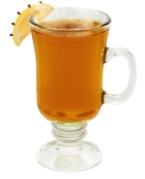
The Laphroaig Scot’s Cider. Cynics and other smart people out there might be forgiven if they assumed that drinks prompted by free booze and recipes provided by the liquor industrial complex were slightly less good than the more classic cocktails that make up the bulk of our work here at DOTW central. The fact of the matter, however, is that — for the most part, anyway — the drinks I’m pitched are crafted by some pretty talented mixologists who are using some very good products. Also, I wouldn’t be including them here if they sucked.

My personal seal of complete non-suckage very definitely applies to our first hot drink of this cool weather season, The Laphroaig Scot’s Cider. It takes the pleasantly woody and lightly smokey flavor of the rather lovely single malt Laphroaig 10-Year-Old Scotch Whisky and builds on it with a very pleasant and easy to make toddy. It’s even easier if you leave out the fancy garnish, which is nice but not essential.

The Laphroaig Scot’s Cider

2 ounces Laphroaig 10-Year-Old Scotch Whisky
1 ounce DeKuyper Mixologist Series Ginger Liqueur
6 ounces hot apple cider/apple juice
1 lemon wedge, studded with cloves (highly desirable, but not essential, garnish)

Preheat your favorite coffee mug with hot water. I simply put a cup of tap water in the microwave and zapped it for a couple of minutes as I was getting my ingredients together. (If you want a more modest, less caloric, drink and are halving these proportions, a small cup will do very nicely.)

Then get your apple cider very very hot, just about boiling even, because you’ll be adding some unheated ingredients. Empty the hot water out of the mug and replace it with your hot cider. Then add the Laphroaig, the ginger liqueur, your garnishes (if any) and sip. Toast something Scottish…Sean Connery, new Doctor Who Peter Capaldi, or poet Robert Burns, it doesn’t matter. This drink won’t gang aft agley.

(Just one question: Why are nearly all world famous Scottish celebrities men? Is being called “lass” all the time bad for your self-esteem? Weird.)

****

A word about garnishes. The original recipe for this drink calls for fresh ground cinnamon. If you’ve got some of that around, definitely give it a try. But I’m personally much too cheap and lazy to mess with that right now. However, I tried a little bit of the cheap supermarket cinnamon I had on hand and, frankly, it didn’t help. And, while I love lemon and cloves, this may be a case where a little garnish goes a long way. Some of my drinks sort of got taken over by the lemon wedge and, really, I think the Scot’s Cider works pretty well without any of the garnishes because the Laphroaig brings plenty of its own complexity.

Of course, I can’t stop you from using other brands of Scotch, or going with a liqueur brand other than the very tasty DeKuyper ginger liqueur, which was also supplied to me by the benevolent booze bribers. It might work pretty well, or it might be merely sweet.

One final point. This recipe originally called for nonalcoholic “apple cider” but, as far as I can tell, there is no clear and meaningful difference between apple juice and un-fermented cider, apart from marketing. By some definitions, including some legal ones in some states, unfiltered (cloudy) apple juice is “cider” but, here in California anyway, that’s also sometimes sold as simply “unfiltered apple juice.” I’m sure using a good, fresh unfiltered apple product will improve this drink. On the other hand, I wouldn’t waste one second worrying about whether it’s apple juice or apple cider. My educated hunch is that there is absolutely no consistent difference between the two.

Drink of the Week: The Brugal 1888 Maple Old Fashioned

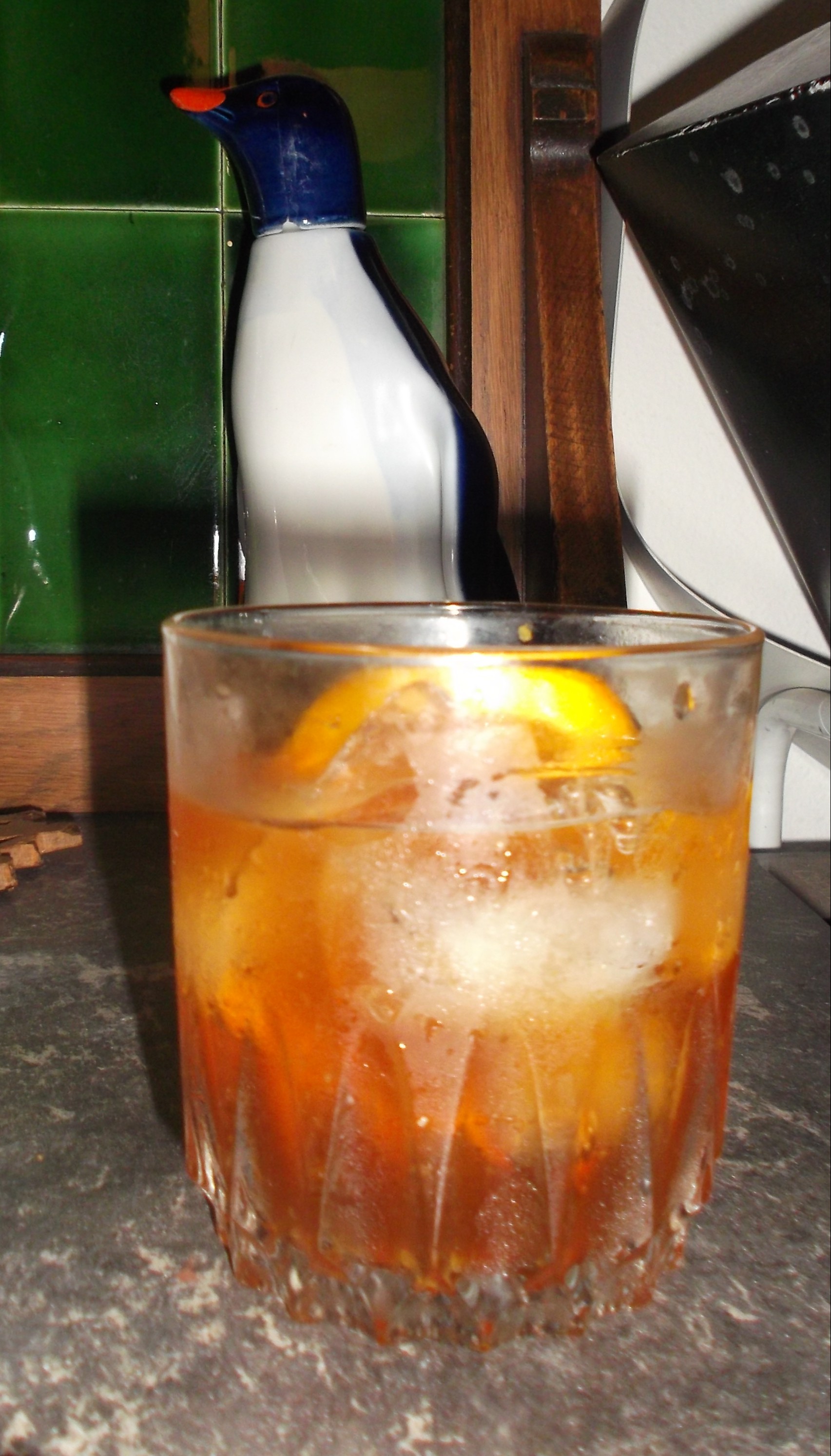
The Brugal 1888 Maple Old Fashioned.It’s been a pretty long time since my first taste of hard liquor, and so it’s a rare thing when I try something that’s genuinely new to me. Still, when the generous gods of booze publicity saw fit to gift me with a bottle of Brugal 1888, it was the best kind of shock. Made from whole sugar cane rather than molasses, but tasting nothing like the cane derived spirit cachaça, no doubt largely due to its painstaking aging process, it’s best described as a high end rum that thinks its fine Scotch or bourbon — right down to its price tag. It includes numerous hints of flavors that range from chocolate to bracing woody notes of dad’s after shave, or something.
Okay, so I’m no better at describing the indescribable than the next writer, but this Brugal 1888 is some really interesting stuff and naturally my first thought was, “what kind of Old Fashioned would this make?” The answer was, “a pretty darn interesting one.” It got even more intriguing when I stumbled over the idea of using maple syrup instead of the usual sugar or simple syrup. It required a little pleasant experimentation, but I think I finally got this drink down.

The Brugal 1888 Maple Old Fashioned

2 ounces Brugal 1888 rum
1/4 ounce maple syrup
2 teaspoons soda water
2 dashes Angostura bitters
1 orange slice

Muddle the orange slice in the bottom of rocks glass. Add the Brugal, soda water, maple syrup, and bitters along with several ice cubes. Stir the cubes and liquid for 20-30 seconds to mix your ingredients and get the drink good and cold. Sip and toast the nations of the Dominican Republic and Canada (or the state of Vermont) for giving us Brugal and maple syrup.

*****

While sipping your Brugal straight is a very adult experience, the other ingredients definitely soften the drink up pleasantly…but I think it can get a bit too soft. I originally tried it with Regan’s Orange Bitters, and then with Fee Brothers Aromatic, but neither of those outstanding products quite did the trick. The relative harshness of regular old Angostura was needed to bring back some of the edge that was lost to the maple syrup. Still, I really never had a bad experience making this drink and if you think orange bitters, or another type of aromatic bitters will work with this, be my guest.

I didn’t dare try it this, but if anyone out there is considering making this with something other than real maple syrup, just don’t. Simple syrup or sugar for a more standard Brugal Old Fashioned is great and, though I haven’t been able to try it out, agave syrup is probably okay too. Maybe honey, even. But Aunt Jemima and Mrs. Butterworth don’t belong in your cocktails.

Drink of the Week: The Jack Rose

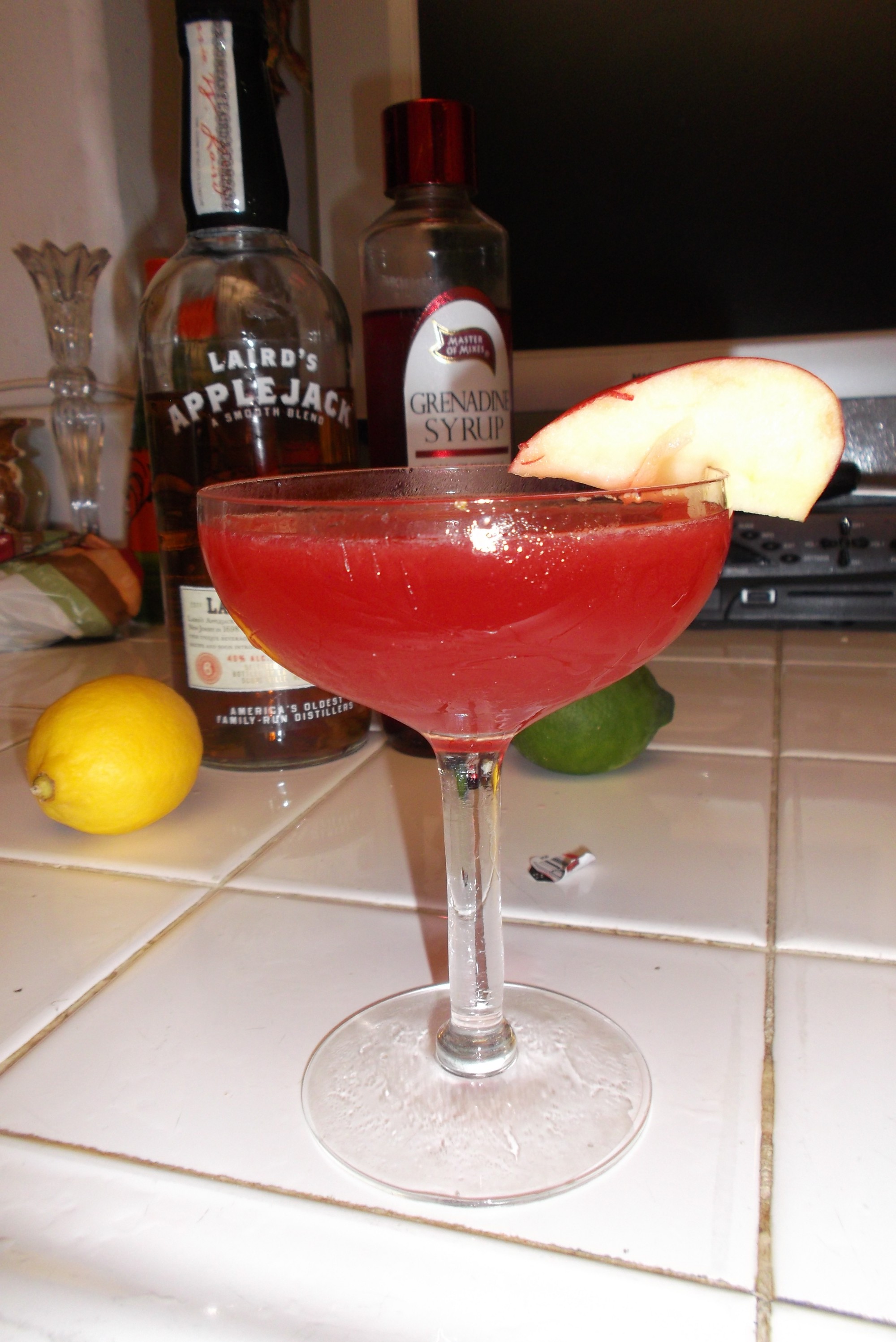
the Jack Rose.Considering I’ve never noticed it on a menu, and never tried it myself until about a week ago, there’s a really good chance you’ve never had yourself a Jack Rose. In fact, this once standard drink might now be completely forgotten were it not for assorted mixed beverage historians and its appearance in two famed books: a walk-on in Ernest Hemingway’s ultra-boozy depressive classic, The Sun Also Rises, and a leading role as one of  the six basic cocktails featured in David Embury’s 1948 The Fine Art of Mixing Drinks. That Embury could place this now obscure beverage alongside such ur-cocktails as the Daiquiri, the Manhattan, the Old Fashioned, and the Martini indicates that this was once a drink that appeared to have some real staying power.
So, what happened? Well, the Jack Rose is not based on whiskey, gin, or rum but on applejack, which is not a sweet cereal for kids but an American apple brandy that fell into disrepute for decades. I’m here to tell you that both the spirit and the drink are really very good — and it’s likely even better versions are out there. More on that, after the asterisks.

The Jack Rose

2 ounces applejack
1 ounce fresh lime or lemon juice
1/2 ounce grenadine
1 apple slice or cocktail cherry (optional garnish)

Combine the liquid ingredients in a cocktail shaker with plenty of ice. Shake vigorously, strain into a chilled cocktail, and toast the printing press, the Internet, and all other means of storing memories. Now, nothing this good has to die forever.

****

If you’ve had the French apple brandy, calvados, then you’ve had apple brandy but you haven’t had applejack. Brewed in New Jersey’s Monmouth County, Laird’s Applejack is pretty much the only game for what was once an ubiquitous American hard liquor. Apparently, part of the issue was that the traditional method of distilling hard apple cider into the applejack by freezing excess water sometimes had some seriously unfortunate chemical results. Happily, I’ve been enjoying quite a bit of Laird’s Applejack this week without the slightest threat to my life or eyesight. Indeed, I really liked the 80 proof Laird’s I was able to buy for a very reasonable price. A 100 proof version, which is very well reviewed and about $10.00 more per bottle, is theoretically available.

In any case, it’s equally good with lime or lemon juice, but don’t try a Jack Rose with pricey but much better known calvados and think you’re having a Jack Rose — a Jacques Rosé, perhaps, but not a Jack Rose. I found the calvados version of this drink a bit overdone and perfumey. With applejack, it’s a simple, balanced, refreshing drink that goes down as easy as any sophisticated cocktail you’ve ever had. It’s very nice.

I’m sure it’s possible the drink could be more fully bodied and complex with the 100 proof Laird’s. I’m also sure it could be even better with a finer grade of grenadine. Now, you can buy some very high end grenadines or you can do what all the cool cocktail kids are doing and make your own. For us poor and lazy folks, the Master of Mixes grenadine syrup is probably the best choice for about five or six bucks.

Here’s the deal. A really outstanding homemade or gourmet grenadine is mostly just a mixture of pomegranate juice and lots of sugar; most commercial grenadines seem to be a mixture of “natural and artificial flavors” and high fructose corn syrup, Master of Mixes splits the difference  with a mixture of pomegranate and cherry juice and a bit of the ol’ high fruc. I’m sure it could be improved upon, but it’s been working pretty beautifully so far in a number of cocktails here.

I know purists like David Wondrich would want me to make my own, and some day I just might. If you look around, there are plenty of recipes online if you’re so inclined — some are tantalizingly simple. However, these posts are largely dedicated to the idea that making really good cocktails at home can and should be very easy. With a decent storebought grenadine and a  tasty, inexpensive base spirit all cocktail fiends should check out, the Jack Rose is a great cocktail that you can make in about five minutes at home for, I’m guessing, less than $1.50 per drink. That’s something.


Drink of the Week: Bram Stoker’s Capitan

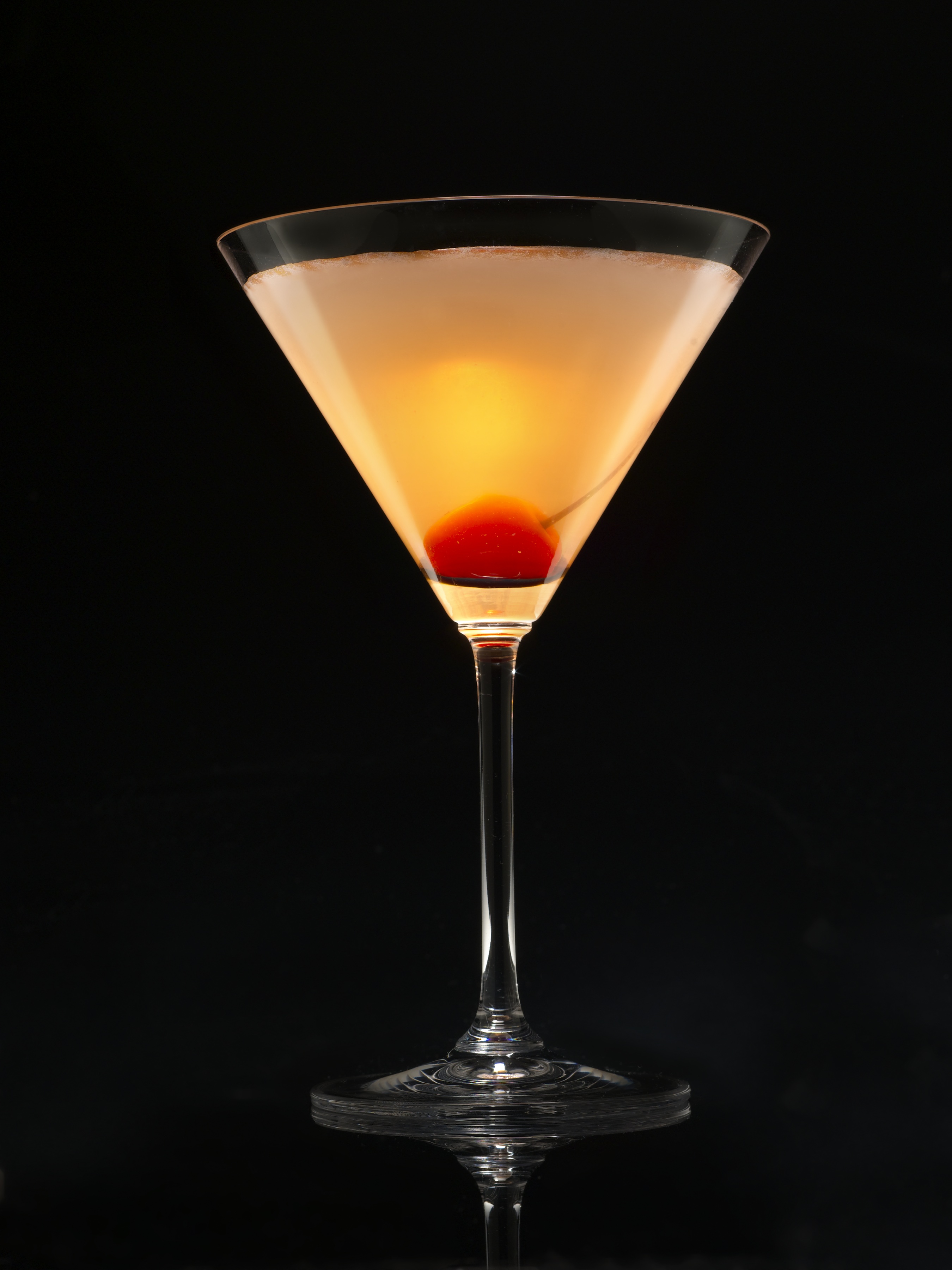
Bram Stoker's Capitan.Halloween this year is a bit awkwardly placed, arriving next Thursday and forcing me to do my annual spooky-themed cocktail a bit too early for true relevance. I suppose people who throw Halloween parties are having the same kind of issue, having to decide whether to throw their soirees the weekend before or the weekend after.
Well, the awkwardness is only going  to get more awkward. I originally had a more appropriately named drink to present you. However, a beverage that had been presented to me by a mysterious benefactor, and which sounded pretty tasty,  just didn’t work at all when I tried it out at the Drink of the Week laboratory. Instead, I’m going with yet another in long line of little known classics.

Today’s beverage is the time-honored but much lesser known companion to the wondrous Pisco Sour, the Capitan. I’ve renamed it after the Dracula creator in the spirit of the holiday and my propensity for silly movie-related in-jokes.

Bram Stoker’s Capitan (The Capitan)

2 ounces Pisco
1 ounce sweet vermouth
1 dash aromatic bitters
1 cocktail cherry (garnish)

Regular cocktailers will see pretty quickly that this is basically a Pisco Manhattan, so the directions are pretty much the same as the way I’d suggest you’d make a Manhattan. Combine the liquid ingredients in a cocktail shaker with plenty of ice. Shake, and strain into a chilled cocktail glass. Add the cherry, and toast Bram Stoker or the deceased horror author of your choice — Edgar Allen Poe, Mary Shelley, Shirley Jackson, Richard Matheson or, yes, even Bram Stoker even if he actually wasn’t that great a writer.

****
Much as many horror tales are about paying off a dark debt, today’s drink is the result of free booze given to me by the makers of Porton Pisco, easily the best known Pisco here in the States and, not surprisingly, made to please the Yanqui palate. Though I had to admit that, it’s not something I’d quaff straight up by choice, that also applies to most gins. All that really matters is that it works very nicely in the right cocktail. That definitely includes the absolutely wonderful Pisco Sour we made here some time ago.

Pisco has a lot of truly unusual flavor notes which seem to work best in the appropriately popular sour, but the Capitan is a lively second best. Some recipes call for equal parts Pisco and sweet vermouth, but I prefer more Manhattan-esque proportions. It’s makes for a tangy, but reasonably stiff, change of pace.

Now, here is the time in this post when I really should have something in particular to say about Halloween, but I don’t have much to add. Except that, if you’re lucky enough to live in certain American cities, then you will very soon be able to check out the long-long awaited and probably final version of what would probably be my favorite horror film of all time, if I actually considered it a horror film. Still, I get it because marketing a movie as “dark comparative religions thriller, with music” would be a tough sell for the 1973’s “The Wicker Man.”

It’s also a good time mention one of that film’s stars, the great Christopher Lee, 91 and still at it, thank goodness. He  sings a bit in “The Wicker Man,” but not about cocktails. So, once again, I present a favorite clip where he does sing about our very favorite subject.

Trick, or treat?


Drink of the Week: The Bijou

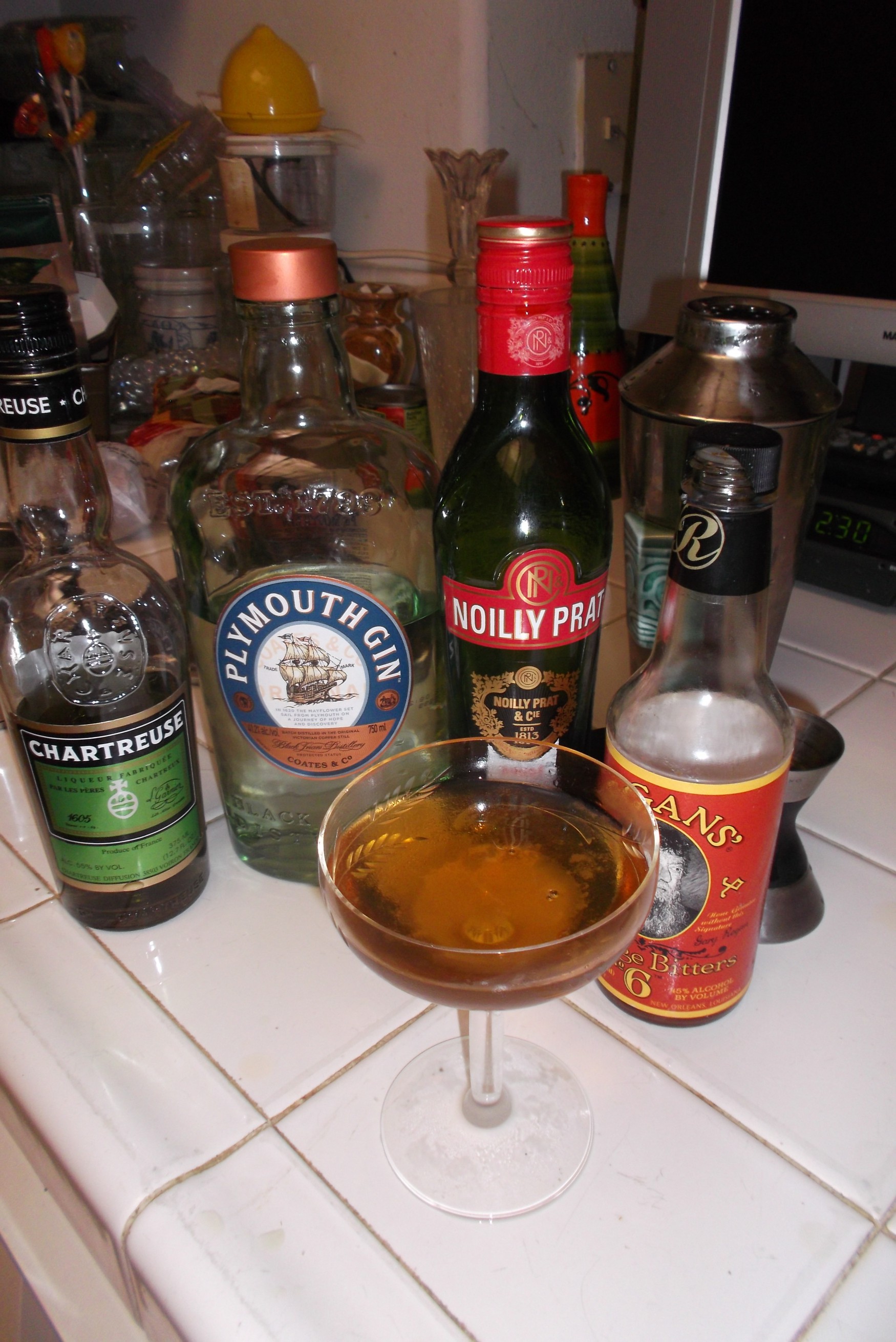
The Bijou. Last week, I invoked the literal spirit of Will Rogers to deal with the insanity that seemed to be sweeping our nation’s capital. As I begin writing this week, it’s starting to appear that some sanity is returning. That’s something we’ll be drinking to this week, with a genuine antique that’s approved of by many of the cocktail cognoscenti. I just wish I loved this one a bit more than I do.

I stumbled over the Bijou in my increasingly well worn copy of Harry Craddock’s The Savoy Cocktail Book, but it’s history goes back to turn of the 20th Century, we are told, when it was included in a manual by bartending legend Harry Johnson. On this political week, it’s worth mentioning that it also got a big shot in the arm back in 2009 when cocktail loving MSNBC icon Rachel Maddow made one for Jimmy Fallon. Alas, I never saw that segment and it’s been pulled from Hulu for some reason. (I blame the Koch brothers.)

I, therefore, have no way of knowing if the woman who accompanies many of my dinners — and whose old Air America radio show helped me to discover the classic cocktail spirit — introduced some twist in her preparation which made the drink sing a bit more for her and Fallon than it does for me. The version I’ve been making is worth is worth a try even if I didn’t love it to death.

The Bijou

1 ounce Plymouth Gin or regular London dry gin
1 ounce Chartreuse
1 ounce sweet vermouth
1 dash orange bitters

Combine your ingredients in a cocktail shaker or mixing glass, stir fairly vigorously, and strain into a chilled cocktail glass. This week, let’s consider a toast to pure, sweet sanity as we down this complex semi-treat.

****

The key ingredient in today’s drink is Chartreuse, also called Green Chartreuse to distinguish it from the milder Yellow Chartreuse. First featured here in star bartender Julie Reiner’s Shamrock Sour, this 110 proof liqueur beloved of cocktail aficionados and, apparently, Quentin Tarantino, is a prime example of a little going a long way. It’s a very herbal, very sweet, and very complex little bugger and gin doesn’t really stand a chance against it.

Since this is one of the 23 recipes in the Savoy book specifically calling for Plymouth Gin, I tried it that way a couple of times. Most recipes, however, call for the usual London style gin. I used Bombay Dry, which is what I have on hand these days, and I found it a bit crisper and more brash that way. Really, though, I  liked the drink about the same with both gins.

You may want to experiment with various garnishes. I tried a cheap maraschino cheery once, which didn’t hurt. Rightly renowned cocktail guru Robert Hess, who is obsessed with presentation to a point I tend to disagree with, calls for an elaborate orange peel, which does look pretty and probably wouldn’t hurt the flavor. I do have to reluctantly admit, however, that this drink really doesn’t benefit from shaking. Don’t ask me why, though I’ll never buy Hess’s argument that “clouding” drinks with ice crystals by shaking them is some kind of cocktail fate-worse-than-death.

Hess is also one of many to point out the word “bijou” means jewel in French, which to him means the drink is supposed to look jewel-like and, yes, be completely unclouded. Movie geek that I am, I associate the term with the frequent name for old theaters. Despite being namesakes, Robert Hess and I clearly don’t think that much alike, though he is absolutely correct when he adds the Bijou is extremely Chartreuse forward.

Some things really are kind of inarguable.Up is not down and day is not night though, as we’ve all learned, you can stop some people from claiming just that. I don’t know about you, but after everything we’ve been through, I could use a drink, any drink.

« Older posts Newer posts »

© 2026 Bullz-Eye Blog

Theme by Anders NorenUp ↑