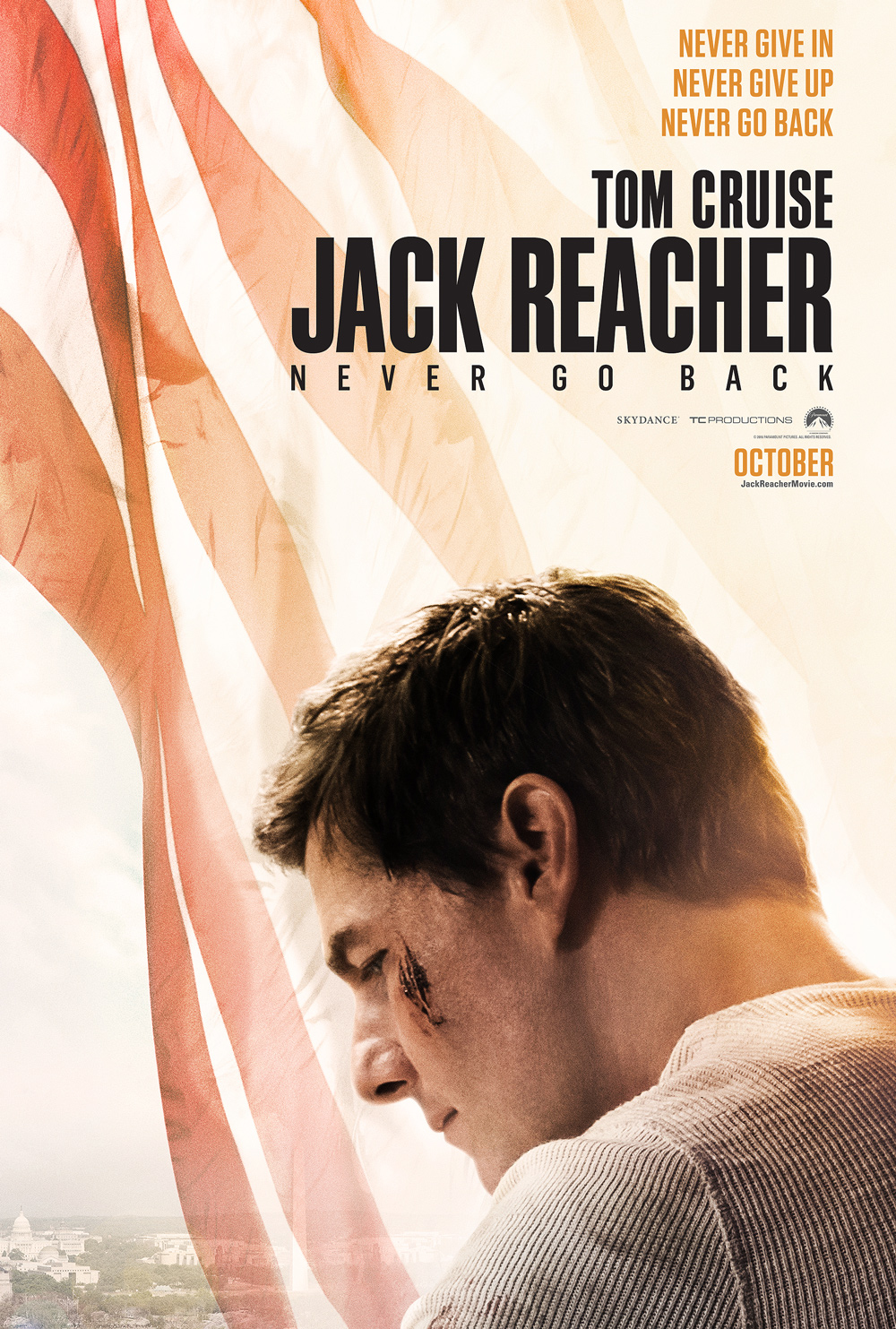



One of the main reasons why “Jack Reacher: Never Go Back” is an invigorating sequel is because it doesn’t share a whole lot in common with its predecessor. While Christopher McQuarrie’s lean and muscular thriller didn’t dig very deep into its titular character, director Edward Zwick’s film raises plenty of questions about the former military man. Zwick, a filmmaker known more for dramas than popcorn thrillers, brings his personal touch to the series based on Lee Child’s popular novels while also producing an impressive crowd-pleaser.
Jack Reacher (Tom Cruise) is still drifting, traveling from town to town with a few dollars in his pocket. As the opening establishes, though, the former major isn’t done helping people in need. He also still has some ties to the military, like Major Susan Turner (Cobie Smulders), who often works with Reacher, but only over the phone. After the two develop a friendship and respect for each other, they make plans to meet when Reacher travels to Washington D.C. Once Reacher arrives in the nation’s capital and enters her office, however, he discovers that Turner is facing accusations of treason. Reacher doesn’t buy it, and he’ll do whatever he can do to prove her innocence.
Part of what’s great about McQuarrie’s film is that Jack Reacher is already Jack Reacher. He’s not at a moral crossroads. He knows right and wrong. He knows who he is. On the other hand, what’s so appealing about Zwick’s film is that we get to see Reacher start to ask questions about himself. We learned more about Reacher through action in McQuarrie’s movie, and this time around, screenwriters Richard Wenk, Marshall Herskovitz and Zwick place some of those actions under a microscope. There’s an inherent sadness to the character’s way of life; he has no real personal connections. “Jack Reacher: Never Go Back” often likes to take its time to truly show what kind of effect that life of solitude would have on someone.


 For those of you who don’t know your early Hollywood history, Douglas Fairbanks was probably the first real superstar action hero and, like Buster Keaton in his own day and Jackie Chan many years later, a superb stunt performer. He played the dashing, ultra-athletic lead in some of the earliest film versions of “The Thief of Baghdad,” “The Mark of Zorro” and “The Three Musketeers,” among many other productions. He was also — and I believe this is a DOTW first for a celebrity-named cocktail — a teetotaler.


