Category: Television (Page 4 of 84)

Blu Tuesday: X-Men: Apocalypse, The Purge: Election Year and More

Every Tuesday, I review the newest Blu-ray releases and let you know whether they’re worth buying, renting or skipping, along with a breakdown of the included extras. If you see something you like, click on the cover art to purchase the Blu-ray from Amazon, and be sure to share each week’s column on social media with your friends.

“X-Men: Apocalypse”
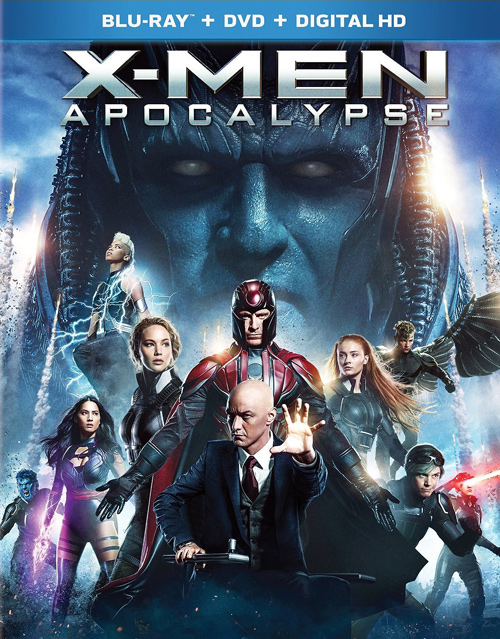
WHAT: When a powerful mutant named En Sabah Nur (Oscar Isaac) reawakens in 1983 after thousands of years in hibernation, he recruits Magneto (Michael Fassbender) and three other mutants to join his side as he attempts to destroy the world and remake it in his image. Standing in his way his Professor Charles Xavier (James McAvoy) and his X-Men, including Mystique (Jennifer Lawrence), Hank McCoy (Nicholas Hoult) and new students Jean Grey (Sophie Turner) and Cyclops (Tye Sheridan).

WHY: “The third one is always the worst.” That’s an actual line of dialogue from Bryan Singer’s “X-Men: Apocalypse,” and though it’s technically referring to “Return of the Jedi,” it could just as easily be applied to the latest installment in the long-running superhero franchise. Messy, overstuffed and generally dull, there’s so much wrong with “X-Men: Apocalypse,” beginning with its titular villain. Not only is the all-powerful mutant surprisingly unimposing, but the movie completely wastes Oscar Isaac by burying him under layers of makeup and giving him very little to do. The same goes for stars Michael Fassbender, James McAvoy and Jennifer Lawrence, none of whom look particularly interested this go-around, as well as the young X-Men, who are well-cast but get lost in the shuffle of the crowded ensemble. What initially seemed like the franchise’s biggest asset (its deep roster) has quickly become its Achilles’ heel. There just isn’t enough time to service all of these characters, and yet that doesn’t stop Singer from cramming as many as possible into the story. Although “X-Men: Apocalypse” has a few good moments (including yet another fun Quicksilver set piece), it’s so far behind what Marvel is doing with their movies that Fox would be better off handing over creative control (see: Sony and Spider-Man) and reaping the benefits.

EXTRAS: In addition to an audio commentary by director Bryan Singer and writer/producer Simon Kinberg, there’s an hour-long making-of documentary, deleted scenes, a gag reel and more.

FINAL VERDICT: SKIP

Continue reading »

Blu Tuesday: American Crime Story, Now You See Me 2 and More

Every Tuesday, I review the newest Blu-ray releases and let you know whether they’re worth buying, renting or skipping, along with a breakdown of the included extras. If you see something you like, click on the cover art to purchase the Blu-ray from Amazon, and be sure to share each week’s column on social media with your friends.

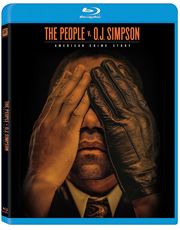
“American Crime Story: The People v. O.J. Simpson”

WHAT: A dramatic retelling of the O.J. Simpson case, in which the former NFL superstar turned actor (Cuba Gooding Jr.) was tried on two counts of murder for the 1994 deaths of his ex-wife, Nicole Brown-Simpson, and her friend, Ron Goldman.

WHY: There’s been a lot of great television this year, and FX’s “American Crime Story” is right up there at the top. Though most people of a certain age remember the media circus surrounding the so-called Trial of the Century, “The People v. O.J. Simpson” manages to feel like an entirely fresh experience, revealing things about the case you may not have known before while also recapturing all the infamous moments. Told largely from the perspective of the lawyers, the show examines topics like race, gender, celebrity and the criminal justice system and how each one affected the outcome of the trial. There’s hardly a dull moment throughout the show’s debut season, including the excellent bottle episode “A Jury in Jail,” which details the mental and physical strain placed on the jurors throughout the lengthy court case. At its core, however, “American Crime Story” is just a really excellent actor’s showcase that features award-worthy performances by Sarah Paulson (as lead prosecutor Maria Clark), Courtney B. Vance (as flashy defense attorney Johnny Cochrane) and Sterling K. Brown (as Clark’s second chair, Christopher Darden), among others. The series is so engrossing and expertly cast that it’s like watching the murder trial all over again, only this time, with an unrestricted view of the chaos and drama.

EXTRAS: There’s a retrospective on the real-life trial featuring interviews with the cast, crew and show consultants, as well as an interactive timeline.

FINAL VERDICT: BUY

Continue reading »

Blu Tuesday: Arrow, The Jungle Book and More

Every Tuesday, I review the newest Blu-ray releases and let you know whether they’re worth buying, renting or skipping, along with a breakdown of the included extras. If you see something you like, click on the cover art to purchase the Blu-ray from Amazon, and be sure to share each week’s column on social media with your friends.

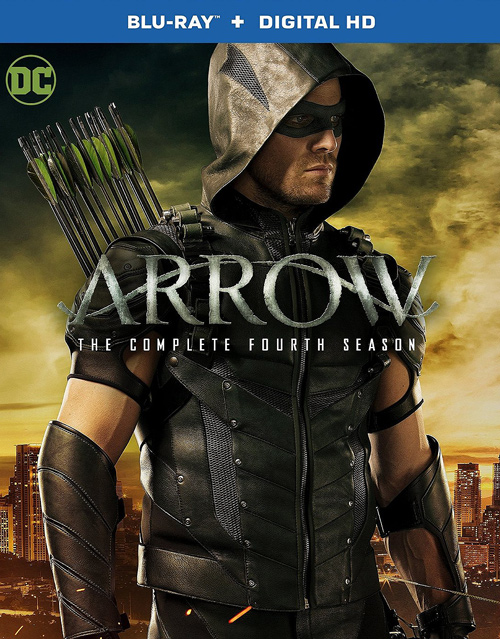
“Arrow: The Complete Fourth Season”

WHAT: After defeating Ra’s al Ghul in battle, Oliver Queen (Stephen Amell) leaves behind his vigilante persona and moves to the suburbs with Felicity (Emily Bett Rickards) to live a normal life. But when Star City is threatened by a terrorist organization called H.I.V.E., Oliver returns as the newly dubbed Green Arrow to stop the group’s leader Damien Darhk (Neal McDonough) – a man with mysterious magical abilities – from destroying what he’s worked so hard to protect.

WHY: The fourth season of “Arrow” is a real low point in the show’s history; it’s as clunky and poorly conceived as Diggle’s awful new helmet. Though past seasons have certainly had their share of criticisms, it’s never been quite this bad. The flashbacks are more pointless than ever, persisting with a plot device that’s no longer necessary, while the Oliver/Felicity romance is horribly mishandled. Even Damien Darhk’s involvement doesn’t seem very well-thought-out. Not only is he too powerful for Oliver and his team, but he only appears when it’s convenient for the plot, going through the same motions over and over until his lame defeat in the finale. However, the biggest problem with “Arrow” (and to a lesser degree, “The Flash”) is that there isn’t enough story to warrant 23 hours of television, resulting in a lot of unnecessary filler. That’s never been more true than in Season Four, and with any luck, it’ll lead to the show receiving a much-needed reset, or at the very least, a return to its grittier, humbler roots.

EXTRAS: In addition to the 2015 Comic-Con panel, there’s a trio of profiles on Damien Darhk, Vandal Savage and Hawkman and Hawkgirl, deleted scenes and a gag reel.

FINAL VERDICT: RENT

Continue reading »

Blu Tuesday: The Walking Dead, Narcos and More

Every Tuesday, I review the newest Blu-ray releases and let you know whether they’re worth buying, renting or skipping, along with a breakdown of the included extras. If you see something you like, click on the cover art to purchase the Blu-ray from Amazon, and be sure to share each week’s column on social media with your friends.

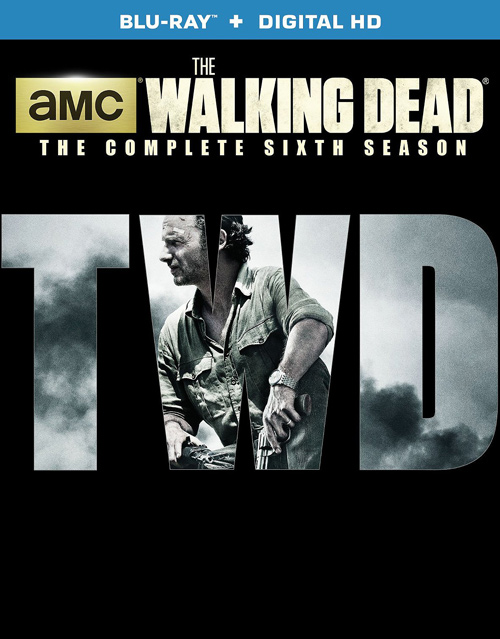
“The Walking Dead: The Complete Sixth Season”

WHAT: When the people of Alexandria are forced to deal with a number of dangerous threats from both the living and the dead, Rick Grimes (Andrew Lincoln) gains the trust of his new community by transforming its residents into survivors. But not everyone agrees with Rick’s shoot-first approach to diplomacy, particularly the newly passive Morgan (Lennie James).

WHY: A lot of the attention surrounding the sixth season of “The Walking Dead” focused on the arrival of fan favorite villain Negan, a character who doesn’t even appear until the closing minutes of the finale and caused just as much backlash as excitement. But whether or not you’re happy with the way Season Six ended, there’s so much great stuff in the lead up to the inevitable faceoff with Negan (a fantastic Jeffrey Dean Morgan) that it’s easily one of the best seasons to date. Glen Mazzara continues to prove why he’s the perfect showrunner for this series, because as a fan of Robert Kirkman’s original comic, he’s able to deliver all the classic moments (the zombie invasion of Alexandria, Carl getting shot in the face, Negan’s thrilling introduction) without feeling slavish to the source material. Not every episode is a resounding success, but even those that caused controversy with their frustrating storytelling tactics (namely “Thank You” and “Last Day on Earth”) exude excellence in one way or another, and it’s for that reason why “The Walking Dead” remains among the best shows on TV.

EXTRAS: In addition to cast and crew audio commentaries on seven episodes, there’s an extended cut of the season finale (including an alternate, expletive-filled version of the Negan speech), five behind-the-scenes featurettes, deleted scenes and more.

FINAL VERDICT: BUY

Continue reading »

Panic in the Year Zero: How “Mr. Robot” and “Fight Club” complement each other

panic_in_the_year_zero

An outsider who cynically views the material attachments of modern society and the misplaced ethos of cultures at large. A plan to destroy an economic institution as a way of setting free the masses from the yolk of corporations. The divergent personalities of a potential savior that is slowly bringing him closer to self destruction, all while commenting on the ludicrous notion of corporate “personhood.” Is this a description of David Fincher‘s 1999 film “Fight Club” or the USA Network original series “Mr. Robot?” There are certain similarities between the two that are hard to ignore, whether it’s those narrative parallels, the camera framing which evokes Fincher’s work, or even the use of the same song; “Mr. Robot” is aware of its influences and pays homage to Fincher’s film in multiple ways. But that’s not to suggest that the TV show is a pale imitation or carbon copy of the raucous movie. Instead, the two are echoes across a divide of time where certain global events change perspectives and objectives of each story.

“Fight Club” (based on the book by Chuck Palahniuk) was made and takes place at the tail end of the ’90s. It sounds like a joke, but it’s important to remember that the film has a pre-9/11 mentality about it. The greatest crises facing people at that time (in the western world) were existential ones. The gravest concern was what was to be done about this spiritual ennui that was affecting a materialistic generation of lost boys stuck in the position of office drones and corporate errand runners. The chief element of Fincher’s film (and Palahniuk’s book) is an examination of masculinity in that time period, how misplaced aggression can lead to the charms of anarchic fascism in the face of a world taken over by Starbucks and IKEA.

Continue reading »

« Older posts Newer posts »

© 2026 Bullz-Eye Blog

Theme by Anders NorenUp ↑