Category: Lifestyle (Page 118 of 274)

Drink of the Week: The Gin and It

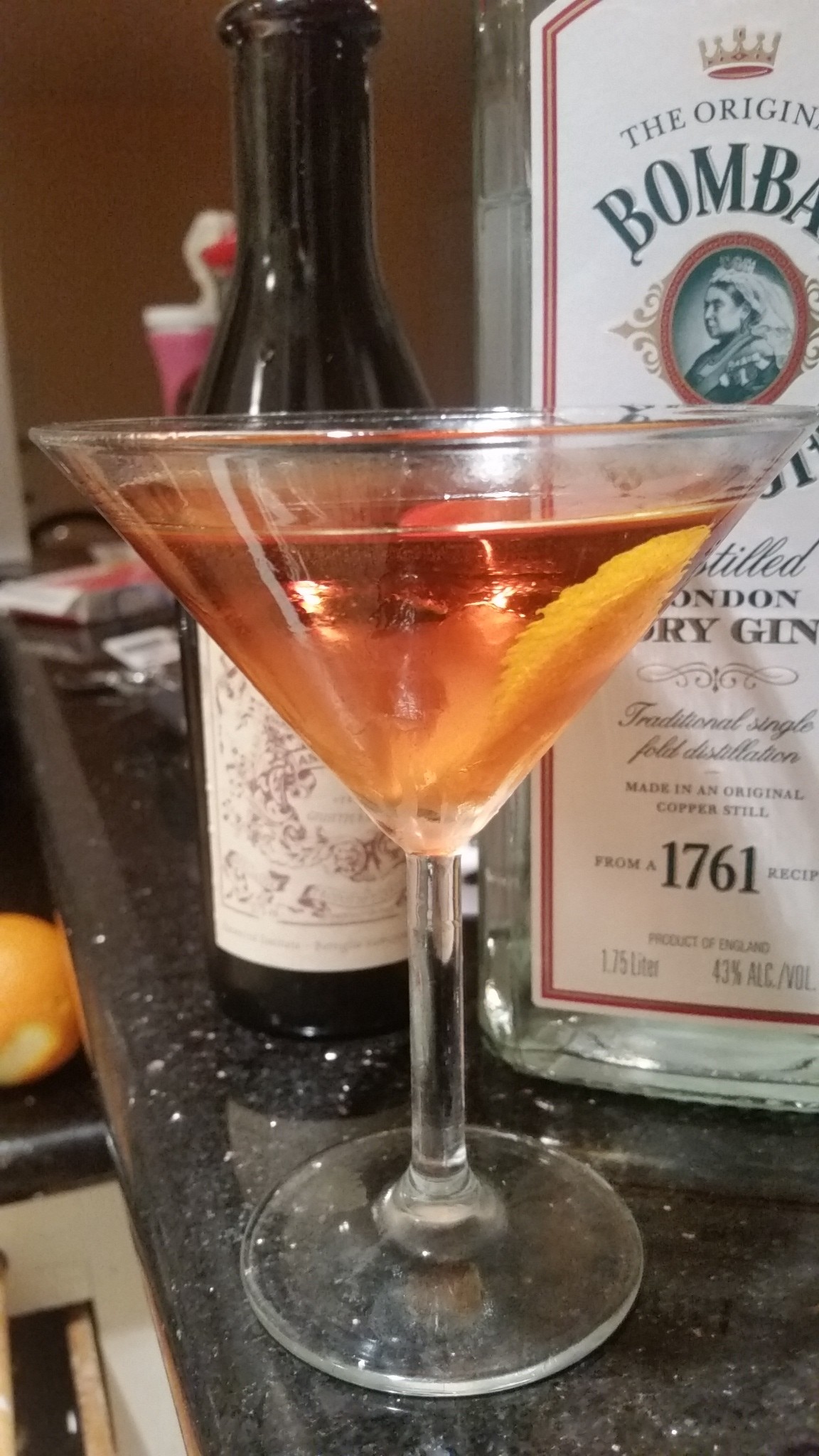
the Gin and It.My first ever DOTW post back in 2011 covered the Martini. It’s nevertheless taken me until just the last few weeks to start exploring the ancestry of that most iconic of cocktails, which a lot of people assume kind of begin and ends with last week’s Martinez. Still, it’s name aside, that very good but very sweet drink has more differences than similarities with the modern oh-so-dry Martini beverage. Today, I’ve found a drink that, while still pretty sweet, really does seem to be the semi-missing link between the Martinez and the Martini.

The Gin and It  — “It” being short for “Italian,” as in Italian vermouth, as in sweet vermouth — is pretty much what the name implies. While some versions weirdly call for using no ice whatsoever, my version of the drink, at least, is very close to my comparatively high-vermouth starter version of a Martini, save for the species of vermouth. It’s also just about identical to my take on a Manhattan (the second DOTW), except for using gin and not whiskey.

Now, here’s the kicker. Back in 1930, Harry Craddock’s epochal The Savoy Cocktail Book, actually listed three types of Martini, one of which was called the Sweet Martini, which, like my Gin and It, calls for 2 parts gin and one part Italian vermouth. His dry version of a Martini called of one part dry vermouth and 2 parts gin. Today, of course, a dry martini typically means one with either only a hint of vermouth or even (and I don’t like this) none at all. Considering Mr. Craddock, however, it seems pretty darn likely that when the first person uttered the quip, “let’s get you out of those wet clothes and into a dry Martini” they meant a drink made with dry vermouth (perhaps Martini brand), not little or no vermouth.

Anyhow, here’s the perfect drink for anyone craving a very un-dry martini as in one that’s actually sweet….but still pretty close to an actual Martini.

The Gin and It

2 ounces gin
1 ounce sweet vermouth
1-2 dashes aromatic bitters
1 orange twist or cocktail cherry (garnish)

Combine your liquid ingredients in a mixing glass or cocktail shaker. As if to foreshadow Ian Fleming, Harry Craddock actually instructed that ALL of his martinis should be shaken, but I prefer my martinis stirred, not shaken. (Gin seems to me to take on a slightly less pleasant flavor when shaken, don’t ask me why.)  Definitely use ice. Strain into chilled cocktail glass and add the garnish of your choice, if any.

Toast vermouth, both sweet and dry. It is one of the most honorable, yet misunderstood and unfairly maligned of cocktail ingredients.

*****

While notably less complex than the Martinez, the Gin and It is also a bit drier, at least at my proportions. (Many versions call for equal parts gin and sweet vermouth.) It pretty much tastes like a Manhattan made with gin, and that’s not a bad thing . I tried this with Bombay Gin, Gordon’s Gin, Carpano Antica and, yes, Martini. While I can’t say any version of the drink rocked my world — I actually enjoyed the Martinez a great deal more — the best version was made was the higher end ingredients; I suppose that’s not a surprise. I also haven’t a clue why this drink isn’t as least as well known as, say, a Gimlet.

I will speculate, however, that the idea being promulgated in some quarters of the Internet that the platonic form of the Gin and It is made without ice might have something do with the idea. Suffice it to say, the room temperature Gin and It is not for everyone, and, this case, the everyone it’s not for includes me. It’s not that it tastes bad, it’s just that there’s a reason we dilute and chill this stuff with ice.

5 Great Summertime Ideas for College Seniors

shutterstock_95363824

As you near the end of your college career, the question starts to come up “what next?” Well before you get on with the rest of your life, you should take some time to celebrate and have some fun. Once you get started with your career, you’ll find that you have a lot less time to go out and do fun things. We recommend making this summer the best yet by following some of the suggestions below.

Continue reading »

Social Network and Marketplace for Car Fanatics

CLpromo

Where can car buffs, car clubs and industry insiders go to interact with other automotive fans? Where can you show off your custom, rebuilt 1967 Mustang GT you’ve been antsy to unleash? Can you say: Social Media? Admit it, a social media site like Facebook has been quintessential in helping thousands locate their long lost cousin, or reconnect with their high school sweetheart and that’s a good thing, if that’s your purpose. But what about the guy who just wants to find other Mustang enthusiasts, or the jalopy driver looking for recommendations on where to purchase her next car? Then there’s the girl who dreams of starting her own Car Girl Club.

Continue reading »

Drink of the Week: The Martinez

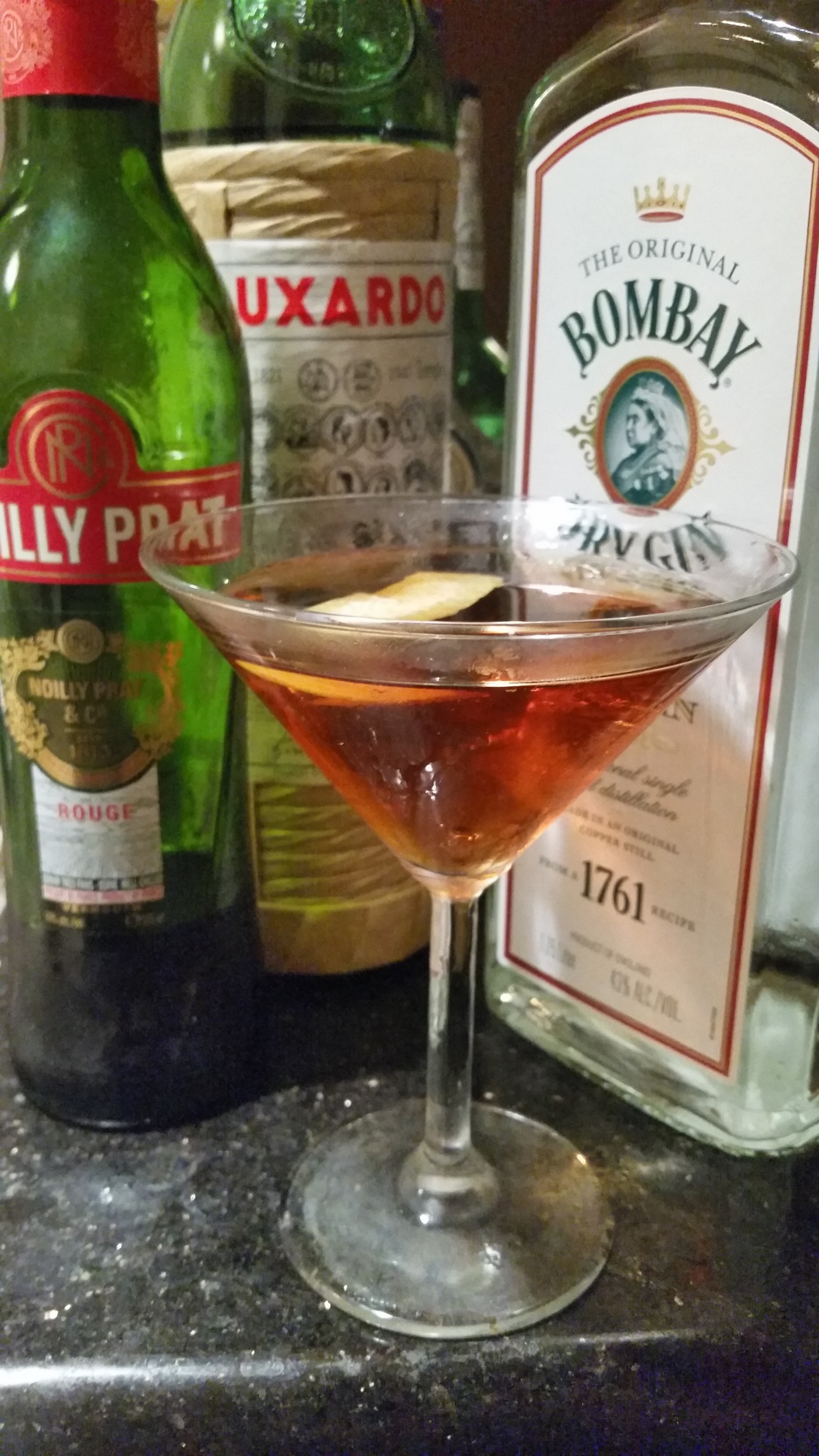
the Martinez.You’ve got relatives, I’ve got relatives. Everyone’s got relatives. The interesting thing about them is that they can have a great many of the same components that we do; at the same time, the final result can have you shaking your head and wondering how the #$@#$# it is that you share any chromosomes at all with these people.


I believe that it’s almost a given that last week’s drink, the Fin de Siècle, was one relative of the modern day Martini However, because of the similarity in its name, the Martinez may arguably be a more direct descendent, or at least the far better known relative. The naming of the Martinez itself, it’s generally believed, has something to do with the Bay Area suburb of Martinez, California. Oddly enough, however, while Northern Californians typically pronounce the city’s name as “Mar-TEEN-is,” the way most of us pronounce the very common Spanish surname, Robert Hess and others typically call the drink the “Martin-ez.”

At the exact same time, in terms of the actual flavor of the drinks, there’s next to no similarity, beyond containing gin. This is a sweet and actually very accessible drink that uses sweet vermouth (often referred to in cocktail books as Italian vermouth) instead of dry vermouth (aka French vermouth).

In any case, the version I’m presenting is significantly less sweet than many of the earlier versions for two reasons. Many variations — including a very decent one proffered by master bartender Robert Hess — actually include more sweet vermouth than gin, while mine is kinda sorta almost like a sweet version of the beverage now known as the Fitty-Fitty. Just as important, many versions of the Martinez including most of the older ones, call for Old Tom Gin — basically your standard London dry, rendered un-dry by some sugar water. As you might guess, that version is very, very sweet.

I rather like the iteration below, approachably sweet while still being nicely balanced and usually quite potent.

The Martinez

1 1/2 ounces dry gin
1 1/2 ounces sweet vermouth
1 smidgen Maraschino liqueur
1 dash orange bitters
1 lemon twist (borderline essential garnish)

Add the prescribed amount of dry gin and sweet vermouth to a mixing glass or cocktail shaker. Next, do what Robert Hess does and just barely tip the Maraschino bottle over and pour as little as you possibly can of the bittersweet cherry liqueur and also add a regular dash of orange bitters.

Stir vigorously, or shake if you prefer to maybe cut the sweetness a bit. (I lean towards stirring here.) Strain into a chilled cocktail glass and be sure to add your lemon twist in the proper manner, running the outside of the peel around the rim of the glass and then twisting it, shiny side down, over the drink to express the oils into your drink. It definitely helps to take the edge off the sweetness. Orange twists, which are sometimes called for, don’t work as well, I found.

****

I know my picture above features Noilly Pratt — and the results with this drink were very good. Still, to really make your Martinez shine, I’ve got to once again speak up for Carpano Antica,which definitely takes the drink in a more mature and well-balanced direction. This time, also, for some reason I noticed a dramatic distinction between the two brands of gin I was using; the premium Bombay Dry was a distinct improvement over the very decent, but less notably less flavorful (and cheaper) Gordon’s Gin.

Now, returning to the question of whether the Martinez is the most direct descendent of the Martini…I personally don’t think so. Next week we’ll be concluding with a drink that actually might be the missing link between the Martinez and the Martini. Stay tuned.

Burning nitro with Patron Funny Car driver Alexis DeJoria

alexis-dejoria-patron-cockpit

To some people, Alexis DeJoria is the wife of “Moster Garage” star Jesse James. To others, she is the daughter of Jean-Paul DeJoria, billionaire businessman and co-founder of Paul Mitchell hair products and the Patron Spirits Company. But on the NHRA Mello Yello circuit, Alexis DeJoria is one of the best Funny Car drivers on the tour.

We spent two days with Alexis and her team from Kalitta Motorsports at the Kansas Nationals at Heartland Park in Topeka, and inadvertently found ourselves in the middle of the most exciting weekend in the history of the sport.

The day before we arrived, during the second day of qualifying, DeJoria ran the best run of her career, an Elapsed Time (ET) of 3.994.

During the weekend, there were a total of 15 three-second runs. There were 19 three-second runs in the entire 2014 season.

In this video, Alexis talks about how her car accelerates faster than anything on earth (yes, even a fighter jet), how she got into racing, and her career-defining victory in the 2014 NHRA U.S. Nationals, it’s 60th anniversary, a feat akin to winning the Super Bowl.

While ET (the time it takes the car to get from the starting line to finish line) determines qualifying order, it is not as important on race day.

On race days, the car that crosses the finish line first wins, regardless of ET. So the quicker car might not be the winning car, because that driver may have left the starting line slower.

kansas-nationals-alexis-dejoria

For any driver, a time in the low fours is considered a successful run. But in Kansas on this weekend, the perfect storm of weather conditions and high performance vehicles combined for the most sub-four runs in one weekend, ever.

So what does that even mean? Each run, or “pass” is 1,000 feet. Going a thousand feet in under four seconds means the cars are travelling at speeds in the 300-315 MPH range. Alexis’ car goes from a complete standstill to 100 MPH in less than one second.

Continue reading »

« Older posts Newer posts »

© 2026 Bullz-Eye Blog

Theme by Anders NorenUp ↑