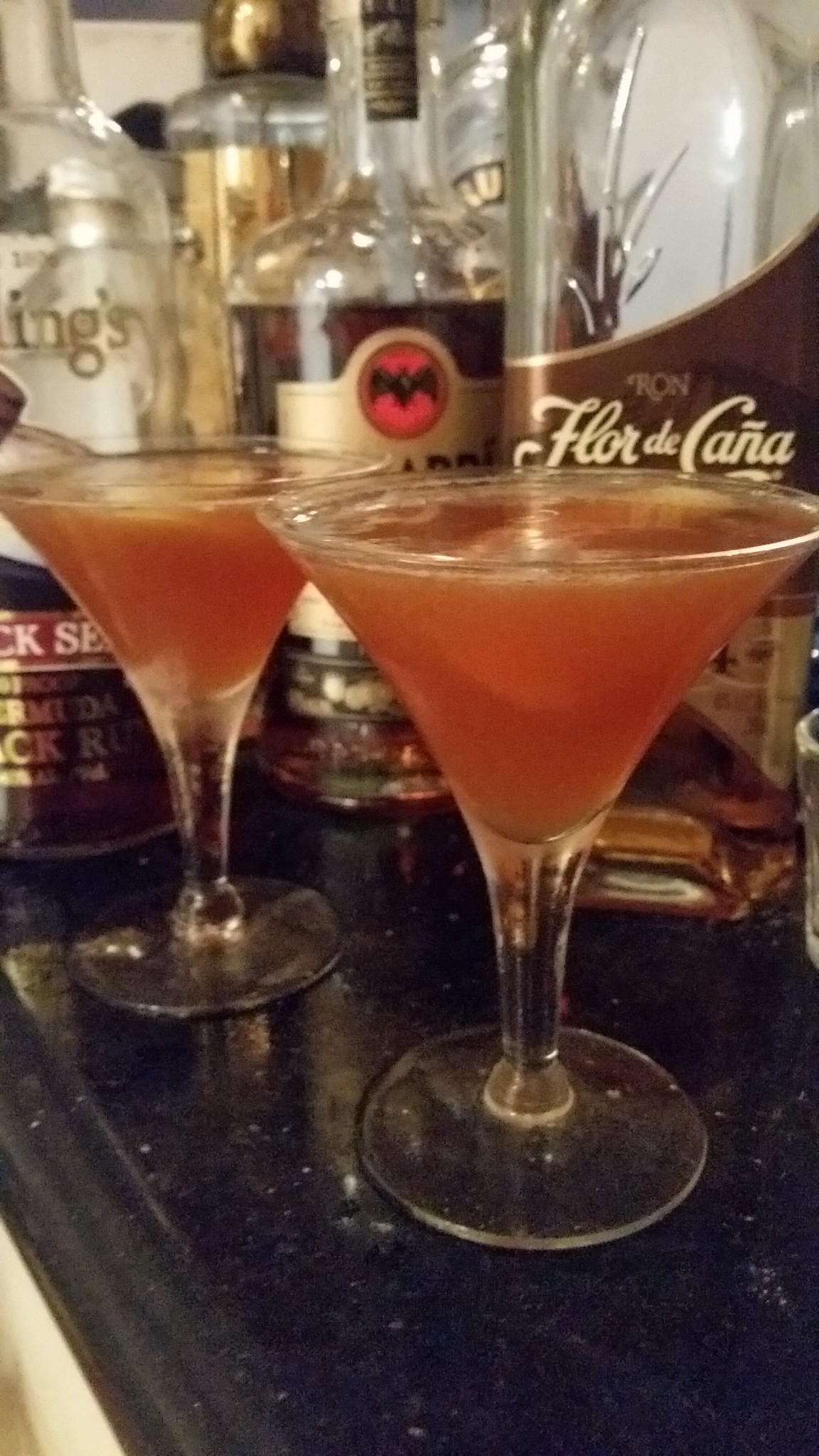
 You’ve never heard of the Captain’s Blood and, until about 24 hours prior to when I began writing this, it didn’t register with me, either. I stumbled over this variation..I’m tempted to say “improvement”…on the classic daiquiri in Robert Hess’s trusty 2008 “The Essential Bartender’s Guide,” though this precise recipe is actually from Hess’s vlog.
It’s apparently a fairly old drink, and it’s name — quite probably drawn from the 1922 Rafael Sabatini pirate novel and/or its swashbuckling 1924 and 1935 film adaptations — suggests a prohibition or post-prohibition provenance. Yet, even among lost beverages, the Captain’s Blood is a bit of a dark horse. Among the better known cocktail tomes, it only appears to have shown up in David A. Embury’s 1948 “The Fine Art of Mixing Drinks.” The Embury recipe is severe indeed — the sweetest ingredient is dark rum. Fortunately, the Robert Hess version has just the right amount of sweetness.
The Captain’s Blood
1 1/2 ounces dark rum
1/4 ounce fresh lime juice
1/4 ounce simple syrup
1-2 dashes aromatic bitters
1 lemon twist (optional, but desirable, garnish)
Combine the rum, juice, syrup, and bitters in a cocktail shaker, add ice, and shake. (If you’re having a hard time measuring a mere quarter ounce, note that 1 and 1/2 teaspoons, i.e., half a tablespoon, is the same as 1/4 ounce.) Strain into a chilled, smallish cocktail glass and add your lemon twist if you’ve got it. Try not to drink this one too quickly, as it has a lovely aroma, but it tastes good enough that you might find it gone in about 45 seconds anyway.
****
My first night out, I tried this drink with several different premium brands — Bacardi 8 (Robert Hess’s choice), Gosling’s Black Seal, and my old pal Brugal 1888, and the results were consistently very, very good. Later selections were a bit less stellar. Papa Pilar’s absolutely delicious dark rum seemed to overpower the thing while, conversely, Flor de Cana dark rum seemed a wee bit dry.
And there’s no getting around the seafaring connotations of this drink which has made it an occasional offering at tiki themed bars, though mostly in highly adulterated versions, I suspect. You can find recipes online that call for super-sweet Rose’s Lime Juice or maraschino. Who knows, they might not be bad. On the whole, however, I’m not in any mood to mess with the Captain’s Blood.
 People who know me in real life know that, if there’s a way to worry about something, I’ll find it. However, one thing I never worry about is running out of cocktails to write about for these blog posts. It’s not just that people have been making up new drinks since well before the Industrial Revolution, it’s the fact that making up a new cocktail is absurdly easy. Find a great cocktail, switch out one or two ingredients that work about as well, and voilà, you too can be the creator of a mixological milestone (that no one will probably notice).
 First of all, let’s get one thing straight: no tigers were juiced in the making of this DOTW post. Moreover, I’m pretty sure, the makers of Tiger’s Milk bars don’t actually have the courage to milk actual members of the feline genus panthera to make their product.
 The Boulevardier, which hails from Paris (where else?), has been featured here before, but it is less well known than its very close Italian relative,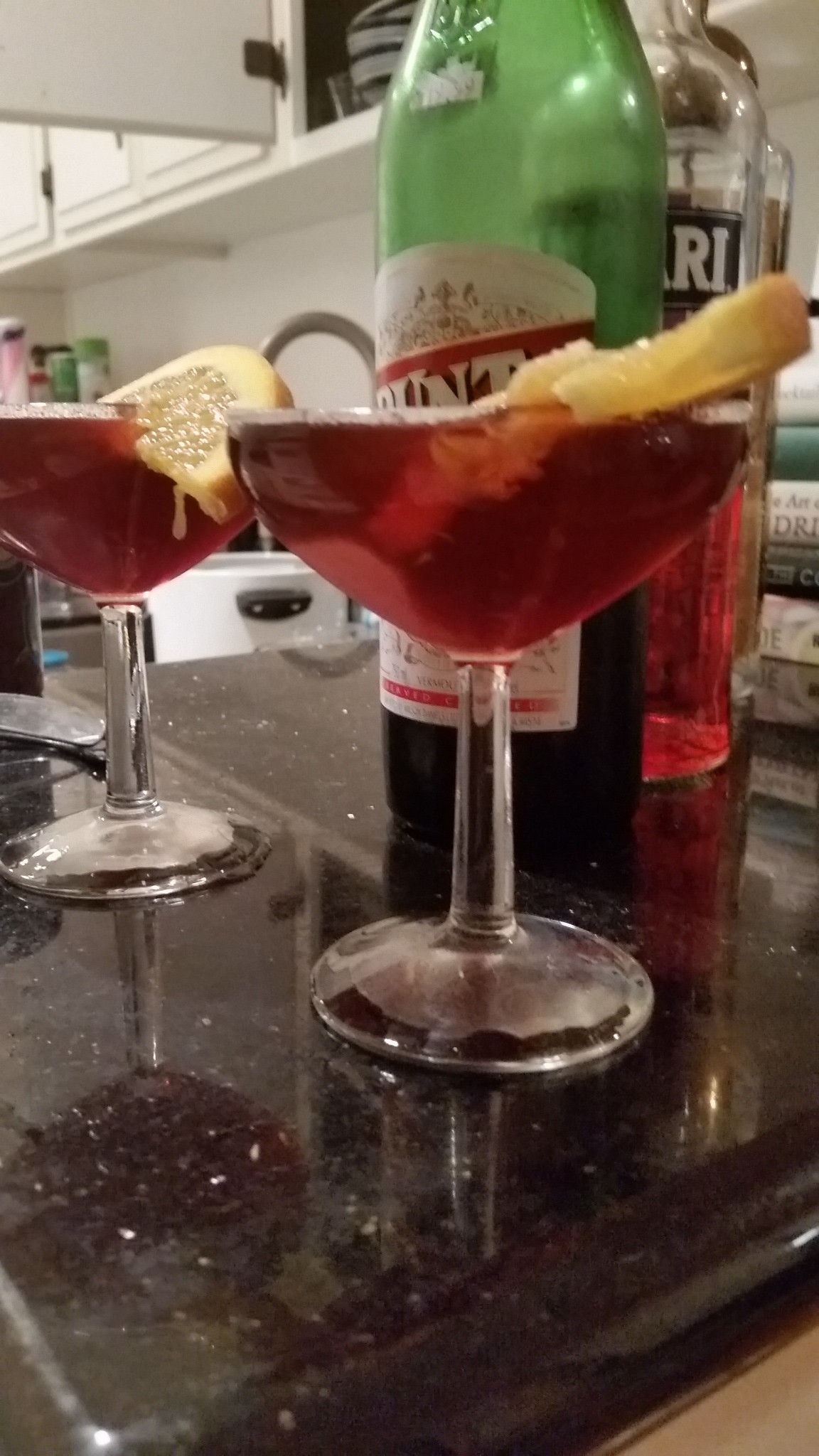
 One of the trickiest aspects of being a home cocktailer is simply having all the right ingredients on hand for the particular drink you want to be making at any given time. It gets slightly trickier with drinks that call for vermouths, since, even when refrigerated after opening, they have a pretty limited shelf-life. Most experts advise us to use a bottle within a month or two at the latest. Sweet, dry, or blanco, they all get progressively less tasty over time.


