Category: Entertainment (Page 82 of 277)

Blu Tuesday: Big Eyes, Batman vs. Robin and Odd Man Out

Every Tuesday, I review the newest Blu-ray releases and let you know whether they’re worth buying, renting or skipping, along with a breakdown of the included extras. If you see something you like, click on the cover art to purchase the Blu-ray from Amazon, and be sure to share each week’s column on Facebook and Twitter with your friends.

“Big Eyes”
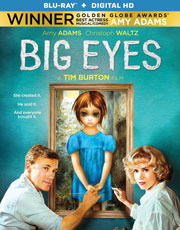
WHAT: In 1958, aspiring artist Margaret Ulbrich (Amy Adams) leaves her husband for a fresh start in San Francisco, and before long, she marries smooth-talking artist Walter Keane (Christoph Waltz). But when Walter starts taking credit for Margaret’s kitschy paintings (after all, they both sign their art “Keane,” and Walter insists they’re a team), the lie grows so big that Margaret is unable to stop it in fear that the whole Keane empire, and her life’s work, will be tarnished in the process.

WHY: Tim Burton’s first live-action feature to not star Johnny Depp in over a decade may be a bit of a departure for the oddball director, but “Big Eyes” is his best film in years, even if that comes off like a backhanded compliment considering some of the recent garbage he’s released. Amy Adams delivers an outstanding performance as Margaret Keane, whose façade of female empowerment is stripped away by Walter’s passive-aggressive bullying, leaving behind an emotionally defeated shell of a woman that Adams plays with such honesty that you feel her heartbreak with every betrayal. And though Christoph Waltz’s bombastic fraud isn’t afforded the same level of complexity, he still takes what could have been a one-dimensional character and turns him into somewhat of a tragic figure, so desperate for recognition that it’s sad to watch as he becomes consumed by his own lie. Unfortunately, “Big Eyes” doesn’t feel like a Burton movie at all, to the point that it makes you wonder what drew such a creative and visual filmmaker to what’s pretty standard biopic material. Kudos to the director for taking a break from his usual genre leanings in order to make a more straightforward drama, but while “Big Eyes” features some strong lead performances and a fascinating story, just like Margaret Keane’s paintings, it never amounts to more than a pleasant distraction.

EXTRAS: There’s a making-of featurette and some Q&A highlights.

FINAL VERDICT: RENT

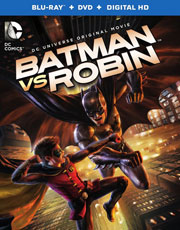
“Batman vs. Robin”
WHAT: After being trained as a killer by Ra’s al Ghul, young Damian Wayne (Stuart Allan) is having difficulty adjusting to Batman’s moral code and his new role as Robin. So when a secret society known as the Court of Owls tries to recruit Damian to their cause, he’s forced to decide what kind of hero he wants to be: one that seeks justice or vengeance.

WHY: “Batman vs. Robin” is just the latest in a line of mediocre animated films from DC Comics. The biggest problem with the movie is its horribly misleading title, because the dynamic duo only faces off against each other once, and even then, it’s a relatively brief skirmish that ranks as the weakest of the included action scenes. A direct sequel to last year’s “Son of Batman,” the movie integrates elements from Scott Snyder and Greg Capullo’s popular “The Court of Owls” story arc into the continuing narrative of Damian’s transformation into Robin. Unfortunately, Damian is such an incredibly annoying character (made even worse by Stuart Allan’s irritating voice work) that you don’t care what happens to the pint-sized brat, and the story suffers as a result. The rest of the characters don’t fare any better, particularly Batman, who resorts to fighting inside a lame robot suit for the climactic battle in what the filmmakers probably thought would be the film’s crowd-pleasing moment. Instead, it’s when Alfred enters the fray seconds later armed with a shotgun, and for as great as that moment may be, it’s a rare highlight in an otherwise forgettable movie.

EXTRAS: There’s an audio commentary with the filmmakers, a pair of featurettes on the Court of Owls and the Talons of the Owls, a sneak peek at “Justice League: Gods & Monsters” and four bonus cartoons from the DC Comics vault.

FINAL VERDICT: SKIP

“Odd Man Out”
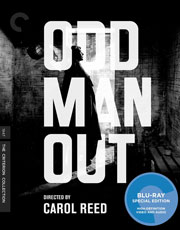
WHAT: When IRA gunman Johnny McQueen (James Mason) is shot during a failed robbery in Northern Ireland, he’s forced to go on the run, seeking refuge throughout the city while being hunted by the police. As Johnny’s fellow conspirators are captured one by one, his lover (Kathleen Ryan) enlists the help of the local priest to track him down.

WHY: Carol Reed is probably best known as the director of “The Third Man,” and for good reason, because it’s one of the greatest films of the 1940s. Just two years before making that movie, however, Reed directed an adaptation of F.L. Green’s novel, “Odd Man Out,” and though it shares many of the same visual cues as “The Third Man,” it doesn’t hold up as well. That’s partly because it’s very much a product of its time, and as such, there are a lot of silly things that transpire over the course of the film that simply don’t make sense. (The fact that all of the characters refer to McQueen’s criminal group as “the organization” and not the IRA, which it very clearly is, smacks of political censorship.) Additionally, the setup is weak and the ensuing story isn’t particularly interesting, losing focus in the latter half as it devolves into a bunch of metaphysical psychobabble. James Mason delivers some good work as the speechless, almost zombified protagonist, and Kathleen Ryan is the unsung hero of the piece, but it doesn’t have the “wow” factor of “The Third Man” to make up for its lesser qualities.

EXTRAS: In addition to a pair of new interviews with British cinema scholar John Hill and music scholar Jeff Smith, there’s a new featurette about the film’s production, the 1972 documentary “Home, James,” the 1952 radio adaptation of the movie, and an essay by critic Imogen Sara Smith.

FINAL VERDICT: RENT

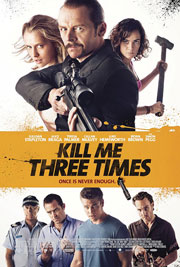
Movie Review: “Kill Me Three Times”

Starring
Simon Pegg, Teresa Palmer, Sullivan Stapleton, Alice Braga, Callan Mulvey, Luke Hemsworth, Bryan Brown
Director
Kriv Stenders

“Kill Me Three Times” is the sort of Quentin Tarantino poser film that peaked in the early ‘00s, when Blockbuster was still the king of home video. That’s how dated director Kriv Stenders’ latest movie feels, and unlike Tarantino’s oeuvre (as well as the really good imitators, like Guy Ritchie’s “Lock, Stock” and “Snatch”), it lacks the colorful dialogue or characters to make up for its derivative story. Though Stenders deserves some credit for assembling such a game cast, the film never quite comes together. “Kill Me Three Times” wants to be both a dark comedy and a stylish crime thriller, but the contrasting tones only end up stifling one another, underlining just how few genuine laughs and thrills that it has to offer.

Set in a sun-drenched coastal town of Australia, the movie stars Simon Pegg as Charlie Wolfe, a professional hitman who’s been hired to follow a woman named Alice (Alice Braga) when her abusive husband (Callan Mulvey) suspects her of having an affair with the local mechanic (Luke Hemsworth). After Charlie delivers proof of Alice’s adultery and is asked to finish the job by killing her, Charlie learns that he may not have to get his hands dirty at all when he stumbles upon a plot by his client’s sister (Teresa Palmer) and her meek dentist husband (Sullivan Stapleton) to settle a large gambling debt by killing Alice as part of an elaborate insurance scam. Charlie’s biggest problem is believing he can trust a couple of amateurs to do a professional’s job, setting into motion a cycle of murder, blackmail and revenge that reaches as far as the town’s crooked police officer (Bryan Brown).

Continue reading »

Jesse Malin is back with “New York Before the War”

jesse_marlin

It’s been five years since Jesse Malin’s last album of original material was released. The time since has seen him tour the world numerous times and reunite with his old band, D Generation, among other things. But finally, the time is here and his new release has been unleashed for us to immerse ourselves in.

“New York Before the War” is an excellent collection of songs that spans a wide range of styles. Taken as a piece, the 13 tracks on this new release are of higher quality than most artists best-of collections. One after another, the tunes come at you in a range of styles. Highlights include “She Don’t Love Me Now,” a song with so much Rolling Stones-like swagger and sway you can imagine Mick singing it, but then you remember that the Stones haven’t recorded anything damn near this good in 30-plus years; “Oh Sheena,” an ode to The Ramones that also has some flourishes that bring to mind “Summerteeth”-era Wilco; and “Turn Up The Mains,” which has a building intensity that feels like it’s going to launch into another sonic stratosphere, but instead teases and tempts your ears with a consistent attack. The first time I heard Jesse road-test “Bar Life” almost two years ago, my jaw dropped. It was not only a gorgeous tune that sounded unlike anything else in his canon, but it also happened to feel like a perfect album closer. As it turns out, it does close “New York Before The War” in beautiful fashion. The first thing I want to do the minute it ends is play the album again from the top.

The biggest difference between Jesse’s previous releases and “New York Before the War” is scope of sound. His debut solo release, “The Fine Art of Self Destruction,” had the feel and isolation of Bruce Springsteen’s “Nebraska” filtered through the less minimal sound of Joni Mitchell’s “Blue.” 2010’s “Love It to Life” showed more of a biting edge and inched slightly closer to the sound of his old band than his solo work in some aspects. Each of his other albums also had a feel unto themselves. “New York Before the War” has all of that and so much more. Be it an overt ode to the Ramones, hints of Cheap Trick and the Mermen, or the simple fact that New York oozes from every pore. With this offering, Jesse has made an album that is both his most diverse and most New York to date. The influences are there and they are many, but more than anything, this album is pure, unadulterated Jesse Malin at his best. Is this his masterpiece? I’m a believer that time decides those things. I’ll tell you this: it sure sounds like a masterpiece, and it’s quite easily the best new release I’ve heard by anyone in quite some time.

Continue reading »

Blu Tuesday: A Most Violent Year, The Voices and More

Every Tuesday, I review the newest Blu-ray releases and let you know whether they’re worth buying, renting or skipping, along with a breakdown of the included extras. If you see something you like, click on the cover art to purchase the Blu-ray from Amazon, and be sure to share each week’s column on Facebook and Twitter with your friends.

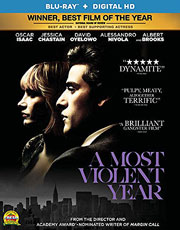
“A Most Violent Year”

WHAT: Set in New York City during 1981, Abel Morales (Oscar Morales) finds his heating oil company embroiled in a turf war at the worst time possible. He’s just gone into escrow on a waterfront fuel yard that could take his business to the next level, but when a young district attorney (David Oyelowo) launches an investigation into Abel’s company, everything that he’s worked so hard to create threatens to come tumbling down.

WHY: Over the course of three movies, J.C. Chandor has established himself as one of the most promising American filmmakers of his generation, and “A Most Violent Year” is his best one yet. A smartly directed character study of a man fighting to uphold the antiquated ideals of the American Dream, the movie is very much a product of its time period, owing a lot to the work of Sidney Lumet and other 1970s classics like “The French Connection” and “The Godfather.” You’d never imagine that a film about the heating oil industry could be so absorbing, yet that’s exactly what makes “A Most Violent Year” so unique, defying the typical gangster movie conventions every chance it gets. Oscar Isaac has never been better, commanding the screen with an ice-cold intensity that evokes Al Pacino in his prime, while Jessica Chastain delivers a deliciously fierce turn as his mob-connected wife. Much like last year’s underrated crime drama “The Drop,” “A Most Violent Year” is the kind of movie that Hollywood doesn’t make often enough, but with brave new voices like Chandor behind the camera, it’s hard to argue against the need for more just like it.

EXTRAS: In addition to an audio commentary by writer/director J.C. Chandor and producers Neal Dodson and Anna Gerb, there’s a pair of production featurettes, an interview with stars Oscar Isaac and Jessica Chastain, and some deleted scenes.

FINAL VERDICT: RENT

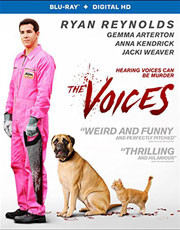
“The Voices”

WHAT: Jerry Hickfang (Ryan Reynolds) is a socially awkward but overall nice guy who’s just trying to lead a normal life in the wake of a family tragedy. But when he gets stood up by office crush Fiona (Gemma Arterton), only to cross paths with her later that night, he inadvertently murders her in the middle of the woods. At least, he thinks it’s an accident, but Jerry hasn’t been taking his meds lately, which is why he’s starting to hear voices – namely, his loyal dog Bosco and sociopathic cat Mr. Whiskers – urging him to kill again.

WHY: Ryan Reynolds has had some really bad luck with blockbuster filmmaking (see: “Green Lantern,” “R.I.P.D.”), but he’s delivered some of his best work on the other end of the spectrum in small indies like “Buried” and “The Captive,” and that trend continues with “The Voices,” a flawed but amusing dark comedy that plays like a strange mix between “Doctor Dolittle” and “American Psycho.” The movie is unlike anything the actor has done before, channeling Norman Bates as the sweet but creepy schizophrenic in addition to voicing the pets that serve as Jerry’s very own shoulder angel and devil. It’s his interactions with them, as well as the reanimated severed heads of his victims that he keeps stored in the refrigerator, that produce some of the best moments, putting Reynolds’ deadpan comic delivery to great use while still allowing the actor to challenge himself in a more nuanced role. Though the film straddles a fine line due to its off-kilter tone, Reynolds and the supporting cast (including Gemma Arterton and Anna Kendrick) do just enough to make “The Voices” an enjoyably weird genre flick with an unexpected dash of humanity.

EXTRAS: There are four production featurettes that cover the making of the movie, the many voices provided by Ryan Reynolds and visual effects, as well some animatics, deleted and extended scenes, and a cast and costume sketch gallery.

FINAL VERDICT: RENT

Continue reading »

Drink of the Week: The Egg (TCM Fest Salute #1)

The Egg.Yes, it’s time for another four-part  salute to the just now bygone Turner Classic Movies Festival of 2015. For the second year in a row, I’ll be presenting cocktails of my own creation inspired by some of the amazing films I saw this year. (If you’re interested in last year’s selections, start here and work your way backwards.)

We’re starting with a drink inspired by the restoration I was personally most anxious to see, not because it’s a particularly well made film but because it’s such a strong piece of material that all producer Jack L. Warner had to do was buy a Broadway show lock stock and barrel, including all of the original cast, and just throw it up on the screen, which is pretty much exactly what happened.

I speak of 1972’s film version of”1776,” a musical which began with an odd conceit by history teacher turned Brill Building songwriter Sherman Edwards. It suggested that a play about the creation and signing of Thomas Jefferson’s Declaration of Independence should involve singing and some fairly broad comedy along with the more serious history lesson. It’s a childhood favorite I (and a bunch of my friends, for some reason) have carried on into adulthood, and it seems like the perfect inspiration for a drink that’s as messy as our nation’s history. It’s basically a flip, a drink as old school as it gets, while being more than a bit radical in terms of its many ingredients.

Yes, I’ve found yet another excuse to make a drink using the world’s most delightfully controversial cocktail ingredient. That’s because today’s drink takes it’s name from my favorite song in “1776,” which compares to the birth of a nation to the birth of it’s national bird…and you know where little birds come from.

The Egg

3/4 ounce Laird’s Applejack
3/4 ounce 1776 Rye Whiskey
1/2 ounce Cherry Herring
1/2 ounce Cynar
1 teaspoon cherry syrup (Torani)
1 teaspoon raspberry syrup (Torani)
1 whole egg
3-4 drops Peychaud’s Bitters (important garnish)

Combine the egg and all the liquid ingredients other than the bitters in a cocktail shaker. Shake without ice to emulsify the egg. Add lots of ice and shake again, much more vigorously this time. Strain into a chilled wine glass. Wait for just a moment as a small cap of foam will appear at the top of the glass. Add 3-4 drops of bright red Peychaud’s Bitters to the top for color. Toast the many flavors that comprise this problematic but fabulous country.

*******

Now, on to the ingredients. Rye, perhaps even more than bourbon, is probably the most authentically North American whiskey and, well, I simply couldn’t ignore the highly coincidental brand name, 1776. Applejack, basically American-style apple brandy, was largely forgotten until recently but it’s the quintessential early American spirit. A version of it was made and sold by no less than George Washington himself. (Yes, General Washington had little to do with the declaration and is not physically present in the play or film “1776,” but he nevertheless plays an important off-screen/off-stage role.)

The rest of my selections here take their cue from the fact that Declaration of Independence author Thomas Jefferson was a farmer who was personally quite partial to vegetables and fruit over meats and such. Cynar is a bittersweet liqueur that’s well known to the cocktail cognoscenti as being derived from artichokes, which were grown at Jefferson’s Monticello along with, you guessed it, raspberries and cherries. Peychaud’s bitters were selected largely for their bright red/pink color but also because they hail from the city of New Orleans, circa 1830. That capital of cocktailing was, of course, acquired for our great nation a few decades after 1776 by President Jefferson as part of the 1803 Louisiana Purchase

Now, I readily admit that there’s nothing in particular in my drink that represents John Adams, the actual protagonist of “1776,” or the great sage and comedy relief of the piece, Benjamin Franklin. Yet, if you dare to try this drink out for yourself — and I think you really should — you’ll find a lively and enjoyable discussion taking place amongst your taste buds, and these were three men who all definitely had their own distinctive points of view. Unfettered debate, with or without rancor, is the very heart of this nation at its best and, this time, I think it’s also the heart of a good drink. I’ll also say that there is no way on earth this drink would work were it not for the unifying factor of the whole egg, which can paper over a million gustatory conflicts.

If you try the Egg and hate it, well, that’s okay. We can’t win every argument. And maybe the dove or the turkey really should have been our national bird. To find out what I mean, observe the mastery of William Daniels as John Adams, Ken Howard as Jefferson, and the late, great Howard da Silva as Franklin, as they discuss the matter at hand

« Older posts Newer posts »

© 2026 Bullz-Eye Blog

Theme by Anders NorenUp ↑