Author: Rob Dean (Page 7 of 9)

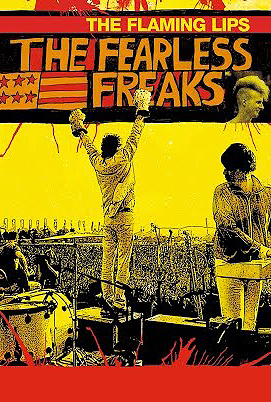
Missing Reels: “The Fearless Freaks” (2005)

Missing Reels examines overlooked, unappreciated or unfairly maligned movies. Sometimes these films haven’t been seen by anyone, and sometimes they’ve been seen by everyone… who loathed them. Sometimes they’ve simply been forgotten. But in any case, Missing Reels argues that they deserve to be seen and admired by more people.
the_fearless_freaks

“You don’t even have to be a fan of the music!” That’s a lie that people often spread about music-centered films. Whether it’s a biopic, a documentary or a concert film, fans of the movie will insist that, in order to like it, viewers don’t even have to like that particular artist’s music. It simply isn’t true. If you don’t like Ray Charles music, then those recording sessions in “Ray” will seem fruitless; if you’re not a fan of The Talking Heads, then “Stop Making Sense” is an interminable bore. No matter how well crafted the film is around those scenes, or how well shot the performances are, if you don’t dig the music on display, you won’t really like what’s happening on screen.

So I won’t repeat that lie here about the music of The Flaming Lips when watching the documentary “The Fearless Freaks.” I will, however, say that there’s a lot more going on here than just the music, which is true of the band itself. The Flaming Lips have always been about the experience, whether it’s their four-disc Zaireeka album played simultaneously, or their freak-out concerts, and the same goes for the documentary which covers their odyssey from crappy punk band to psychedelic musical masters. It helps if you’re already partial to some of their music to enjoy this film, but if not, then hopefully you can enjoy its simple story and arresting images.
Continue reading »

Third Time’s Not the Charm: The worst threequels in cinema

third_times_not

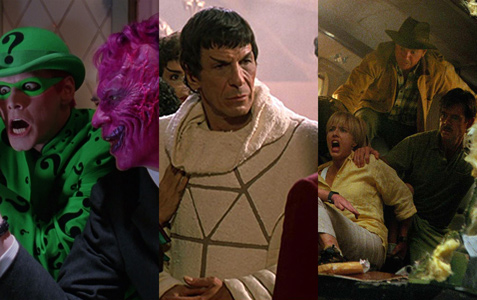
Sometimes it’s best to quit when you’re ahead. It’s tempting to keep on going with the gravy train and assume that the cash will just flow in based on the name alone, but sometimes that means coming up with paper-thin excuses to make a movie, to tell a tale no one was asking for, and to simply try to skate by on the goodwill of the former films. Some of these duds are nadirs of the series; some of them are just portents of worst things to come. A couple would be the forerunners for better films (“Rambo” is a great return to the brutality and morality of “First Blood,” and many Trekkies hold “Star Trek IV” close to their hearts), but for the most part, these third entries are unabashed attempts to cash in on known quantities without any of the artistic merits of the previous two films.

There are some pretty good threequels as well, but these ten films aren’t anywhere in the neighborhood of being considered good. In conjunction with the upcoming release of “Star Trek Beyond,” the third part in the new Kelvinverse “Star Trek” series, it’s time to reflect on the ten worst threequels in film history.

Continue reading »

Third Time’s the Charm: The best threequels in cinema

third_time

The third entry in a film franchise can often be a real lull in the series that barely extends a reason for it to continue. However, there are more than a few examples of great Part Threes (or threequels, if you’ll allow the portmanteau) in cinema where they not only justify their existence but stand alone as great and entertaining films in their own right. Some of them are wrapping up trilogies (or impromptu trilogies), while others give the series a resurgence of energy and importance, but they all deliver the goods when people could have easily just gone on autopilot. As audiences prepare to see what type of movie “Star Trek Beyond” will be, here are the top ten best threequels in film.

Continue reading »

The Sound of Laughter: Why the music business lends itself so well to comedy

sound_of_laughter

Music and comedy have gone together for ages, ever since the first little ditty with nonsense words, or a dirty limerick put to music, all the way up to the operettas of Gilbert and Sullivan, vaudeville and even “Weird Al” Yankovic. Comedies have used music to great effect in the past, whether it’s the crooning of Nick Rivers in “Top Secret,” the lip-synching to Queen in “Wayne’s World,” or the John Farnham sing-a-long turned riot in “Hot Rod,” and many others. But there is a subsection of comedy films that is particularly obsessed with music, parodying a specific brand of music and musician to great effect.

The obsession with pop culture fads is nothing new, with Hollywood chasing the music scene for laughs arguably beginning with The Monkees (see our interview with Michael Nesmith). The accompanying sitcom that poked fun at Beatlemania while aping the look and feel of “Help!” and “A Hard Day’s Night” was an early shot in the battle between comedy and music.

Continue reading »

Remade Right: The secrets to a successful remake

remade_right

Hollywood has always loved remakes, no matter how much it may seem like they’re inundating our multiplexes these days. For almost as long as movie studios have been pumping out hits for the masses, they’ve been remaking so-called classics. Sometimes it’s a matter of retelling an old story, adapting a particular book again, or even translating a foreign film into an English-language version so people don’t have to bother with the pesky subtitles. Regardless, remakes are nothing new. From adapting TV series for the big screen, to rebooting older franchises with new blood (all while tipping the hat to what came before, like J.J. Abrams’ “Star Trek”), there are plenty of remakes always being developed, and there always will be.

With the new “Ghostbusters” arriving in theaters on July 15th, it’s uncertain how that film will perform. Will it be a good update to the now-classic comedy with its own take on the material, or will it simply be a cash grab with swapped gender roles and updated F/X but nothing else of interest? It’s too soon to say, but it got me thinking of the remakes that got it right. What made those films work when so many others have failed? Why are they successful, sometimes even eclipsing the original, when the majority of remakes just feel tired and uninspired?

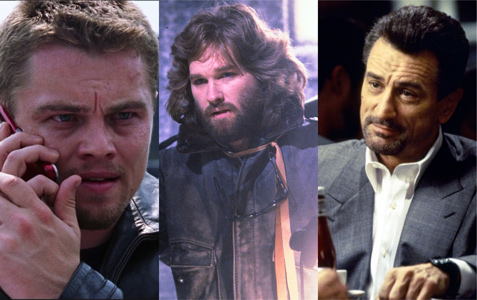
Here’s a handy list of probably the best remakes produced by studios in the past 35 years or so (in no particular order): John Carpenter’s “The Thing,” David Cronenberg’s “The Fly,” Philip Kaufman’s “Invasion of the Body Snatchers,” Martin Scorsese‘s “The Departed,” Matt Reeves’ “Let Me In,” Terry Gilliam’s “12 Monkeys,” Steven Soderbergh’s “Ocean’s Eleven,” Joel and Ethan Coen‘s “True Grit,” Michael Mann’s “Heat,” Martin Scorsese’s “Cape Fear,” James Cameron‘s “True Lies” and Mike Nichols’ “The Birdcage.”

Continue reading »

« Older posts Newer posts »

© 2026 Bullz-Eye Blog

Theme by Anders NorenUp ↑