Tag: Happy Hour (Page 40 of 81)

Drink of the Week: The Shamrock Sour

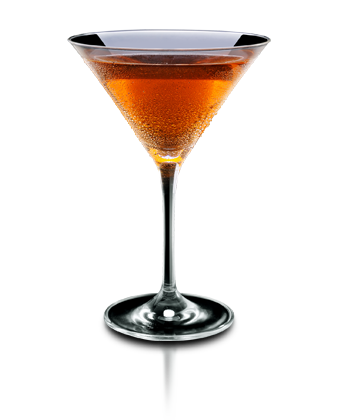
the Shamrock Sour. Okay, we admit that St. Patrick’s Day is nearly a fortnight away, but the tireless promoters of the alcoholic industrial complex have been hard at work plying me with bottles of top-quality hooch and some intriguing holiday themed recipes to go with them. In this case, we’re talking about my personal favorite member of the Jim Beam Small batch family, Basil Hayden’s. Yes, it’s only 80 proof and therefore less overtly flavoriffic than a typical high quality bourbon, but it mixes so harmoniously, I really can’t say anything bad about it. It’s definitely one bourbon that’s worth trying with just a bit of cold water or maybe some ice cubes. Sort of like a sweeter version of a very nice Scotch.

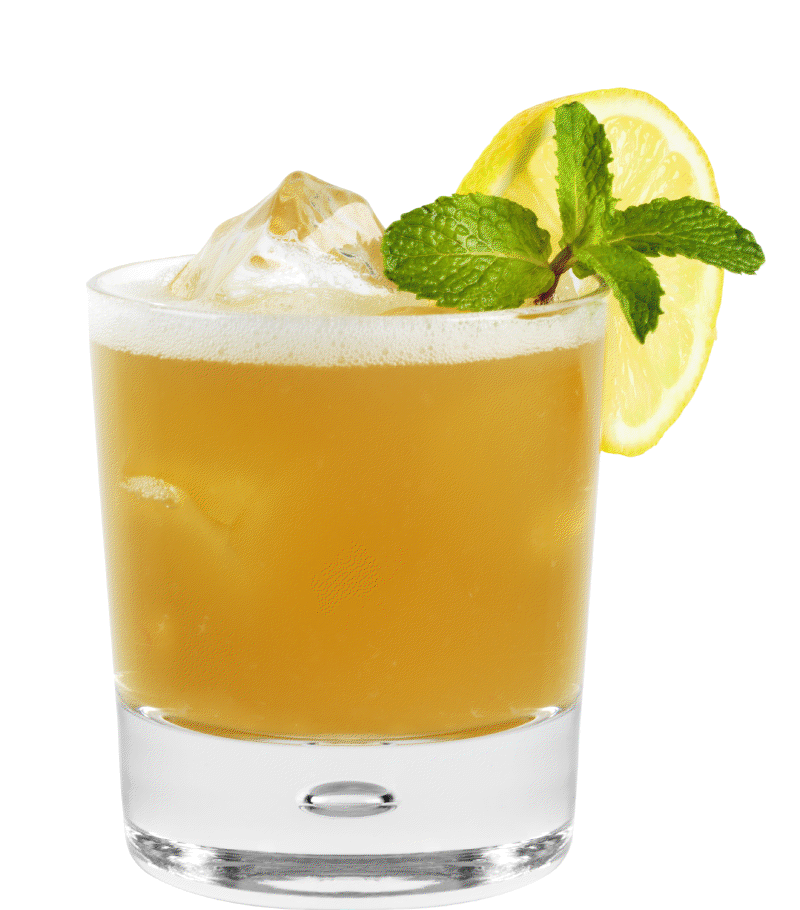
Nor do I have anything but nice things to say about the Shamrock Sour, a lively variation on a timeless tonic developed by New York mixologist and proprietor, Julie Reiner, who appears to be something of a budding superstar in the bar game. I can’t think of a better final chapter to wrap up the quartet of delicious sours I’ve been featuring in recent weeks.

Now, I would agree with naysayers that the Irish/St. Patrick’s Day bonafides of any bourbon-based beverage are very seriously in doubt — it’s not like Kentucky is any kind of Irish-American enclave. On a more superficial level, the Shamrock Sour isn’t even particularly emerald colored, a bit of very expensive but worth it green chartreuse notwithstanding. Still, if the choice is between good taste and thematic consistency, I have to go with the taste. On the other hand, we’ll be trying out another drink using actual Irish whiskey as the big boozing day approaches. For now, however, I wholly endorse the Shamrock Sour for St. Patrick’s Day, or any other day. Authenticity, be darned.

The Shamrock Sour

2 ounces bourbon (preferably Basil Hayden’s®, naturally)
1/2 ounce green chartreuse
1/2 ounce fresh lemon juice
1/2 ounce grapefruit juice, preferably fresh
1/4 ounce agave nectar
1/4 ounce water (to mix with the agave nectar)
1/4 ounce egg white
1 lemon wheel (highly desirable garnish)
1 sprig of fresh mint (even more desirable garnish)

Combine bourbon, chartreuse — a highly distinctive a-little-goes-a-long-way liqueur whose complete formula is known only to a pair of monks in France’s Chartreuse Mountains — and juice in a cocktail shaker. Mix the agave nectar with an equal amount of water to make 1/2 ounce of agave syrup. Add the egg white and, as usual with egg cocktails, shake vigorously before you have added ice.

Then, add ice, shake again very vigorously and pour over fresh ice into a fairly good size rocks glass. Add a lemon wheel and mint sprigs, which I think is actually an important part of the flavor here, particularly the mint. Toast the people of Ireland (who gave us James Joyce), the people of Kentucky (who gave us two of my favorite character of recent pop culture, Raylan Givens and Abraham Lincoln), and why not throw in those Carthusian monks and Julie Reiner while you’re at. I know I’m grateful to all of them.

****

This really is an especially well-balanced whiskey sour variation. Aside from the good booze, the agave, and the all important (though viscous and therefore tricky to measure out), egg white, the secret ingredient in here is the grapefruit. In fact, I have to credit this drink for dispelling my childish dislike of the bittersweet citrus fruit with legendarily healthy properties. I hated the stuff as a child and always remembered it as just bitter and ultra tart. I’m embarrassed to say that I haven’t tried eating the stuff in years. Apart from this drink, I find I now am increasingly tolerant of the stuff. It’s actually about as sweet as it is bitter, sorta kinda like the citrus equivalent of Campari or Aperol.

It’s healthy too. In fact, now I understand that grapefruit might actually help fight type 2 diabetes, an illness genetics — and my outsize enjoyment of food and drink — suggest I might fall prey to. Is it possible this is a drink that could save my life? Well, I’m definitely going to use that excuse the next time I make it.
Drink of the Week: The Meyer 100 Proof Bourbon Semi-Sour

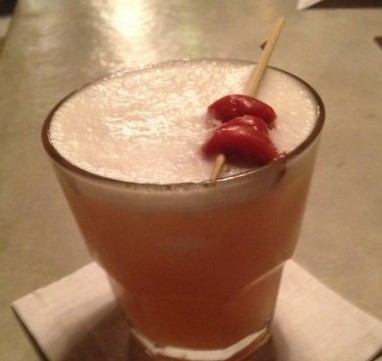
Image ALT text goes here.Corrections and retractions time. Though I totally stand behind my creation last year of the Meyer Canadian Semi-Sour, I was perhaps wrong when I described the wondrous Meyer lemon as “partly an orange.” Turns out,  it might actually be partly a Mandarin orange. That would make sense since la wiki tells us that it was once actually a primarily a houseplant in China. The humble plant’s destiny was forever changed, however, after being discovered sometime around the turn of the 20th century by a U.S. Department of Agriculture employee named Frank Nicholas Meyer.
Anyhow, with the return of the Meyer lemon to stores in my vicinity and with my recently rekindled interest in the eggier side of the sour family of cocktails, I decided to see if the juice of the more edible lemon worked as well with 100 proof bourbon as it did with the ever-so gentle, and merely 80 proof, Canadian Club I used last year. I’m happy to say that, if anything, it’s even better — as long as you like your cocktails boozy and sweet as heck.

The Meyer 100 Proof Bourbon Semi-Sour

2 ounces 100 proof (more or less) bourbon
3/4 ounce freshly squeezed Meyer lemon juice
1/2 large egg white
2 teaspoons superfine sugar
1 dash orange bitters (very optional)
1 maraschino/cocktail cherry (optional garnish)

If you’ve read my other recent sour recipes, you can probably guess what the drill will be. Combine the bourbon, juice, sugar and (if you’re using them) bitters in a cocktail shaker without ice. Shake the contents to emulsify the egg white. Then, add ice, shake a bunch more, and strain into a well chilled rocks glass. Garnish with cherry and salute the late citrus pioneer, Mr. Meyer, and mourn his untimely and mysterious passing in 1918.

*****

I used my personal default bourbon, the highly underrated, little known, and very reasonably priced Old Fitzergald’s Bonded in Bond 100 proof (aka “Old Fitzgerald Green Label”). I can’t be sure, but I suspect this recipe would also work with very high proof bourbons or something even as meek as Maker’s Mark, which I guess is going to remain 90 proof indefinitely after that brouhaha last week. (All I can say, is where were you people when Canadian Club and countless other brands went from 86 to 80 proof sometime in the 1980s or 1990s?)

Re: bitters. I originally tried using Angostura in this, but found it an unwelcome distraction. Then I tried it without bitters at all, and found the drink absolutely wonderful. Then, I tried it again with Regan’s Orange Bitters and found the drink tasted tangier and even sweeter and not quite as much to my personal liking. However, one of my test subjects here at DOTW Manor was very pleased with this version, so I’m leaving you the option of throwing the orange bitters in. Try it both ways, I say.

Finally, there is the question of how you determine that you’re using half an egg white. I’m sure there’s a way to do that with measurements — though measuring egg whites can be a hassle, or you can do like I’d probably do and just sort of eyeball it. This time, I took the easiest and least wasteful way out and just doubled up and made two Meyer 100 Proof Bourbon Semi-Sours at the same time. This is a drink worth sharing.


Drink of the Week: The Vieux Carre

The Vieux Carre.Like most Americans, I’m not exactly a polyglot. Four years of junior high and high school Spanish have been of great assistance in helping me to order  items at taco trucks; three quarters of college French allow me to chuckle knowingly to myself when “merde!” is translated as “damn!” in subtitles. So, I can’t properly pronounce the name of the Vieux Carre, but I can tell you it means “old square.” That square, as it turns out, is off of Bourbon Street in New Orleans, and this is another fine cocktail associated with America’s most intriguing cocktail capital.
Quite obviously, however, this is not in the same category as a Hurricane and it’s not the one of the scary, gigantic green drinks featured on this year’s season premiere of “Bar Rescue.” While, for me, the Vieux Carre doesn’t quite achieve the classic cocktail nirvana of a Sazerac, this is one beverage that actually gets tastier the longer you let it sit. It’s perfect for a long conversation and, by the end of it, even ever-so-justifiably-furious bar rescuer John Taffer might get mellow enough to maybe stop shouting for just a second.

The Vieux Carre

3/4 ounce rye whiskey
3/4 ounce cognac or brandy
3/4 ounce sweet vermouth
1 teaspoon Benedictine
2 dashes Peychaud’s Bitters
2 dashes aromatic  bitters (Angostura or similar)
1 lemon twist (garnish)

Making this drink is about as easy to make as it is to get a buzz going in the French Quarter. Build over some ice cubes in a rock glass, stir, and add the lemon twist. Toast whatever or whomever you like, but do so slowly.

****

I’m very sorry to say that this week’s post completes my trilogy of drinks of cocktails featuring Camus’s Ile de Ré Fine Island Cognac. Sadly, that’s the case because I polished off the bottle last night. No disrespect to my value-priced go-to brandy, Reynal, but there’s a reason the Camus people get to charge the big bucks for this stuff. It’s great in a cocktail and remarkably easy and pleasurable to drink neat. Good thing I still have a few airplane bottles of various Ile de Ré expressions in my alcohol laden larder.

My rye for this double-base spirit cocktail was another new freebie favorite we’ve featured here before, the lovely Templeton Rye, previously featured in the Capone.  I usually lean towards higher proof ryes like my old pal, 100 proof Rittenhouse, but that might have been a bit much in this context; Templeton’s more mellow flavor makes it a pretty perfect match for a Vieux Carre.

I experimented quite a bit with the other ingredients. Many recipes call for more booze and somewhat less of the Benedictine — a very sweet herbal liqueur which famously mixes well with brandy. I also tried three different sweet vermouths, all favorites. The lightest was Noilly Pratt, which was very nice, but an even better result was achieved with the greatness that is Carpano Antica. (Yet another freebie previously featured here).

I also tried it with another great product I’ll be featuring later, Punt e Mes. In that instance, it sort of dominated the cocktail but, since I love, love, love me some Punt e Mes, I didn’t really mind.

One final note, apparently to really do the Vieux Carre right, some people suggest you should make it with just one very large ice cube. Sounds cool, but I guess I need to find an ice cube tray that make 3″x 3″ ice cubes.


Drink of the Week: The Egg Sour

Image ALT text goes here.A coworker of mine pointed out to me recently that  a good chunk of my post on eggnog from Christmas of 2011 consisted of warnings, provisos, and disclaimers about the use of raw egg. Well, I included no such warning on my post on the amazing Pisco Sour a couple of weeks back, although that used only a pretty small amount of egg white. Today, I’m throwing all caution to the proverbial wind with a drink featuring an entire egg — yolk and all. The fact that I had about 9 bird ova in the fridge threatening to go to waste earlier this week is entirely coincidental.

The Egg Sour appears to have originated in print via Jerry Thomas’s classic bartending guide from 1887 — back in the days when refrigeration was rare and penicillin was nonexistent but people knew a tasty and seriously refreshing libation when they tasted one. This drink would also fall easily into the category of a breakfast drink. While I don’t usually go in for that sort of thing, this is certainly a first-rate, and more potent, mimosa alternative.

The Egg Sour

1 ounce cognac or brandy
1 ounce orange curaçao
1/2 ounce fresh squeezed lemon juice
1 teaspoon superfine sugar
1 large egg

Combine your cognac, curaçao, lemon juice, whole egg, and sugar, in a cocktail shaker. It’s not entirely necessary but, if you like, you can beat the egg into the rest of the ingredients to aid in the blending process. (It might be more important to observe this step if you’re attempting two Egg Sours at a time.) Next, shake all of your ingredients vigorously without ice in order to ensure a good mix. When you take off the top of your shaker, you should see a nice orangey-white froth. Add ice, shake again very vigorously, and strain into a well-chilled rocks glass. Toast the chicken, or the egg, whichever you think comes first.

***

Very observant readers may notice that a couple of ingredients are similar to last week’s drink, the East India House Cocktail, and that’s no coincidence. I took advantage of my newish bottle of curaçao and the lovely, and very free, fifth of Camus Ile de Ré Fine Island Cognac for this drink and it’s a lovely combination. I’m sure other brands of cognac or brandy, such as my value-priced fall back brandy, Reynal, will work extremely nicely here as well, though they may lack a certain touch of class.

As I said above, this is one seriously refreshing but, thanks to the lemon, not quite super-sweet drink. I tried doubling the sugar up to two teaspoons for people with stronger sweettooths, but the result actually tasted less sweet and pleasing to the tongue and had similar results with an entire teaspoon of simple syrup. Interesting.

This is the point in the blog when I usually comment on some cultural or personal aspect of a given beverage, but today’s drink is just tasty in a way that’s totally out of context with much of anything else. Maybe I should have spent more time defending my use of a raw egg.

Drink of the Week: The East India House Cocktail

The East India House Cocktail. It’s not exactly a secret around here that I greatly lean towards cocktails as opposed to drinking even truly fine spirits straight. Still, it’s fairly obvious even to me why the best cognacs and other high end brandies are among the most popular of all beverages to enjoy neat. Certainly that applies to the Ile de Ré Fine Island Cognac from the Camus line of fine cognacs with which I was recently blessed by the Powers that Booze.

The PR materials for this brandy emphasize the fact that this particular cognac actually comes from a tiny island off the coast of France which is legally included in the Cognac appellation. My grasp of French geography is nowhere near strong enough for me to know if this is a bit of alcoholic loophole, but no one seems to be complaining about the quality of this cognac which, we are told has a “maritime” feeling and a dash of iodine in its flavor. I’ve never drunk iodine, so I wouldn’t know, but this is definitely about as sippable as any brandy or cognac I’ve enjoyed, and there is a bit of similarity to a good, slightly smokey Scotch I’m sure many will enjoy. It’s also very, very good with an equal part of brandy’s best known significant other, Benedictine.

Nevertheless, while many consider it a sacrilege to make cocktails out of really outstanding cognac, breaking that particular taboo is a big part of the name of the game here at DOTW Central. Even so, we’ve managed to find a very nice cocktail that permits the cognac to be the star of the show, adding a number of sweeteners in small amounts to make for an intriguing and very drinkable whole. While not the equal of the mighty Cognac Sazerac, todays drink is worthy of the status of a very good second-tier classic.

The East India House Cocktail

2 oz cognac (or brandy, if you are an impoverished peon who doesn’t get free booze in the mail)
1 tsp. pineapple juice
1 tsp. superfine sugar
1 tsp. orange curaçao
1 tsp. maraschino liqeuer
1-2 dashes aromatic or Peychaud’s bitters
1 cherry or lemon twist (fairly optional garnish)

Combine the ingredients in a cocktail sugar, stir briefly to dissolve the superfine sugar. Add ice, shake vigorously and strain into a well chilled cocktail glass. If you’re looking for something to toast, you might consider the phylloxera louse. While it’s not typical to salute a vine-eating vermin, this wingless insect was kind enough to leave the Ile de Ré alone back in the 1850s even as it was munching up mainland wine crops. I’m not 100% sure this is relevant to the quality of the island’s cognac today; I just like saluting lice.

****
There are several versions of this drink, also sometimes referred to simply as the “East India Cocktail,” so feel free to experiment. Some versions I stumbled upon call for raspberry syrup in place of the pineapple and sugar, which sounds worth a try. Robert Hess of “The Cocktail Spirit,” dispenses with the sugar and just goes with the pineapple juice, though the original recipe called for pineapple syrup (i.e., pineapple juice and sugar). I found his version a bit lacking.

While I’m a fan of all of the ingredients, I’m not certain I’ve found the perfect mix here, so I definitely encourage further experimentation. If anyone out there has better luck with different proportions, I’d love to hear about it. I will say my favorite version featured Angostura bitters and a lemon twist, but every permutation I tried worked fairly well.

For those of you wondering about the name of this week’s drink, the East India House was a real place in London. It was the headquarters of the East India Company, which was crucial in the development of British Imperialism from the Renaissance up through the 19th century, when it was nationalized by the English parliament.

Especially if you’re of Indian or Chinese extraction or just really into human rights, you might consider a drink with a name like that to be a distasteful celebration of oppression. However, another drink I considered making this week was called the “Antebullum Mint Julep” which we are told was a drink commonly enjoyed at pre-Civil War Southern Plantations. What next, I wonder. “The Gestapo Cocktail” or, perhaps less offensively, “The Spanish Inquisition”? as you may be aware, at least that last cocktail has the virtue of being forever unexpected.

« Older posts Newer posts »

© 2026 Bullz-Eye Blog

Theme by Anders NorenUp ↑