

Blog Zones
Blog Topics More Blog Zones

Drink of the Week: The White Russian

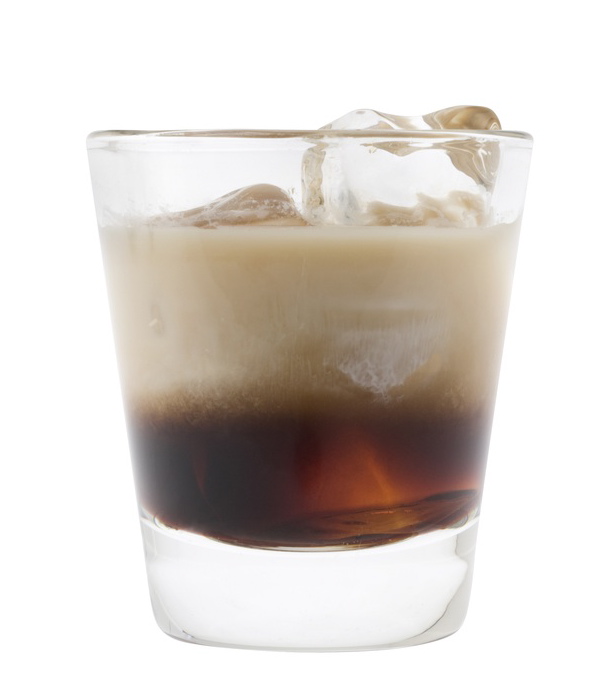
white RussianCocktail classicists beware, because this week we’re saluting the immanent blu-ray release of the Coen Brothers’ comedy classic, “The Big Lebowski,” as well as the historic Lebowski Fest cast reunion with a drink that not only contains vodka but which usually requires no shaking and perhaps not even a great deal of stirring. That’s not all, the White Russian is extremely sweet and seems to derive not from the cocktail heights of the early 20th century but closer to the mixological nadir of the 1970s. The fact that it was a drink simple enough for a stoner to love led to it being immortalized on celluloid in the aforementioned 1998 film with Jeff Bridges, easily the greatest example of the pot-driven comedy genre yet made. Next to James Bond’s shaken vodka martini, the Dude’s Caucasian — same drink, different name — is easily the most legendary of all movie cocktails.

Still, no movie can make a drink popular all on its own, and the White Russian’s appeal is obvious; it tastes like a frozen candy bar. Moreover, the fact that it contains a bit of caffeine and even some rudimentary nutrition also makes it a highly appropriate beverage, not only for achievers but for caffeine heads like me. No wonder that it was one of the first cocktails I gravitated to in my ignorant youth and no wonder I still enjoy it when the time is right. Sometimes there’s no time for a martini and a very sweet cappuccino to follow it up. Impact-wise, the white Russian gives you a bit of both.

The White Russian

1.5 ounces vodka
3/4 ounces Kahlua or other coffee liqueur
3/4 ounces of heavy cream (or somewhat larger portions of half-and-half, whole milk, or even 2% milk)

Pour vodka and Kahlua over ice in rocks glass. Add heavy cream, which should “float” over the top, or other dairy topping. Stir and proceed to get into endless arguments with your friends about whether or not urinating on a rug constitutes a Saddam Hussein-like act of imperial aggression.

***
There are a number of variations on the above, of course. You can eschew the diary product and go for a black Russian. I understand that if you use 2% or lower fat content film it’s called a Skinny Russian, which isn’t awful. On the other hand, I can tell you first hand that going past half-and-half and into the land of heavy cream will make the drink all the more tasty, though perhaps not tasty enough to warrant the eventual heart attack if you drink these things on too regular a basis. On the other hand, if you’re drinking as many Caucasians as the Dude seems to do during the course of a single day, wear and tear on your heart may not be your primary concern.

Also, I have to note cocktail historian David Wondrich‘s recipe actually calls for the drink to be made in a shaker and strained into a chilled rocks glass. It’s not bad that way, though it’s hard to imagine the Dude putting in all that work. As Wondrich points out, this is a drink beloved both by very occasional drinkers like my former self for its sweet-as-ice-cream taste and for the most down and out of out-and-out alcoholics, for whom it’s often the closest thing they’ll get to a balanced meal. Yes, a White Russian is for all, but really it belongs to just one man.


You can follow us on Twitter and Facebook for content updates. Also, sign up for our email list for weekly updates and check us out on Google+ as well.

WATCH THIS!

Drink of the Week: The Moscow Mule

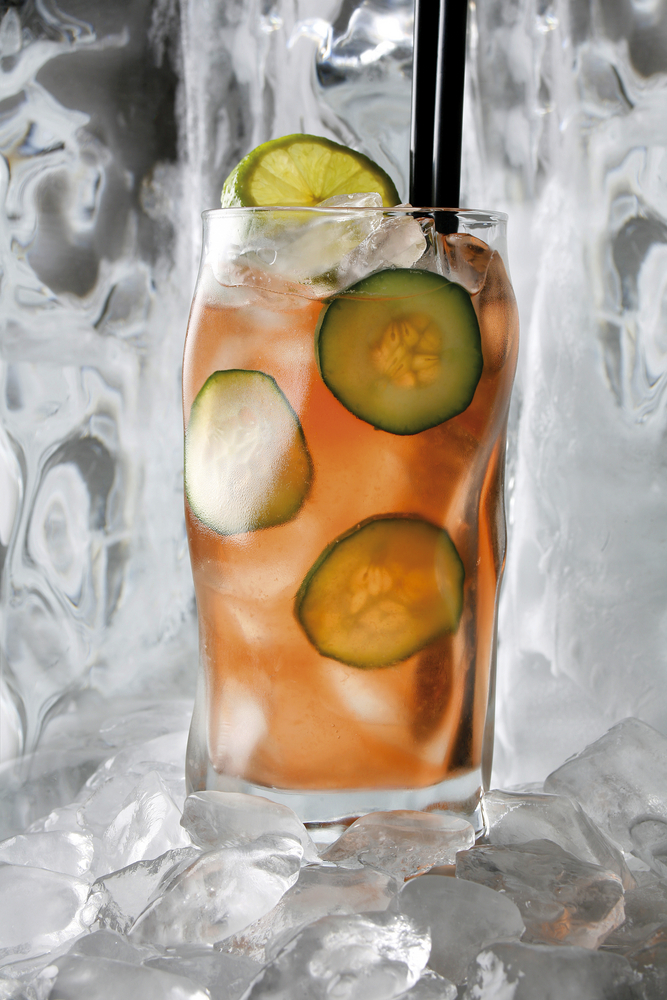
Moscow MuleSummertime weather has kicked into high gear much earlier than usual in the greater Los Angeles area and it’s hot as we write these words at Drink of the Week Central. So, it’s as good a time as any to celebrate an appropriately cold and refreshing, and actually perfectly delightful, semi-classic cocktail that was invented in New York but popularized in what is now incorporated West Hollywood. Moreover, while the name of this drink might have once hinted at anti-capitalist subversion, this is one beverage with a history that any U.S. captain of industry or Russian oligarch can appreciate.
The Moscow Mule was developed by East-coast based Smirnoff manufacturer Heublein in the 1940s to help popularize vodka, then a poor seller in the U.S. market. The new drink hit it big, however, with the movie-star heavy clientele at the Cock ‘n Bull pub on the Sunset Strip. The pub’s owner, it turns out, also was the president of Cock ‘n Bull Products, which manufactured the drink’s other main ingredient, ginger beer. Since cocktails made with ginger beer or ginger ale were commonly called “bucks” or “mules” and Smirnoff was a Russian-derived vodka, the name must have been easy enough to invent.

Here’s the recipe:

The Moscow Mule

2 ounces vodka
1/2 ounce fresh lime juice
1 spent lime wedge (garnish)
1 teaspoon superfine sugar
Approx. 3 ounces ginger beer
1 dash Angostura bitters

Dissolve sugar in lime juice, bitters, and vodka. Add plentiful ice to Tom Collins glass or large metal mug. Top off with ginger beer. Throw in one of the lime wedges you used to produce the lime juice. Stir with a bar spoon or swizzle stick and toast the Cock ‘n Bull, which tragically closed down forever in 1987. (It’s now a car dealership.)

****
The above recipe is actually our distillation of a number of recipes we found online. So, be aware that it’s entirely okay to use an entire ounce of lime juice or up to three or four dashes of bitters, though that will add perhaps more piquancy than some might be prepared for while giving it the same pinkish hue as the picture we’re using this week. (If you’re big into bitters, Moscow mules have also been made with Fee Brothers’ Whiskey Barrel Aged Bitters.) You can also use the minimum amount of lime juice and dispense with the sugar and bitters entirely. Still, when all was said and done, the version above produced a really well-balanced beverage that a drinking newbie can easily love and cocktail connoisseur can, at the very least, respect.

Ginger beer, by the way, is fairly similar to ginger ale, just a little bit, or a lot, heavier on the ginger, depending on the brand. We haven’t tried it, but real cheapskates may consider experimenting with plain old Vernors or Canada Dry. Ginger beer can be more expensive than some brands of actual beer.


Drink of the Week: Highballs

Because it’s the start of the Memorial Day Weekend, traditionally a big time for picnics and barbecues, we’re going to keep it extra simple this week. So simple a “recipe” in the usual sense isn’t even required.

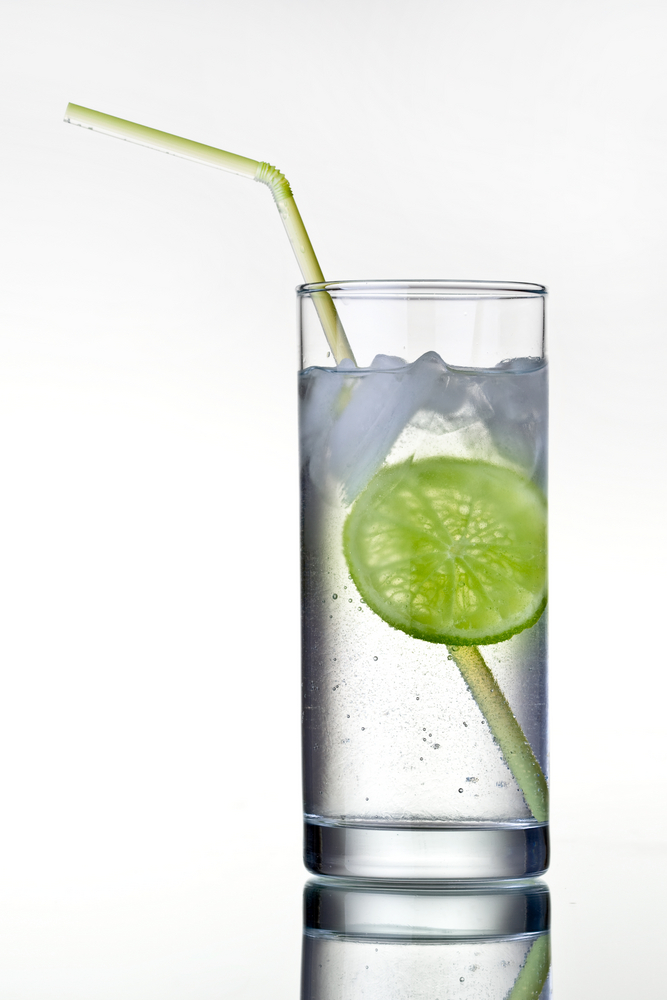
highball gin and tonicHighballs are not any one particular drink but any cocktail comprised of an alcoholic base and a much larger proportion of some non-alcoholic beverage. Ordinarily, we wouldn’t bother with a lot of highballs because there’s not much point in giving you a recipe for, say, rum and coke or a 7 and 7 (just in case you’re extremely new to booze, that’s 7-Up and Seagram’s 7 whiskey).  Your basic highball is 1-2 ounces of booze, a mixer to taste — about five or six ounces, maybe, and some ice. You can throw in a garnish of your preference, like a lime or lemon wedge, if you want to get fancy.

We’re making an exception this weekend because highballs really are the easiest cocktails to make if you’re going to be outdoors and away from the conveniences of home. Yes, it’s possible to drag your cocktail shaker, measuring shot glass, plenty of ice cubes (which you’ll be quickly tossing), assorted bitters, garnishes, and — most tricky of all– the appropriate type of glasses with you on a picnic. However, we’ve tried it and had fun with it, but it was no picnic. Yes, you can use plastic champagne glasses in place of martini glasses and it won’t be bad, but it’s still a lot of work, those plastic champagne glasses cost a few bucks, and they will never be the same as an actual chilled glass right out of  your freezer.

Of course, cocktail snobs look a bit downward on many of the most popular highballs — you’ll never see James Bond ordering a Jack Daniels and Coke, but then again you’ll never see him gnoshing on a Hoffy’s or Hebrew National at a picnic, either. Nevertheless, there are many beverages in the highball family with a degree of nobility that Bond and even snootier folks have been known to favor. For starters, no one should look down on you for your Scotch or bourbon and soda. (Depending on liquor laws and enforcement in your community, however, police officers may feel otherwise.)

If you really want to kick it old-old-old school, try taking some ginger ale along with the usual cola and lemon lime sodas. Dry ginger ale (not too heavy on the ginger) was the mixer of choice during prohibition, when most liquor was not of high quality; it still works very nicely. Canada Dry and Canadian whiskey was our grandmother’s beverage of choice and we think the old lady kind of knew what she was doing. (We love heavier, more gingeriffic, ginger ales like Vernor’s and ginger beers, and they are frequent cocktail ingredients, but they might not be as reliable mixers in a simple picnic setting.)

Better yet, the immortal gin and tonic is one highball you can knock back with pride, and not just because it’s a favorite of English aristocracy, as seen on “Masterpiece Theater.” Even back when we were young and foolish and appreciated neither gin nor tonic water, somehow the combination of the two of them made one of the delightful warm weather alcoholic beverages we’d fall back on, and we still love them. An especially good version of this uses Hendrick’s Gin, a terrific mid-priced premium gin made in Scotland — most gins are strictly English — that uses a cucumber infusion. As for garnishes, the usual lime wedge will work just fine, but a slice of cucumber stolen from whoever’s making salad really kicks this drink to life. Vodka and tonic is obviously another popular choice here.

Screwdrivers — orange juice and vodka or gin — are impossible to mess up — unless you put in more than 1-2 ounces of  booze, in which you case you probably don’t really care what it tastes like anyway. And while a gin or vodka and tonic won’t actually cure malaria with the tiny amount of quinine that it contains, we are fairly certain the vitamin C in the orange juice will be sufficient to ward off scurvy. Trust us, nothing can ruin a picnic faster than a bad case of scurvy.


Drink of the Week: The Martini

It wouldn’t be right to kick off our new “Drink of the Week” feature with any less of a beverage than this most durable but paradoxically most intimidating of cocktails. It’s the strong but perfect before dinner drink.

A million things have been written about martinis, but the first thing you need to realize is that it’s a specific cocktail and not just any liquid poured into a martini glass. We love a good chocolate martini, because it’s chocolate, but it’s no more a martini than a chocolate bunny is a rabbit. A cosmopolitan is also not a martini; it’s a freaking cosmopolitan.

Here’s our starter recipe:

2 ounces gin or vodka
1 ounce vermouth
1-2 dashes of Regan’s Orange Bitters (optional, but especially recommended with gin)
Olive(s) or twist of lemon garnish

MartinisPour gin/vodka and vermouth over ice into cocktail shaker, along with a dash or two of orange bitters if you’ve got them. Shake or stir very vigorously and strain into chilled martini glass or, for smaller portions, a wide-mouthed champagne glass, add olive(s) or lemon twist. Always serve up — i.e., without ice. (We know people who drink martinis on the rocks, but we’ve tried them that way and think they’re wrong. Very, very wrong.)

Now, note that this is a starter recipe. You’ve doubtless heard of the dry martini. It’s possible that the term once simply referred to dry vermouth, but in common usage this is one with very little vermouth. From the “M.A.S.H.” TV series, to “Auntie Mame,” to Luis Buñuel’s surrealist comedy classic, “The Discrete Charm of the Bourgeoisie,” the extremely dry martini has been lionized and joked about endlessly in low, middle, and high culture. Feel free to experiment in the direction of less vermouth, reducing the amount as much as you dare.

It’s even legitimate to make your martini a la Mame Dennis (Rosalind Russell, in the movie) and pour a small amount of vermouth into a glass and then simply discard it, filling it with extremely cold strained gin or vodka afterward. This can work particularly well with vodka. We’re pretty sure, however, that Luis Buñuel was kidding in his autobiography when he suggested merely having a ray of sunlight pass through a vermouth bottle on its way to a gin bottle.

Importantly, don’t be afraid to go in the opposite, not-so-dry, direction. Many would call our recipe, which is in fact similar to what you’ll find on the back of vermouth bottles, a bit overly “wet,” particularly for vodka. Nevertheless, it’s good to use a significant amount of a good brand of vermouth. (Señor Buñuel’s choice of Noilly-Pratt is our default.) The martini is, after all, a cocktail not just a gussied up shot. We’ve even been experimenting with a drink called, “the fitty-fitty” which is, as you would expect, 50 percent gin and 50 percent vermouth. Done right, it’s an extremely smooth martini and highly recommended.

Moving on, our take on the shaken vs. stirred debate is that shaking works really well for vodka martinis, which is what James Bond is mostly ordering in the movies, and we’re still making our mind up about how it works with gin. We’ve had good and less good gin martinis made both ways.

We hope to return to the shaken/stirred and dry/not dry dichotomies at some date in the not-so-immediate future as we continue to explore classic cocktails. For now, just remember that martinis are very much a case of trial and error with your taste buds, but even the errors should be fun.


Here’s a new iced tea idea for your summer BBQ

This week’s Happy Hour cocktail is for all you iced tea fans out there. Spice it up a bit by adding some SKYY Infusions, like this cool recipe we got from the kind folks at SKYY Vodka.

SKYY Summer Palmer
Kathy Casey, Kathy Casey Food Studios

1.5 oz. SKYY Infusions Citrus
0.25 oz. Triple Sec
1 oz. Sweetened Iced Tea
0.5 oz. Fresh Lemon Juice

Combine SKYY Infusions Citrus, triple sec, unsweetened iced tea, lemon juice and ice into a cocktail shaker. Shake vigorously and strain into a martini glass with sugar rim as garnish.

If you’re hosting a barbecue, it’s always fun to offer more than just beer in a cooler. Put out a drink cart with some flavored vodkas and plenty of mixers and your guests will have a great time.


Related Posts