Blog Zones
Blog Topics More Blog Zones

Drink of the Week: The Corpse Reviver

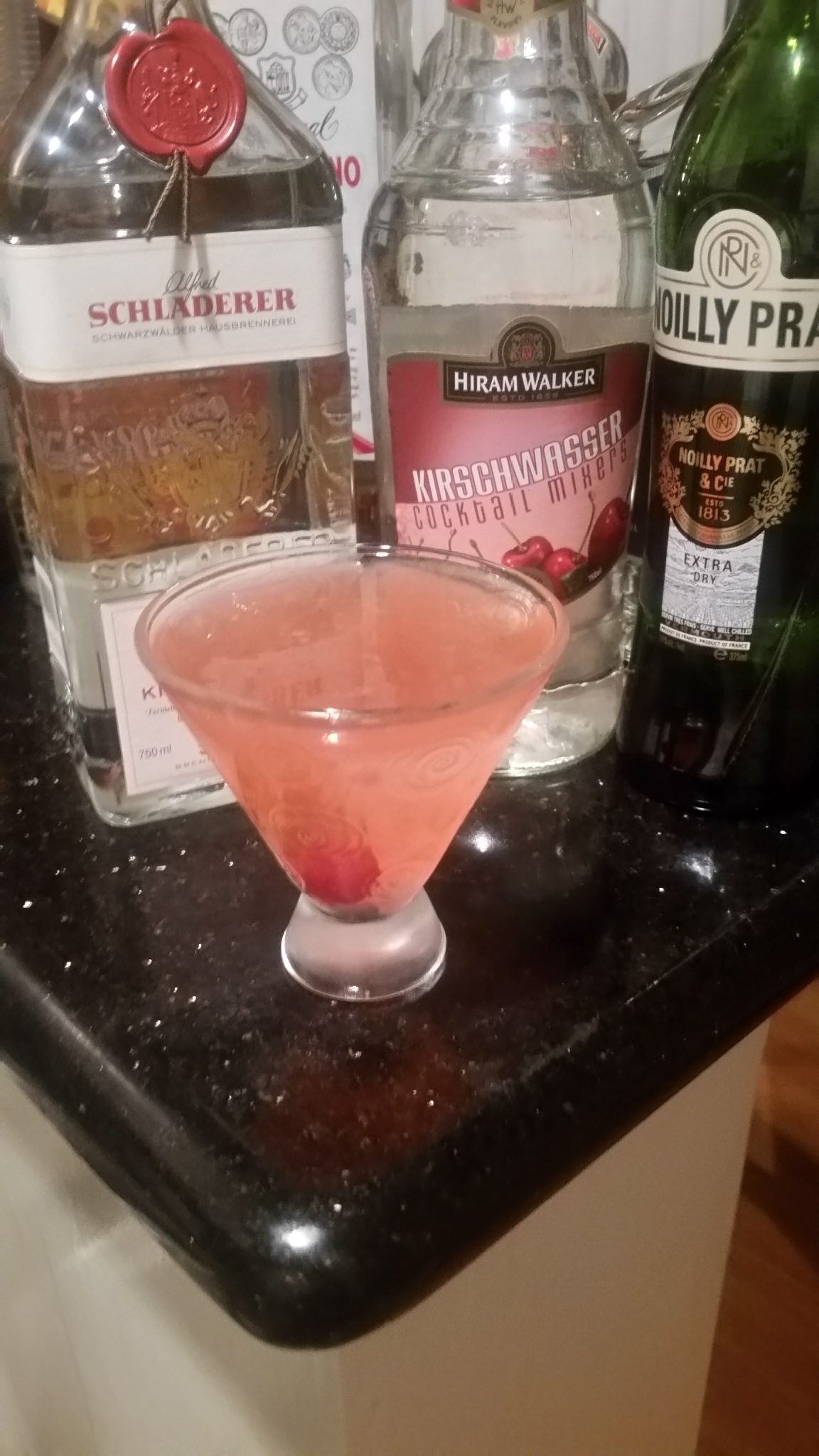
The Corpse Reviver. As promised when I took on the Corpse Reviver #2 last June, I’ve finally gotten around to the less known apparent original drink to bear the name. While my first attempts at a Corpse Reviver made it easy to see why it has been eclipsed by the gin and Lillet Blanc based sequel, with the right ingredients it really can wake up your taste buds and temporarily enliven your soul. We’ll simply ignore the fact that I happen to be writing most of this post on Easter Sunday of 2013.

In any case, the real reason for the name is that this drink is supposedly a hangover cure — though it’s not so much hair of the dog as a good chunk of the canine. Nevertheless, let us begin the revival.

The Corpse Reviver

1 1/2 ounces brandy or cognac
3/4 ounce Calvados or another apple brandy
3/4 ounce sweet vermouth

Combine the ingredients in a cocktail shaker or mixing glass. Although I’m generally in favor of shaking over stirring, I say you should stir your Corpse Reviver. Little ice crystals are the last thing you want in this drink. Nevertheless, stir vigorously and strain into a chilled cocktail glass and drink — to life, I suppose.

****

I messed around with the ingredients a lot on this one, but I used only one type of apple brandy. Calvados seems to be the classic choice of apple brandy for this drink and the Calvados Coquerel I’m using is expensive enough for half a fifth that I wasn’t in the mood to try out any competitors or more downhome variations. (Some recipes call for applejack.) I had just enough left over Ile de Ré Fine Island Cognac on hand to make one very sophisticated, yet perhaps too understated, version of the drink using my standard Noilly Pratt sweet vermouth.

I moved on to my personal favorite value brandy, Reynal, which isn’t made with genuine Cognac grapes but which is produced by a company with offices in the French town of Cognac. Using the Noilly Pratt vermouth along with the Calvados yielded an acceptable, but very unspectacular drink.

However, I still had some Carpano Antica on hand that had been thrown my way by mysterious benefactors — improperly stored due to a massive snafu on my part but still acceptable for use. That yielded a lovely result, with the bittersweet, chocolate-like character of the high end vermouth providing a very nice bottom against the lighter, boozier notes of the brandies. I was less pleased — but still pleased — when I tried the exact same drink with another favorite, Punt e Mes, which is in many respects very similar to Carpano but a bit sharper edged. Try it with one of those.

Now, we come to the point in these weekly missives where I usually like to make some kind of a quip or draw some larger conclusion about the drink. With a name like the Corpse Reviver, I suppose you’d expect that. The problem is that I really have no “larger” thoughts right now other than the fact that I certainly do not recommend this drink as a breakfast beverage. Maybe the gods of cinema can give me a hand.


You can follow us on Twitter and Facebook for content updates. Also, sign up for our email list for weekly updates and check us out on Google+ as well.

WATCH THIS!

Drink of the Week: The Fáilte

The Fáilte.If you’re looking from tips on how to pronounce the name of this week’s drink, you’re barking up the wrong tree. For one thing, my secretive communications with the dark forces that provide me with free booze and some very decent cocktails from time to time are all done via e-mail and gaelic doesn’t happen to be one of my languages. (My languages include English and, of course, fluent Pig Latin.) I’m pretty sure, it’s not pronounced “the faulty,” however.

I do know that it was developed for Kilbeggan Irish Whiskey, a brand which we’ve featured here before but of which you should not be ashamed to be ignorant. It had very limited distribution here in the States prior to be being picked up by the Jim Beam liquor monolith last year. Now, this brand is getting enough attention that even I’m hearing about it repeatedly and getting bottles thrown at me.  The whiskey itself is a very decent choice, particularly for Irish whiskey fans who might be looking for reasonably priced alternatives to the two very well known — and admittedly very lovable — iconic Irish brands. I also appreciate the effort they’re taking to making up more Irish whiskey cocktails.

Today’s drink was actually created by Declan Byrne. Aside from having a very cool  name that makes me think he might be actor Gabriel Byrne’s cooler older brother, he’s the President of the Irish Bartender’s Association. I imagine that to be an extremely august body, similar to the Jewish Tsuris Purveyor’s Guild. It’s actually a pretty delightful drink, though we discovered one controversial element, which we’ll deal with after the recipe below. Also, fáilte means “welcome,” which is nice.

The Fáilte

2 ounces Irish whiskey (preferably Kilbeggan, naturally)
1/2 ounce fresh squeezed lemon juice
1/3 ounce amaretto liqueur
1/4 ounce cherry syrup
2-5 dashes chocolate bitters

Combine all the ingredients in a cocktail shaker, add ice and shake as if possessed by a mad leprechaun. Or, if that’s a bit too much, shaking vigorously will also do. Strain into a chilled cocktail glass. Sip and contemplate how very rarely chocolate and whiskey have been combined.

****

Which brings us to the interesting apparent disagreement regarding the Fáilte. I’ve actually altered the recipe above from Mr. Byrne’s original to allow for somewhat less of the chocolate bitters for a very specific reason — I didn’t really care for this drink when I went with the full five dashes. However, I liked it a lot when it cut the dashes down to 2, 3, or even 4. While I fully expected the combination of Irish whiskey and chocolate to be a case of two great things that go great together, for me, the flavor of the Fee Brothers Aztec Chocolate Bitters I was using just dominated the drink in a way I didn’t find at all pleasant.

Wondering if perhaps I was using the wrong type of chocolate bitters, I found that my source at Kilbeggan had actually used exactly the same brand as I and loved the result. Could our taste buds be so different? Maybe. Or maybe it was something to do with the fact that they were using Monin cherry syrup and Luxardo amaretto, while I was using Torani cherry syrup and Disaronno amaretto. These are all pretty standard brands; could the flavor be so different? Well, I’m too cheap/poorly paid to find out, so I resorted to cutting down a bit on the chocolate bitters and the result was pretty darn good. Might the five dashes be perfect with those different brands? Could the flavors be so different?

Readers are, of course, fáilte, to try out both combinations of brands and amounts of bitters for themselves, but I found what works for me.


The Italian Mistress

The Italian Mistress.I’m guessing that, even if you weren’t getting hammered specifically on Conhattans or Shamrock Sours last weekend, at least a few of you were overindulging. For your sake, I’m hoping you weren’t overdoing it on bad green beer (is there ever good green beer?) and, if you were doing shots, I’m hoping it was on the good Irish stuff. (I’m personally partial to Bushmills.)

All of that is now in the past, and it’s time to recuperate with a drink that — unusually for DOTW — features not a single drop of hard liquor. Just some of my personal favorite mildly alcoholic grape derivatives. One of them happens to be this week’s sponsor, an old favorite of mine previously featured here several times, most memorably (to me) in the Ugly Americano. I speak of Punt e Mes, which basically tastes like regular sweet vermouth imbued with the spirit of the best dark chocolate you ever had.

Also, as readers of an online men’s magazine, you guys have got to love the name of this week’s tasty but tempestuous beverage.

The Italian Mistress

1/2 ounce Punt e Mes
1/4 ounce simple syrup
3-4 dashes Angostura Bitters
Sparkling white wine
1 orange twist (garnish)

Combine the Punt e Mes, bitters and syrup in the bottom of champagne flute or, if you haven’t got one, a regular champagne glass — in which case you might want to reduce the proportions of syrup and vermouth as flutes tend to be larger. (If you don’t have any simple syrup on hand, by the way, a dissolved teaspoon or less of superfine sugar will also work.) Top off with the sparkling white wine…very carefully. Excess foam can be a factor.

Once your drink is fully poured, add your orange twist. Now, sip and salute the Italian mistresses of the world, not that we have anything but good thoughts for Italian wives and girlfriends.

****

This is a pretty simple and straightforward drink, which is one reason why I like it. However, the recipe that came to me simply said it was to be built in a champagne glass, so I originally made this in a smaller regular champagne glass which I also happen to use as a cocktail glass, since it’s essentially the same thing. (The Y-shaped martini glass is a relatively modern invention. Nick and Nora Charles drank their martinis and Manhattans from champagne glasses/coupes and so do I, most of the time.)

It was only when I received the picture above that I realized I was using a slightly wrong glass. I have to admit it was a better balanced drink in the flute, but the version in the champagne glass did put the Punt e Mes a bit more forward, and that’s realy never a bad thing.The one thing I will say is never stint on the bitters on this one. Though Punt e Mes has more than its share of bitter notes, the Angostura is definitely needed to sort of counter-intuitively smooth things over.

The one place where I may have gone wrong was on my choice of bubbly. I stumbled over a very cheap genuine Champagne which had a slightly unpleasant bitterness to it and which I therefore can’t quite recommend.  Still, the drink was sturdy enough to absorb that small blow. After all, any Italian mistress should be able to deal with a bit of French unpleasantness.

Now, we mambo.


Grub for Guys: March Madness Spread

March Madness, like most big sporting events, has become a free-for-all of food options. But just because the Madison Avenue crowd tries to pump your eyes and ears full of pizza, tacos and subs, you don’t have to fill your belly with that commercially made food (and I use the word “food” loosely). So here are a few options to try and mix things up in your own kitchen, literally.

TANGY SWEET SOY-LIME WINGS

I’ve been trying to create and perfect various wing recipes, and lately I’ve been into the sweet, tangy and spicy notes of Asian flavors, so here is the most ambitious of this group of recipes.

Ingredients:

¼ cup each soy sauce
¼ cup mirin
¼ cup sake (rice wine)
¼ cup brown sugar
1 inch piece of ginger, trimmed and chopped fine
5 lb. bag chicken wing sections (if frozen, thaw in the refrigerator for 1-2 days before using)
¼ cup vegetable oil (such as canola or peanut oil), divided
Salt and pepper to taste
Sriracha hot sauce to taste
Juice of 2 limes
1/3 cup chopped roasted peanuts
¼ cup chopped cilantro

Directions:

Preheat oven to 400 degrees. Combine soy sauce, mirin, sake, sugar and ginger in a small bowl and whisk together. Set aside. Heat 2 Tbsp. oil in a large, deep skillet or Dutch oven on medium heat. Lay wings on a large platter or a few plates and sprinkle with salt and pepper. When you put your hand about 2 inches from the oil and can feel the heat, add half of the wings, skin side down. Sear for about four minutes per side and remove to another plate. Repeat with remaining oil, wings and salt/pepper, but after searing the second batch, return the rest of the wings to the pot, and dump in the sauce. Turn down the heat and cover, and simmer for about 10 minutes. Remove cover, and let simmer another five minutes, until sauce is reduced and thick. Using tongs, carefully remove wings to a large baking sheet coated with cooking spray and bake for about 15-20 minutes or until browned and crispy. Remove wings to a plate, drizzle with some of the remaining sauce in the pan and Sriracha, and sprinkle with lime juice, peanuts and cilantro.

TRIO OF FAT FINGER SANDWICHES

People like tea-like finger sandwiches. They are also the food of choice for many fancy cocktail parties. But for dudes like us, they should be called something that reflects our caveman instincts, hence the name “fat finger sandwiches.” For the purpose of making this easy for you (and me), I’ll show you how to make about four sandwiches at a time, and you can multiply out as necessary.

Crispy Cristo Sandwich

Is it even worth saying that this may be the single most delicious thing I have ever made or tasted? Because, well, it really was. And after wrestling with the idea that I would have to figure out how to butter the donuts, I realized that with the sugar glaze, the donut as “bread” would become crisp on its own.

Ingredients:

Butter
4 glazed donuts, preferably Krispy Kreme
4 thin slices smoked deli ham
4 slices yellow American cheese
Cooking spray

Directions:

Heat a large nonstick skillet over medium heat and throw in a pat of butter. Slice each donut, lay a slice of ham and then cheese on the bottom and replace with the top, and then place donut sandwich in the skillet and press down with a spatula. Repeat with all donuts, and when bottom begins to brown (about 60 to 90 seconds), flip the sandwich over and cook for another 45 seconds to a minute. Move to a plate as is or slice in half or quarters.

Pizza Bagel and Sausage Slider

Another super easy and tasty snack.

Ingredients:

1-2 links (fully cooked) smoked Italian sausage, sliced
8 small pizza bagels

Directions:

In a large nonstick skillet over medium heat, fry sausage slices on each side until brown and crispy, then drain on paper towels. Meanwhile, bake pizza bagels according to package directions. Let cool a few minutes, then put a few slices of sausage on four of the bagel halves and top with remaining bagel halves.

Chicken and Wafflewich

I’ve been semi-obsessed with this classic combo lately, and this is about as simple as it gets.

Ingredients:

6-8 small breaded chicken strips
4 double maple waffles (such as Eggo)
2 Tbsp. maple syrup
2 Tbsp. hot sauce
2 pats butter

Directions:

Bake chicken strips according to package directions and set aside. Meanwhile, combine syrup and hot sauce in a small bowel. Toast waffles and spread butter on each slice. Then, top two waffles with chicken strips and drizzle with syrup. Top with other waffles (they should be those waffles that are perforated that you can break into four large finger sandwiches) and serve.

PIMENTO CHEESE CANOES

Because you need some vegetables (well, maybe not!), here is an easy and tasty way to put three food groups together.

Ingredients:

1 bunch celery
½ cup pimento cheese (in a jar, looks like cream cheese)
Handful of slivered toasted almonds (Trader Joe’s has them pre-toasted like this)

Directions:

Wash and trim celery, leaving them as long “canoes.” Spread cheese on each and sprinkle with almonds.

BLOODY MIKEY SHOOTER

I imagine this would be a kickass hangover cure, although I haven’t tested that theory just yet.

Ingredients:

½ cup tomato juice or vegetable juice
1 Tbsp. Buffalo wing sauce
1 Tbsp. hot pickled cherry pepper juice
Juice of half a lime

Directions:

Combine all ingredients in a small juice glass and stir. Drink up! (Note: This makes one shooter, but you can use this guideline to make as many as you want).


Drink of the Week: The Conhattan

The Conhattan. With St. Patrick’s Day 2013 nearly upon us, we’re featuring the second of two cocktails that claim some sort of association with the Emerald Isle and it’s descendents in the vast Irish diaspora. Last week, we had the delightful, but in no way particularly Irish, Shamrock Sour.

The Conhattan was suggested to me by a representative of a newish brand of Irish whiskey which has divided critics to a certain extent and actually boasts a connection with the town of Livermore. Livermore is not, I must tell you, located near Dublin or in County Cork, but in County Alameda in Northern California, a relative stone’s throw from Oakland and San Francisco. Aside from being the home of the famous/notorious nuclear weapons laboratory, it’s also the home of Concannon Winery, which is legitimately Irish-American but also, well, a winery.

This whiskey is made in Ireland, of course, by a distiller who finishes the whiskey in actual petite sirah barrels from Cali. As for the taste, it might not strike everyone as particularly Irish. While this video argues differently, to me, Concannon Irish Whiskey is probably best enjoyed by those who lean toward Scotch and find Jameson and Bushmills a bit overly soft. It’s very decent, but a bit astringent like a Scotch, not that there’s anything wrong with that.

In fact, I think the astringency may just be essential to today’s drink, a very sweet variation on a Manhattan but which differs a great deal from the more classic Irish Whiskey Manhattan, which we featured last year at this time. This time, this whiskey is mellowed not by sweet vermouth, but by a very popular cocktail ingredient we’ve never featured here before — St. Germain elderflower liqueur. Anyhow, let’s get started with a concoction created for Concannon by Dublin mixologist Gillian Boyle.

The Conhattan

1 1/2 ounces Concannon Irish Whiskey
1 ounce St. Germain
1 teaspoon Noilly Prat dry vermouth
2-3 dashes Angostura Bitters
1 orange twist (garnish)
1 cocktail cherry (somewhat optional garnish)

Put all liquid ingredients into a mixing glass or cocktail shaker with plenty of ice. Ms. Boyle would have stir just until the drink is “evenly diluted” but I say stir as long as you like, or be a heretic like me and shake the thing. Strain into a chilled cocktail glass, add the orange peel and, if you like, the cherry, and toast your favorite Irish or Irish-American person, real or imagined.

****

I often strip out most of the brand names from my recipes because I like to offer readers the freedom to try out drinks with their own brands and not feel tied to what I happen to be using. This time, however, I really think it’s best to mostly stick with the script as provided by Boyle. I haven’t actually had the opportunity to try the Conhattan with other products, but I strongly suspect this drink would completely fall apart if you attempted it with say, Bushmills or Jameson’s. Much as I adore those highly approachable whiskeys, I strongly suspect that they wouldn’t stand up to this much St. Germain, which is complex but also extremely sweet. Also, you’d have to change the name (“The Bushhattan”??). You could probably cheat by using another brand of dry vermouth than Noilly Pratt, but since it’s been a favorite go-to brand of mine for years now, I see no reason to diverge there.

On the other hand, I am offering readers the option of raising or lowering the amount of St. Germain, for a very simple reason. Very frankly, though I am no stranger to the tooth that is sweet, I found the original recipe, which called for a full ounce of liqueur, overly sweet — good enough for DOTW but very far from a personal favorite.Reducing it to 1/2 ounce, however, produced an extremely nice cocktail on which I’m proud to place my personal stamp of approval. At that amount, the light touch of the elderflower is just sweet enough to properly soften the kick of the Concannon without muffling it outright.

It’s all about balance. Indeed, there’s a place for sweetness on St. Patrick’s Day, as director John Ford — the ultimate Irish-American mythmaker — undoubtedly would have agreed.


Drink of the Week: The Shamrock Sour

the Shamrock Sour. Okay, we admit that St. Patrick’s Day is nearly a fortnight away, but the tireless promoters of the alcoholic industrial complex have been hard at work plying me with bottles of top-quality hooch and some intriguing holiday themed recipes to go with them. In this case, we’re talking about my personal favorite member of the Jim Beam Small batch family, Basil Hayden’s. Yes, it’s only 80 proof and therefore less overtly flavoriffic than a typical high quality bourbon, but it mixes so harmoniously, I really can’t say anything bad about it. It’s definitely one bourbon that’s worth trying with just a bit of cold water or maybe some ice cubes. Sort of like a sweeter version of a very nice Scotch.

Nor do I have anything but nice things to say about the Shamrock Sour, a lively variation on a timeless tonic developed by New York mixologist and proprietor, Julie Reiner, who appears to be something of a budding superstar in the bar game. I can’t think of a better final chapter to wrap up the quartet of delicious sours I’ve been featuring in recent weeks.

Now, I would agree with naysayers that the Irish/St. Patrick’s Day bonafides of any bourbon-based beverage are very seriously in doubt — it’s not like Kentucky is any kind of Irish-American enclave. On a more superficial level, the Shamrock Sour isn’t even particularly emerald colored, a bit of very expensive but worth it green chartreuse notwithstanding. Still, if the choice is between good taste and thematic consistency, I have to go with the taste. On the other hand, we’ll be trying out another drink using actual Irish whiskey as the big boozing day approaches. For now, however, I wholly endorse the Shamrock Sour for St. Patrick’s Day, or any other day. Authenticity, be darned.

The Shamrock Sour

2 ounces bourbon (preferably Basil Hayden’s®, naturally)
1/2 ounce green chartreuse
1/2 ounce fresh lemon juice
1/2 ounce grapefruit juice, preferably fresh
1/4 ounce agave nectar
1/4 ounce water (to mix with the agave nectar)
1/4 ounce egg white
1 lemon wheel (highly desirable garnish)
1 sprig of fresh mint (even more desirable garnish)

Combine bourbon, chartreuse — a highly distinctive a-little-goes-a-long-way liqueur whose complete formula is known only to a pair of monks in France’s Chartreuse Mountains — and juice in a cocktail shaker. Mix the agave nectar with an equal amount of water to make 1/2 ounce of agave syrup. Add the egg white and, as usual with egg cocktails, shake vigorously before you have added ice.

Then, add ice, shake again very vigorously and pour over fresh ice into a fairly good size rocks glass. Add a lemon wheel and mint sprigs, which I think is actually an important part of the flavor here, particularly the mint. Toast the people of Ireland (who gave us James Joyce), the people of Kentucky (who gave us two of my favorite character of recent pop culture, Raylan Givens and Abraham Lincoln), and why not throw in those Carthusian monks and Julie Reiner while you’re at. I know I’m grateful to all of them.

****

This really is an especially well-balanced whiskey sour variation. Aside from the good booze, the agave, and the all important (though viscous and therefore tricky to measure out), egg white, the secret ingredient in here is the grapefruit. In fact, I have to credit this drink for dispelling my childish dislike of the bittersweet citrus fruit with legendarily healthy properties. I hated the stuff as a child and always remembered it as just bitter and ultra tart. I’m embarrassed to say that I haven’t tried eating the stuff in years. Apart from this drink, I find I now am increasingly tolerant of the stuff. It’s actually about as sweet as it is bitter, sorta kinda like the citrus equivalent of Campari or Aperol.

It’s healthy too. In fact, now I understand that grapefruit might actually help fight type 2 diabetes, an illness genetics — and my outsize enjoyment of food and drink — suggest I might fall prey to. Is it possible this is a drink that could save my life? Well, I’m definitely going to use that excuse the next time I make it.


Drink of the Week: The Meyer 100 Proof Bourbon Semi-Sour

Image ALT text goes here.Corrections and retractions time. Though I totally stand behind my creation last year of the Meyer Canadian Semi-Sour, I was perhaps wrong when I described the wondrous Meyer lemon as “partly an orange.” Turns out,  it might actually be partly a Mandarin orange. That would make sense since la wiki tells us that it was once actually a primarily a houseplant in China. The humble plant’s destiny was forever changed, however, after being discovered sometime around the turn of the 20th century by a U.S. Department of Agriculture employee named Frank Nicholas Meyer.

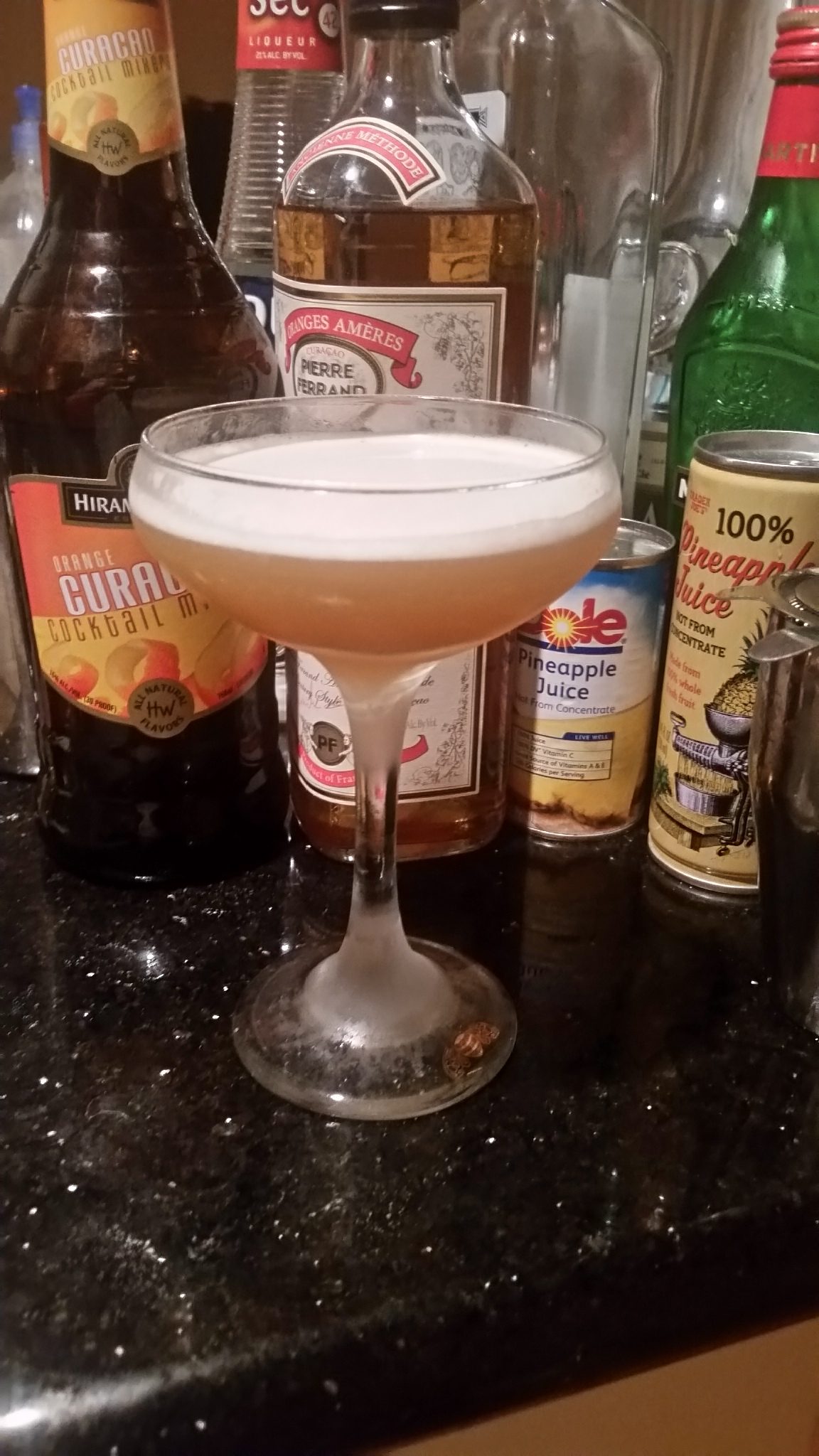
Anyhow, with the return of the Meyer lemon to stores in my vicinity and with my recently rekindled interest in the eggier side of the sour family of cocktails, I decided to see if the juice of the more edible lemon worked as well with 100 proof bourbon as it did with the ever-so gentle, and merely 80 proof, Canadian Club I used last year. I’m happy to say that, if anything, it’s even better — as long as you like your cocktails boozy and sweet as heck.

The Meyer 100 Proof Bourbon Semi-Sour

2 ounces 100 proof (more or less) bourbon
3/4 ounce freshly squeezed Meyer lemon juice
1/2 large egg white
2 teaspoons superfine sugar
1 dash orange bitters (very optional)
1 maraschino/cocktail cherry (optional garnish)

If you’ve read my other recent sour recipes, you can probably guess what the drill will be. Combine the bourbon, juice, sugar and (if you’re using them) bitters in a cocktail shaker without ice. Shake the contents to emulsify the egg white. Then, add ice, shake a bunch more, and strain into a well chilled rocks glass. Garnish with cherry and salute the late citrus pioneer, Mr. Meyer, and mourn his untimely and mysterious passing in 1918.

*****

I used my personal default bourbon, the highly underrated, little known, and very reasonably priced Old Fitzergald’s Bonded in Bond 100 proof (aka “Old Fitzgerald Green Label”). I can’t be sure, but I suspect this recipe would also work with very high proof bourbons or something even as meek as Maker’s Mark, which I guess is going to remain 90 proof indefinitely after that brouhaha last week. (All I can say, is where were you people when Canadian Club and countless other brands went from 86 to 80 proof sometime in the 1980s or 1990s?)

Re: bitters. I originally tried using Angostura in this, but found it an unwelcome distraction. Then I tried it without bitters at all, and found the drink absolutely wonderful. Then, I tried it again with Regan’s Orange Bitters and found the drink tasted tangier and even sweeter and not quite as much to my personal liking. However, one of my test subjects here at DOTW Manor was very pleased with this version, so I’m leaving you the option of throwing the orange bitters in. Try it both ways, I say.

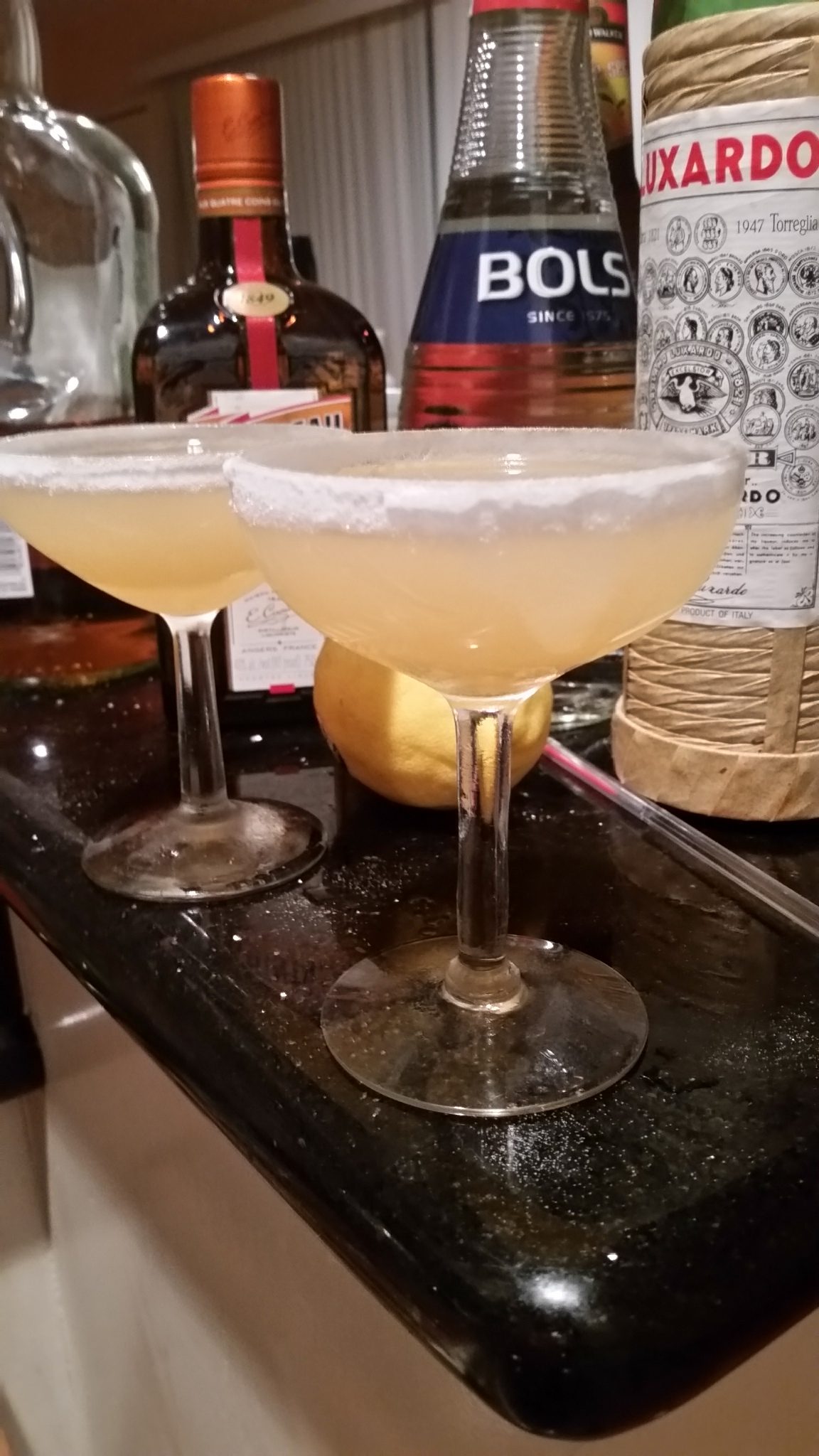
Finally, there is the question of how you determine that you’re using half an egg white. I’m sure there’s a way to do that with measurements — though measuring egg whites can be a hassle, or you can do like I’d probably do and just sort of eyeball it. This time, I took the easiest and least wasteful way out and just doubled up and made two Meyer 100 Proof Bourbon Semi-Sours at the same time. This is a drink worth sharing.


Crown Royal On Point: Jermaine Dupri

Jermaine Dupri has been a creative force in the music industry for more than twenty years. The founder of So So Def Records single handedly put Atlanta at the forefront of the R&B music scene. Learn the secret to his success, and find out how this music innovator has been able to “Reign On”.


Mountain Dew Kickstart Adventure Starring BMX Pros Chad DeGroot and Mark Mulville

When Mountain Dew gave me the opportunity to head down to Orlando, Florida for two days to learn how to ride bikes with professional BMX riders Chad DeGroot and Mark Mulville, I couldn’t shirk off the responsibilities of fatherhood, home ownership and general employment fast enough.

Kickstart by Mountain Dew is a sparkling juice beverage made to kick-start your day and get your rear into gear. With just 80 calories per 16 oz serving and 92 milligrams of caffeine (roughly as much as one cup of coffee), Kickstart gets you moving without the bloated, heavy feeling supplied by most “energy drinks” on the market. Don’t think of this as an energy drink — think of it as Mountain Dew for breakfast! Didn’t we all go to school with someone who drank Mountain Dew for breakfast, anyway? My buddy Eric Hoffman drank so much in the ’90s he pisses Yellow #5 to this day, exclusively.

Want to kick ass at BMX? Try this PED. And, it will make you into a sexual tyrannosaurs.

Loaded with Vitamins B and C, plus 5% fruit juice, it’s a morning drink (not an energy drink) that gets your body and your mind higher than BMX pro/stunt cock Mark Mulville off a 10-foot wall at Orlando Skate Park!

Speaking of OSP, (which is what you call it, Brojam), getting there at roughly 7 AM was a serious thing of beauty. The sun had just began to rise, which gave everything a cherubic, surreal glow, and was accompanied by an endless chorus of early morning bird chirping action. It was like a bird mixtape that you made to impress a chick (when you used to do shit like that), except this was played against the backdrop of crisp morning air and the excitement of doing something you had never done before: riding a BMX bike.

Orlando Skate Park

When I first attempted to straddle the BMX, my first concern was for my nutsac. I’m all vasectomied up, so I wasn’t worried about reproductive function being compromised (spray and pray, baby); I was literally worried about crushing my nutsac on the pointy plastic seat. When I asked pro rider Chad DeGroot about the protruding seat, which could tear anal membrane or ball sac-age with equal ease, he said, “Well, you really don’t have to worry because you’re usually standing when you’re on the bike, anyway.”

And with that, I mounted the bike from behind, and rode it, in a rather wobbly way for about 10-15 feet. The bike was really small, my legs felt super long, and the safety of my ballsac was still floating through my mind. Maybe it’s because when I was 13 and playing little league I watched a kid in the on-deck circle take a well hit, yet foul, line drive directly to the nuts which resulted in one of his balls deflating, right there on the field. What a sound!

Pages: 1 2 3  

Drink of the Week: The Vieux Carre

The Vieux Carre.Like most Americans, I’m not exactly a polyglot. Four years of junior high and high school Spanish have been of great assistance in helping me to order  items at taco trucks; three quarters of college French allow me to chuckle knowingly to myself when “merde!” is translated as “damn!” in subtitles. So, I can’t properly pronounce the name of the Vieux Carre, but I can tell you it means “old square.” That square, as it turns out, is off of Bourbon Street in New Orleans, and this is another fine cocktail associated with America’s most intriguing cocktail capital.

Quite obviously, however, this is not in the same category as a Hurricane and it’s not the one of the scary, gigantic green drinks featured on this year’s season premiere of “Bar Rescue.” While, for me, the Vieux Carre doesn’t quite achieve the classic cocktail nirvana of a Sazerac, this is one beverage that actually gets tastier the longer you let it sit. It’s perfect for a long conversation and, by the end of it, even ever-so-justifiably-furious bar rescuer John Taffer might get mellow enough to maybe stop shouting for just a second.

The Vieux Carre

3/4 ounce rye whiskey
3/4 ounce cognac or brandy
3/4 ounce sweet vermouth
1 teaspoon Benedictine
2 dashes Peychaud’s Bitters
2 dashes aromatic  bitters (Angostura or similar)
1 lemon twist (garnish)

Making this drink is about as easy to make as it is to get a buzz going in the French Quarter. Build over some ice cubes in a rock glass, stir, and add the lemon twist. Toast whatever or whomever you like, but do so slowly.

****

I’m very sorry to say that this week’s post completes my trilogy of drinks of cocktails featuring Camus’s Ile de Ré Fine Island Cognac. Sadly, that’s the case because I polished off the bottle last night. No disrespect to my value-priced go-to brandy, Reynal, but there’s a reason the Camus people get to charge the big bucks for this stuff. It’s great in a cocktail and remarkably easy and pleasurable to drink neat. Good thing I still have a few airplane bottles of various Ile de Ré expressions in my alcohol laden larder.

My rye for this double-base spirit cocktail was another new freebie favorite we’ve featured here before, the lovely Templeton Rye, previously featured in the Capone.  I usually lean towards higher proof ryes like my old pal, 100 proof Rittenhouse, but that might have been a bit much in this context; Templeton’s more mellow flavor makes it a pretty perfect match for a Vieux Carre.

I experimented quite a bit with the other ingredients. Many recipes call for more booze and somewhat less of the Benedictine — a very sweet herbal liqueur which famously mixes well with brandy. I also tried three different sweet vermouths, all favorites. The lightest was Noilly Pratt, which was very nice, but an even better result was achieved with the greatness that is Carpano Antica. (Yet another freebie previously featured here).

I also tried it with another great product I’ll be featuring later, Punt e Mes. In that instance, it sort of dominated the cocktail but, since I love, love, love me some Punt e Mes, I didn’t really mind.

One final note, apparently to really do the Vieux Carre right, some people suggest you should make it with just one very large ice cube. Sounds cool, but I guess I need to find an ice cube tray that make 3″x 3″ ice cubes.

Anyhow, a moment of non-silence for my forever spent bottle of fine cognac. Mr. Gillespie, it’s time for a little Cognac blues.


Related Posts